



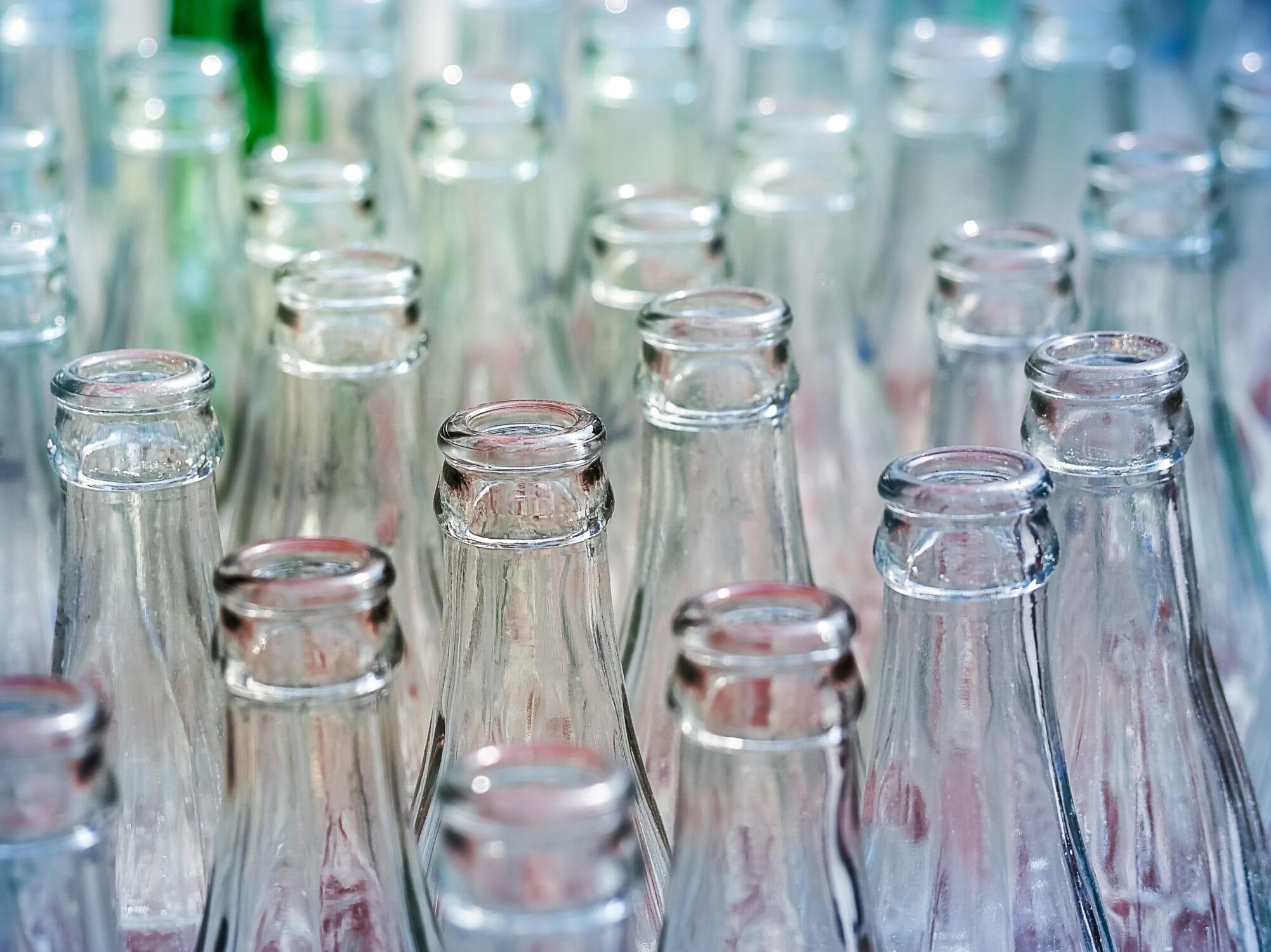
The German container glass market fell by 7.8 percent in the first half of 2026 to around 1.82 million tons, according to the Federal Glass Industry Association. Both domestically and abroad, sales declined. This continues a trend that had already characterized the balance of the previous year period.
The decline was particularly pronounced in the beverage bottle segment: sales there fell by 8.7 percent compared to the first half of 2025. Within the segment, all sub-segments showed negative growth. Beer and spirits recorded a drop of 6.4 percent, while wine and sparkling wine had to endure the steepest decline, with a drop of 11.4 percent. Non-alcoholic beverages such as water, milk and juice fell by 8.2 percent.
Packaging glass for food also declining
In the packaging glass segment for food as well as for pharmaceuticals and cosmetics, the association also recorded a drop in sales, by 5.9 percent. Within this segment, the sales of packaging glass for food without fruit, vegetables and canned food (OGS) fell by 3.7 percent. The most affected segment was the packaging glass segment with OGS, which had to endure a decline of 8.9 percent compared to the same period last year.

„The figures for the first half of the year unfortunately show that the hoped-for recovery in the container glass market has so far not materialized. Given the economic uncertainty and the continued high price levels, many consumers are paying very close attention to their spending. This has an impact on numerous consumer goods markets, and therefore on demand for products in glass packaging as well.“
Dorothée Richardt, Managing Director of Container Glass at the Federal Association of the Glass Industry
Richardt also emphasized the importance of making the added value of glass – its product safety and recyclability – visible to consumers along the value chain. The container glass industry also needs reliable framework conditions in Germany and a secure, affordable energy supply. Further burdens, such as the planned increase in the consumption tax on sparkling wine and spirits, should be avoided, Richardt continued.
Source: Glass Packaging Action Forum


