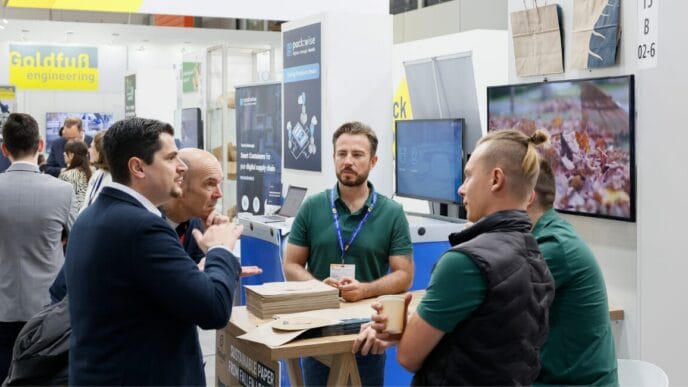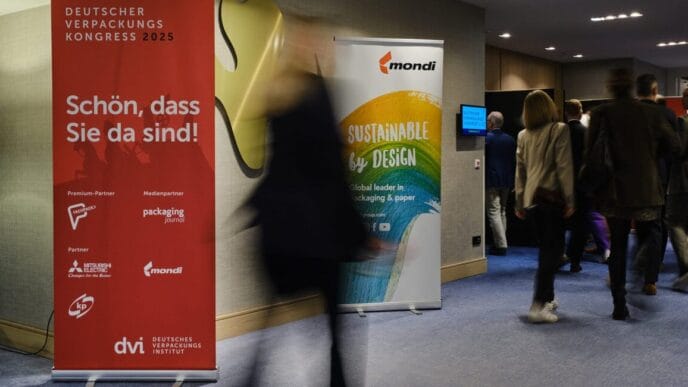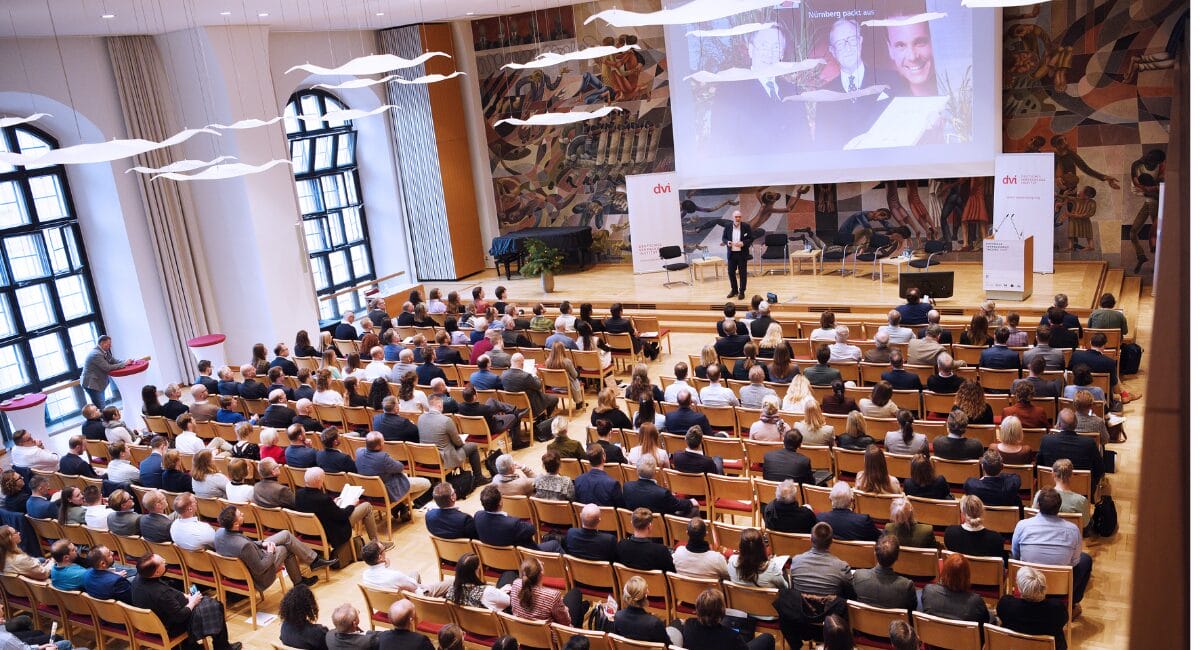
For 35 years now, the „class reunion of the packaging industry” has been a firm fixture in the calendar during Advent: the Dresden Packaging Conference. Once again, of course, the PWWR and everything associated with it took centre stage. The packaging journal was there.
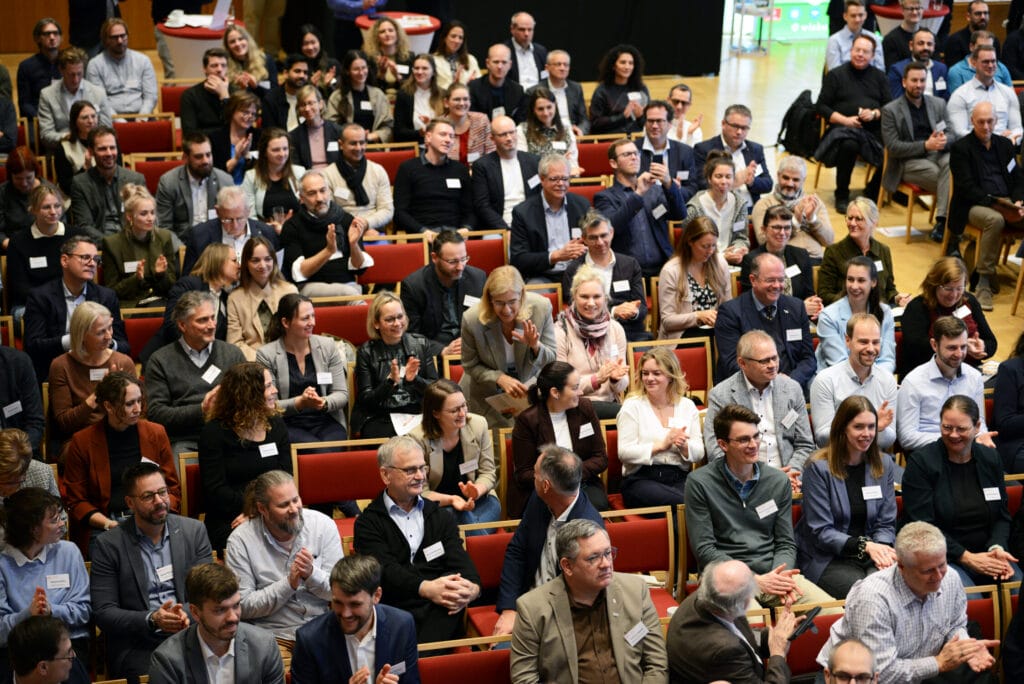
After a brief historical review and a tribute to the initiators in 1990, the 35th Dresden Packaging Conference began with an exciting, informative panel discussion on current developments in the PPWR. Under the motto „Understanding challenges - shaping solutions“, representatives from trade, associations and industry discussed this complex topic. Over 250 participants were able to benefit from the expert panel's exchange on the current state of knowledge in connection with the PPWR and recognise themselves in the practical solutions presented. Once again, however, it became clear that there are still many uncertainties.
Obligations, documentation, standardisation
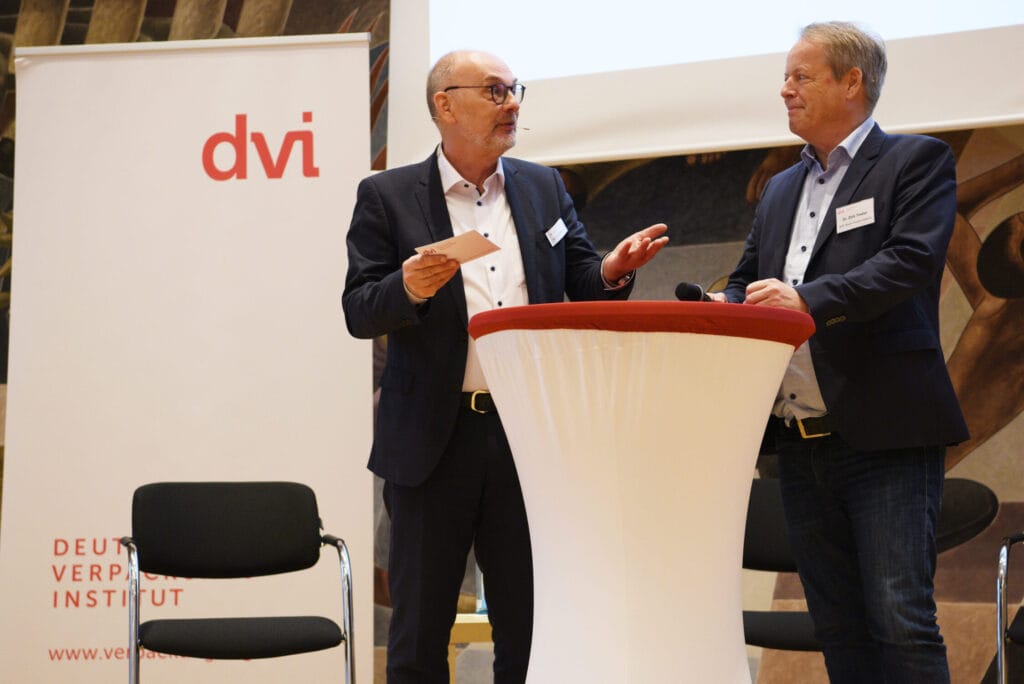
Moderated by Dr Nathalie Brandenburg, the new Managing Director of the German Packaging Institute (dvi), Martin Engelmann (IK Industrievereinigung Kunststoffverpackungen), Lydia Tempel (PTS - Institut für Fasern & Papier), Dagmar Glatz (dm-drogerie markt Deutschland), Lorenz Dobiaschowski (Develey Senf & Feinkost) and Robin Huesmann (Leipa Group) contributed their positions and results to the exchange of experiences.

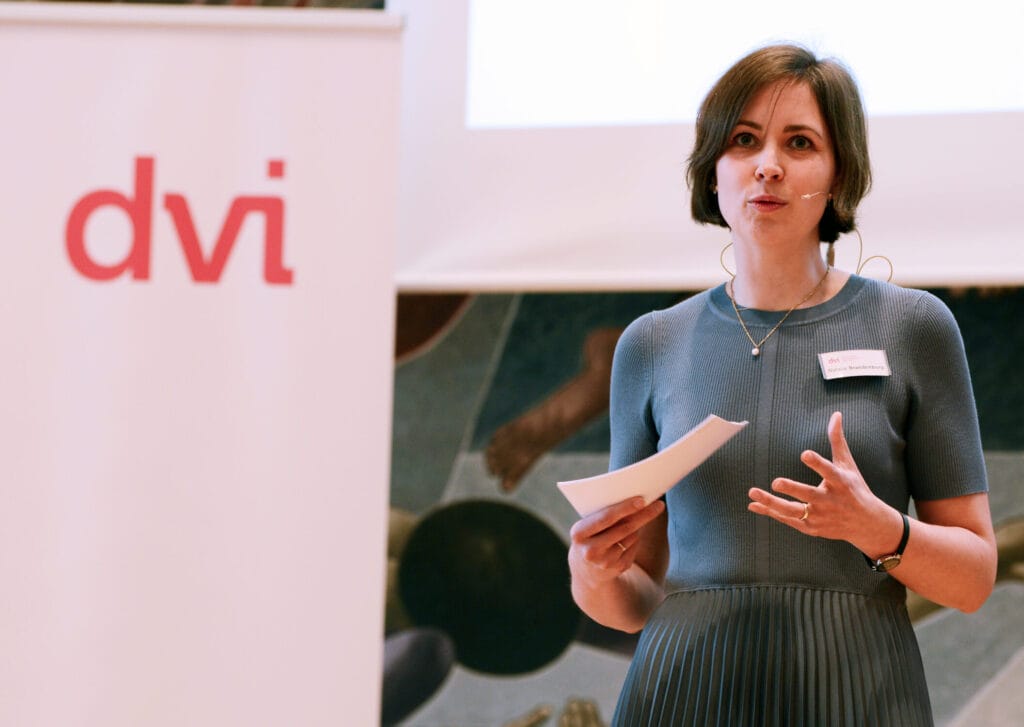
Starting point: „What do we know today that we didn't know in the summer? Conclusion: The EU only provides rough guidelines. There is still a lack of concrete guidelines or clarifications, including from the Central Agency Packaging Register (ZSVR). Every company is therefore well advised to first clarify its new role (am I a manufacturer, distributor, importer, etc.) and deal with these tasks. There is no single solution, the requirements are too different. You are well advised to start by orientating yourself to the minimum standard.
The challenge at the documentation level and the creation of declarations of conformity are even more complex: How can you manage the extreme effort required to collect all the reporting obligations and the necessary data from all partners in your own value chain? What attributes do you need? How do you organise the provision of and access to the data? At dm, for example, this affects several thousand products. Dagmar Glatz made everyone involved aware that digitalisation processes must not slow down SMEs. And that they should not lose sight of eco-efficiency in this endeavour.
There were also exciting insights into the standardisation process of the European Committee for Standardisation (CEN) on the recyclability of PPK. How can components and constituents (separate and integrated components) of packaging be standardised? How can recyclability be standardised at this level if, for example, collection and recovery systems are designed differently in different countries? Because all of this has an influence on sortability, on compatibility with the recycling process, on the recyclable proportion of the packaging.
In view of the complex data requirements, the industry needs suitable digital solutions to systematically handle thousands of documents and analyse the information they contain. Otto Hefner and Stavros Kyriakidis from the start-up Pyx AI presented an attractive solution that promises reliable analyses in compliance with the GDPR using AI.
Recycled materials and alternative fibres
The evaluation and future potential of different recycling scenarios are a prominent focus, as legislators are increasingly demanding the use of recycled plastics in packaging. The programme in Dresden included contributions on the facts, challenges and solutions from various perspectives. It became clear what the omnipresent „recyclate gap“ is actually all about: Recycling quotas are not recyclate quotas. There is a lack of legal certainty and future prospects for the recycling companies involved. Currently, orders of magnitude of recycling potential are not being utilised. Medium-sized companies are giving up. 2030 is too far away for them. Without material incentives for the use of recyclates, too little is currently happening. It was also emphasised that the safe and reliable use of PCR requires a functioning interplay between supply chain, safety, material and performance, design plus the consumer, who is often forgotten.
Alternative fibres can do more than just serve as padding in packaging. They are increasingly replacing cellulose fibres through appropriate processing. The approach of paludicultures as an agricultural model and the market launch of biogenic packaging raw materials from paludicultures were reported on.
Illig presented its innovative dry fibre system for the production of packaging made from dry natural fibres. The modular and scalable production systems process natural fibre webs into dimensionally stable packaging. Thanks to a newly developed and patent-pending process, a higher stretch ratio and therefore significantly deeper and more varied geometries can be realised.
The potential of glass and reusable systems as well as the topic of green claims rounded off the lecture programme. Once again this year, part of the „Dresden Mix“ was the so-called „Study Wall“, where the numerous students of packaging-related degree programmes from Leipzig, Dresden, Berlin, Munich, Stuttgart, Karlsruhe, Hanover, Kempten and Vienna who were represented at the conference were able to present themselves. This was complemented by job and internship offers from many of the companies present. Both sides made intensive use of the opportunity for active networking.
One anniversary - one farewell - many reunions
Companies from the entire value chain: retail, brands, mechanical engineering, research, start-ups plus young students find a common language in Dresden. The dvi celebrates its 35th anniversary, and at the same time Winfried Batzke bids farewell after 22 years at the dvi and retires.
You can always rely on seeing lots of familiar faces. People know each other or get to know each other quickly, listen to each other and can count on each other. The honesty of the dialogue is remarkable. There are still a lot of unanswered questions, and nobody claims to have the perfect solution in their pocket. This is precisely why the dialogue was so valuable. „Impulses instead of patent remedies“. The industry can only do this together.