
More than a quarter of German consumers have difficulties understanding food labelling correctly. This was revealed in a recent survey commissioned by the NSF organisation. More transparency and more comprehensible information on packaging are required.
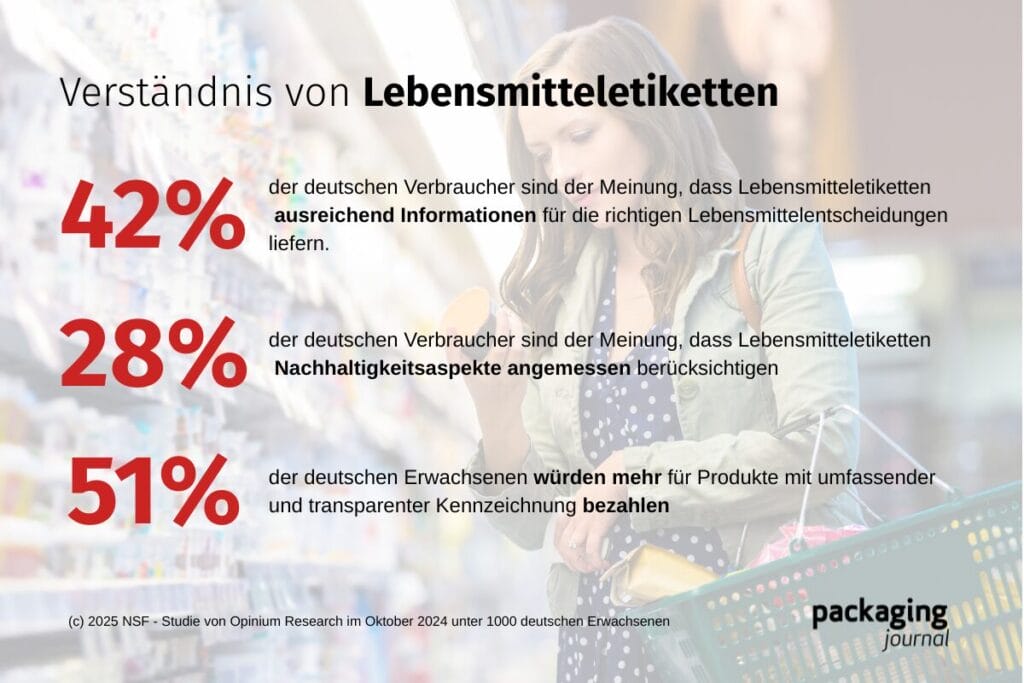
A representative study conducted by market research institute Opinium on behalf of NSF sheds light on the growing gap between consumer interest and the actual comprehensibility of food labels. Although three quarters of those surveyed stated that they regularly read labels before making a purchase, only 42 per cent felt that the information on them was sufficient to enable them to make informed decisions.
According to the study, there is a particularly strong desire for clearer information on food processing: 79 per cent of respondents are in favour of this. Labelling of allergens (78 percent), information on ethical origin (70 percent) and environmental impact (56 percent) are also high on the wish list of many consumers.

Arta Prokshi, Senior Consultant for Food Advisory and Training at NSF, sees this as a clear opportunity for the food industry. She emphasises: „If three quarters of German consumers actively read labels, but less than half find them sufficient, we see a crucial opportunity for food manufacturers to better serve their customers.“
Labelling is becoming more important - and influences willingness to pay
The study also shows that the importance of labelling is growing. 58 per cent of those surveyed stated that they pay more attention to food information today than they did five years ago. Around half would be prepared to pay an average of seven to nine per cent more for products with better labelling. However, trust in health claims varies greatly between age groups: While 58 per cent of 18 to 34-year-olds trust the relevant information on packaging, only 42 per cent of over 55-year-olds do.
The results make it clear that the desire for clear, credible and differentiated information at the point of sale is increasing - not only for consumer protection reasons, but also as a differentiating feature for brands.
The complete white paper with detailed results and recommendations for action is available from NSF on its website available.