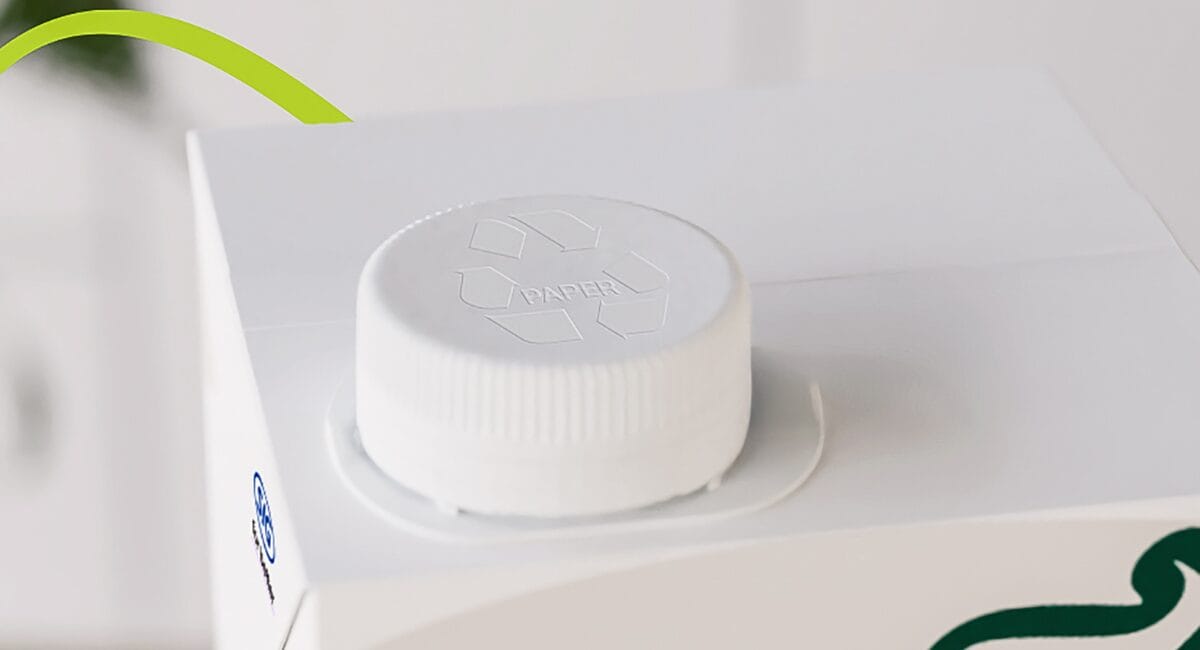
SIG and PulPac enter into a strategic partnership to unlock the potential of dry moulded fibre for the high volume production of paper-based closures.
Together, the two companies intend to work on an exclusive development programme for the creation and large-scale production of the next generation of paper-based closures for SIG's aseptic carton packs. This will bring SIG one step closer to achieving its goal of Paper share in aseptic carton packs to 90 per cent by 2030, including closure to increase. This year, SIG is aiming for an interim target of 85 per cent paper content (excluding closures).
PulPac's dry moulded fibre technology is based on the Forming dry fibre nonwovens instead of producing paper-based products from a fibre sludge. This means minimal water consumption in the moulding process and also offers other benefits, such as lower CO2 emissions compared to plastic solutions. The technology also offers unrivalled design flexibility and is designed for mass production.

"Dry moulded fibre technology is one of the most scalable fibre-based solutions on the market with great potential to drive the transition from plastic to paper-based closures. In our paper-based closure, both the base and the cap will be paper-based, further increasing the already very high paper content in our aseptic carton packs. At the same time, we want to offer consumers the same convenience and opening properties that they are used to from our existing closure solutions.“
Gavin Steiner, Chief Technology Officer at SIG
Seamless integration into existing systems
At SIG, the closures for aseptic carton packs are only applied to the closed packs after the products have been filled and after the carton packs have been securely closed in the aseptic zone of the SIG filling machines. The precise application of the closures is carried out using closure applicators developed and built by SIG. This does not interfere with the aseptic process in any way and ensures that the filled products remain securely protected. This application process after the product has been filled and the pack sealed forms the basis for a plug-and-play solution for paper-based closures, which in future can be applied to the closed packaging without changing the production process - just like plastic closures.
Source: SIG