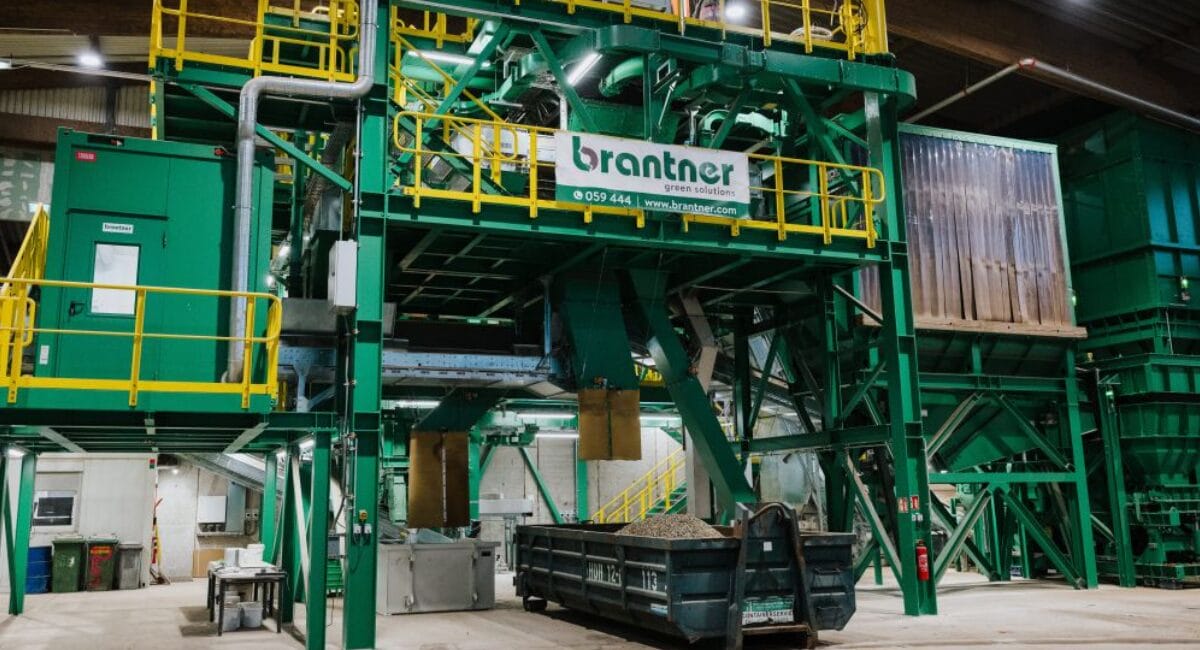
Brantner Green Solutions has commissioned a new type of recycling plant in Hohenruppersdorf (Lower Austria) that recovers glass from residual waste incineration residues with a purity level of 99.9999 per cent and returns it to the material cycle.
The plant, called Glasy, addresses a long-standing problem in waste management: in Austria, waste incineration plants produce around 600,000 tonnes of incineration residues every year, with individual fractions containing up to 30 percent glass. However, previous sorting processes yielded glass that was contaminated with metals and minerals and therefore could not be used as a secondary raw material for new packaging glass. Up to now, such quantities have mainly ended up in landfill sites.
Glass from ash for new packaging glass
The processing method that has now been introduced separates and purifies glass from incineration ash so that it can be used directly in the glass industry. According to Brantner, the Glasy plant can recover around 20,000 tonnes of glass per year from incineration residues. The sorted material is suitable for the production of packaging glass, glass beads and insulating materials such as foam glass, among other things. White cullet can be turned back into jam jars, brown cullet into beer bottles and green cullet into wine bottles.

According to the company, the use of secondary raw materials saves large quantities of primary raw materials such as quartz sand, soda and limestone, which no longer need to be mined. At the same time, the use of energy in the form of electricity and gas in the production of new glass is to be significantly reduced because higher-quality cullet can be used in the melting process. This not only reduces emissions, but also reduces the amount of waste materials sent to landfill.
Development since 2021 and realisation in own contribution
The idea for Glasy was reportedly developed at the Brantner company in 2021. In collaboration with the company's own research department, the glass industry and plant manufacturers, a process was created that was further developed in several series of tests until it was suitable for everyday use. Construction of the plant at the Hohenruppersdorf site began in spring 2025 and is now in regular operation. The project was realised in-house by Brantner Green Solutions and supported by an environmental grant from the Federal Ministry of Agriculture, Forestry, Regions and Water Management (BMLUK), which was handled by Kommunalkredit Public Consulting (KPC).
The partners whose expertise has been incorporated into the project include Austria Glas Recycling, Vienna's municipal department 48, Linz AG Abfall and Stoelzle Oberglas. Brantner sees the plant as a building block in its circular economy strategy, in which waste is increasingly viewed as a resource and is to be returned to the material cycle by means of recycling and upcycling processes.
Source: Brantner