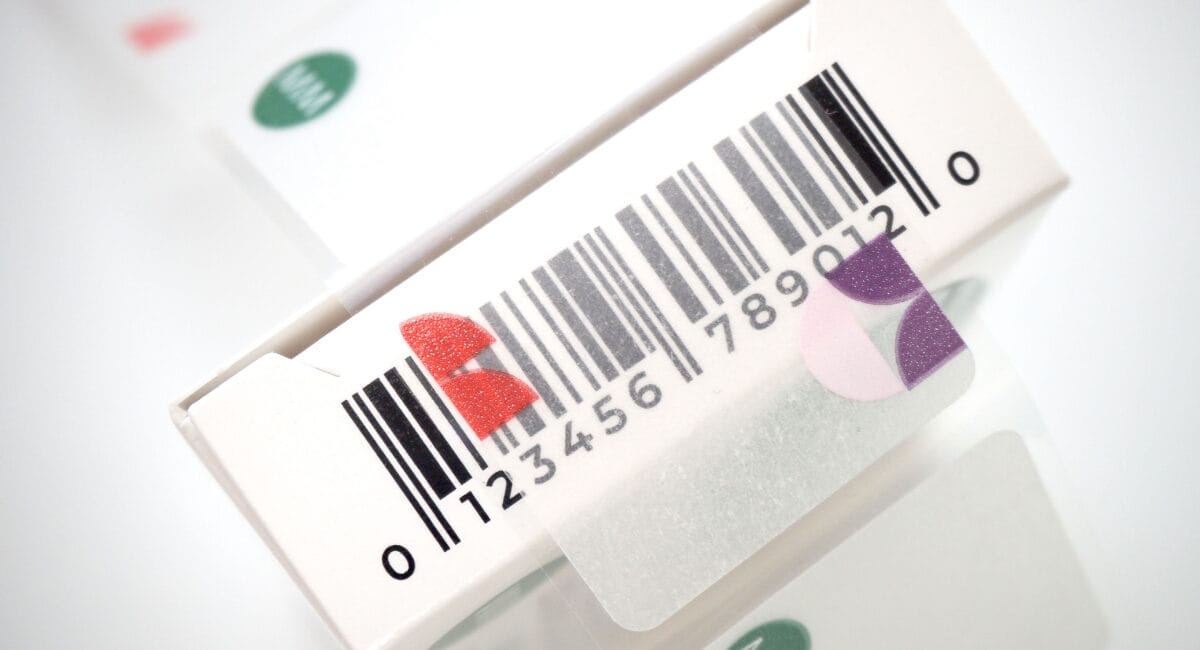
Today, the pharmaceutical industry needs to make its packaging systems more sustainable without compromising on product protection, regulatory safety or process stability. The focus here is particularly on increasing recyclability. MM Pharma & Healthcare Packaging has now developed translucent, paper-based tamper-evident labels that fulfil these requirements.
The pharmaceutical industry is under double pressure today: on the one hand, regulations such as the EU Falsified Medicines Directive and the US Drug Supply Chain Security Act demand clear, irreversible proof of tampering. On the other hand, the market, politicians and society expect convincing progress towards a circular economy and reduced environmental impact. This conflict of objectives is particularly evident in the case of tamper-evident labels, which have so far been made predominantly from plastics. Although these have proven to be reliable, process-stable and transparent, they are often at odds with companies' sustainability strategies and at the same time make it difficult to recycle paper by type.
Plastic-based seal and security labels on folding cartons offer high tear resistance and reliable performance under demanding conditions, but it is precisely these material properties that make them unsuitable for fibre recycling. The seemingly simple desire to simply replace plastic with paper turns out to be a technological challenge. On the one hand, paper must be sufficiently brittle to provide clearly visible, irreversible proof of safety when the medicine is opened. At the same time, the label must not obscure important information on the packaging and must be stable enough to be processed reliably in high-speed lines.

Paper solution combines sustainability and functionality
With this in mind, the Mayr-Melnhof Pharma & Healthcare Packaging division initiated a development that initially sounded like a classic materials project, but quickly turned out to be a complex interdisciplinary task. Research and development, quality assurance, technical customer support and engineering worked closely together to create a solution that combines sustainability and functionality rather than playing them off against each other. One of the key requirements was to identify a paper substrate that was sufficiently translucent so as not to impair the visibility of codes, logos and mandatory pharmaceutical information. Paper is traditionally opaque; finding a translucent variant was a crucial step.
At the same time, a targeted tearing behaviour had to be developed that reliably and reproducibly makes tampering attempts visible. To this end, safety break points were integrated to ensure that the label breaks apart in a controlled manner and material remains on the carton. This behaviour should occur reliably regardless of processing speed, climatic influences or cardboard surfaces. Another requirement was to formulate an adhesive that was strong enough for pharmaceutical folding cartons, but at the same time would not impair the recyclability of paper packaging. The labels also had to be easy to integrate into existing production lines, as pharmaceutical manufacturers generally do not accept additional investments or long set-up processes.
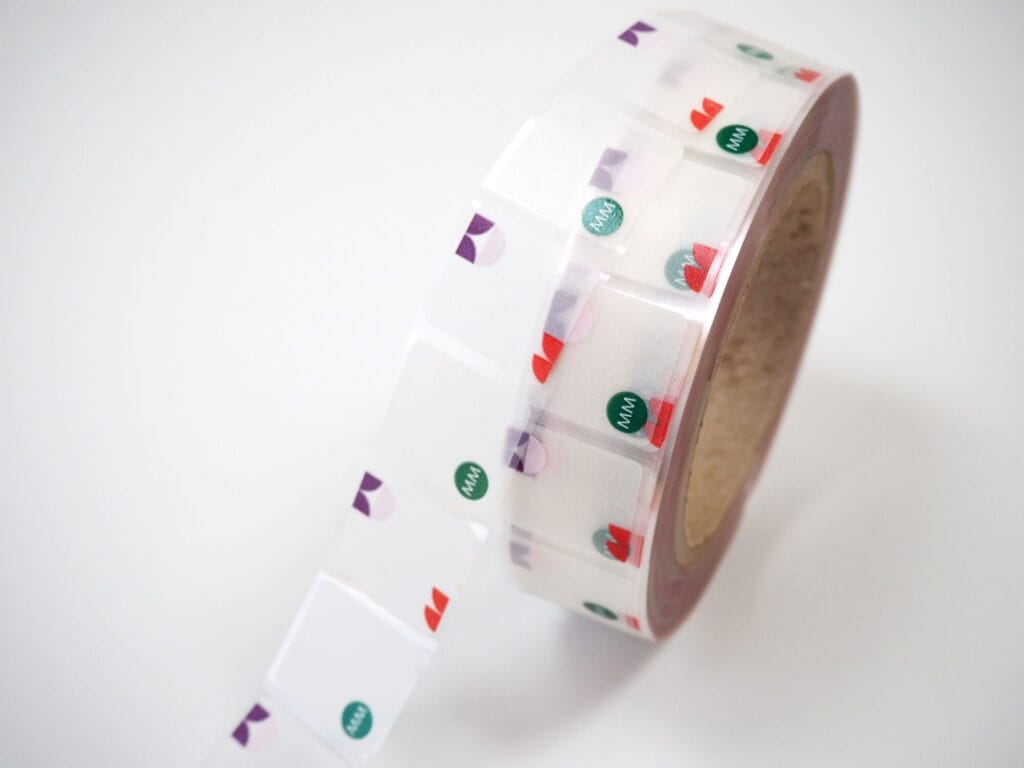
The result of this development work is a translucent, paper-based tamper-evident label that provides clear proof of opening through targeted frangibility and at the same time supports the recyclability of folding cartons. Thanks to its material properties, the design of the packaging remains completely visible, which is a decisive advantage in the pharmaceutical environment. Process capability was also a key criterion from the outset. The labels can be processed on existing labelling systems and are designed for high cycle rates without the line parameters having to be adjusted to a critical extent.
Easy changeover for customers
The final validation was not only carried out in the laboratory, but also in real production environments together with pharmaceutical partners from MM Pharma & Healthcare Packaging. Adhesion, frangibility, machine capability and print image stability were tested under real-life conditions. The technical service team accompanies this introduction with „walk the line“ support, which ensures that the transition to paper-based tamper-evident labels runs smoothly for customers and that critical factors such as quality control or compliance requirements are taken into account at every stage of the project.
Including the entire value chain
The paper-based solution is an important step towards consistently sustainable pharmaceutical packaging. It allows manufacturers to reduce plastic content, implement recyclable mono-material concepts and at the same time fulfil the highest safety, product protection and regulatory requirements. This eliminates the previously often necessary compromise between sustainability and compliance. The development also shows how strong the need is for solutions that incorporate the entire value chain. Only when material manufacturers, packaging experts and pharmaceutical companies work closely together will innovations emerge that are not only technically interesting but can actually be used on an industrial scale.
At the same time, paper-based tamper-evident technology is not the end of the line, but the beginning. With increasing regulatory and social pressure on sustainable packaging, the demand for such solutions will continue to rise. In the future, paper-based labels can be combined with digital security features, further optimised for climate-stable qualities or enhanced with additional physical security mechanisms. The development makes it clear that paper today offers functional possibilities that were hardly conceivable just a few years ago.