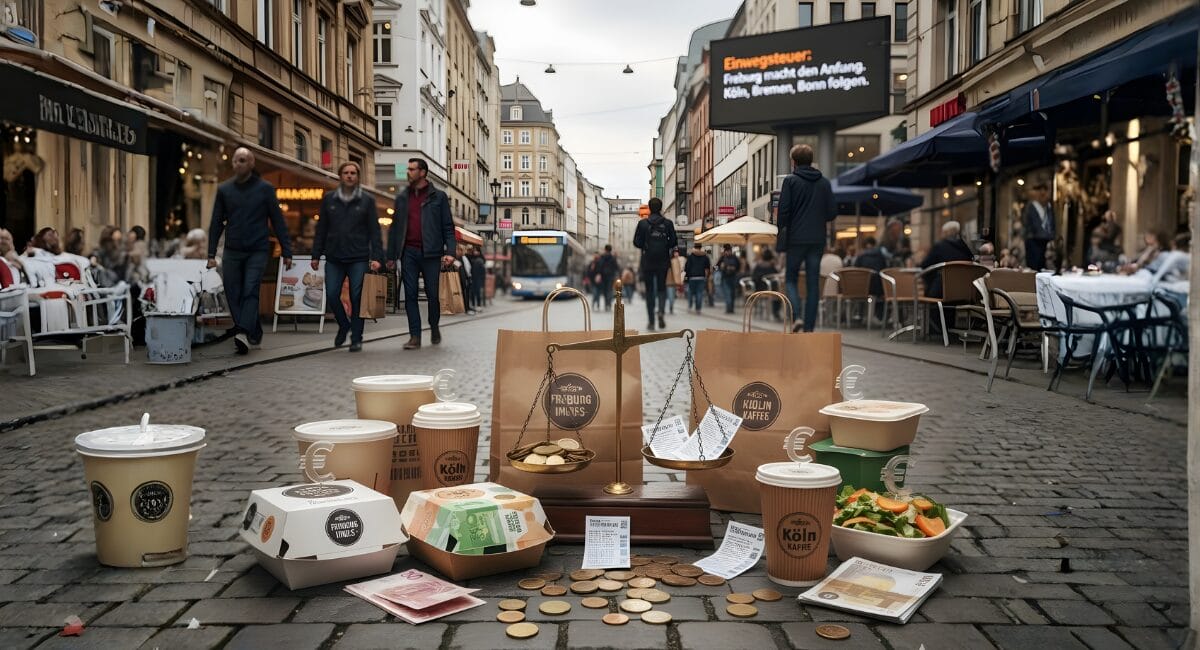
A survey by Deutsche Umwelthilfe shows: More than 150 cities are considering or planning a packaging tax, i.e. a municipal levy on disposable packaging. A signal with risks for the economy.
More and more cities in Germany are thinking about introducing a tax on disposable packaging - especially in the takeaway sector. This is the result of a recent survey by Deutsche Umwelthilfe (DUH). According to DUH, a total of 155 cities have expressed an interest in levying such a packaging tax. Freiburg wants to implement it as early as 1 January 2026, while other cities such as Cologne, Bremen and Bonn have made initial decisions. This raises the question for packaging companies and manufacturers: are we facing a new wave of special municipal taxes - with additional bureaucratic and financial burdens?
A patchwork of local regulations
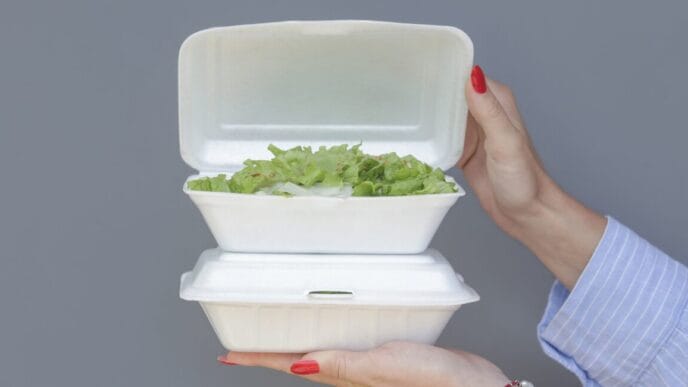
According to the DUH, 42 cities are currently in the process of concrete examination and 21 are discussing corresponding applications. A further 85 municipalities have expressed a fundamental interest without having already initiated procedures. Tübingen and Constance are regarded as pioneers - the packaging tax already exists there. It typically applies to disposable packaging that arises from the sale of takeaway food and drinks, e.g. cups, food trays or disposable cutlery.

Even if the measures are primarily aimed at catering disposable packaging, there is growing concern that such regulations could extend to other product segments in the future or include other types of packaging - for example, if local authorities define or expand their own types of tax. This would lead to a difficult-to-calculate regulatory environment for packaging companies.
Industry warns of additional burden
The packaging industry views this development with scepticism. There are already complex obligations to licence and take back packaging in accordance with the Packaging Act. Special regional taxes could not only undermine the system of nationwide recycling, but also lead to multiple burdens.
There is also the question of whether local authorities use the tax exclusively as an ecological lever or also for budget financing. According to DUH, Tübingen, for example, reported revenue of around one million euros in the year of introduction - a multiple of the administrative costs. .
DUH favours reusable packaging - but calls for legal clarity
Environmental Action Germany, which initiated the survey, is expressly in favour of combining tax measures with the expansion of municipal reusable infrastructure. The organisation is calling on Federal Environment Minister Carsten Schneider (SPD) to provide a binding support mechanism for reusable packaging as part of the upcoming amendment to the Packaging Act.
However, DUH is also seeing political headwinds: Bavaria has announced that it will no longer allow municipal packaging taxes from January 2026. DUH sharply criticises this - not least because Bavarian cities had also signalled their interest in the tax.
Unclear situation - need for action for companies
The increasing number of initiatives at local authority level show just how politicised the issue of single-use packaging is. Packaging manufacturers and filling companies should follow developments closely - especially where they are active in the takeaway, food service or to-go packaging sectors. Without standardised national regulations, there is a risk of a patchwork of local requirements, which would make both planning and competition in the sector more difficult.