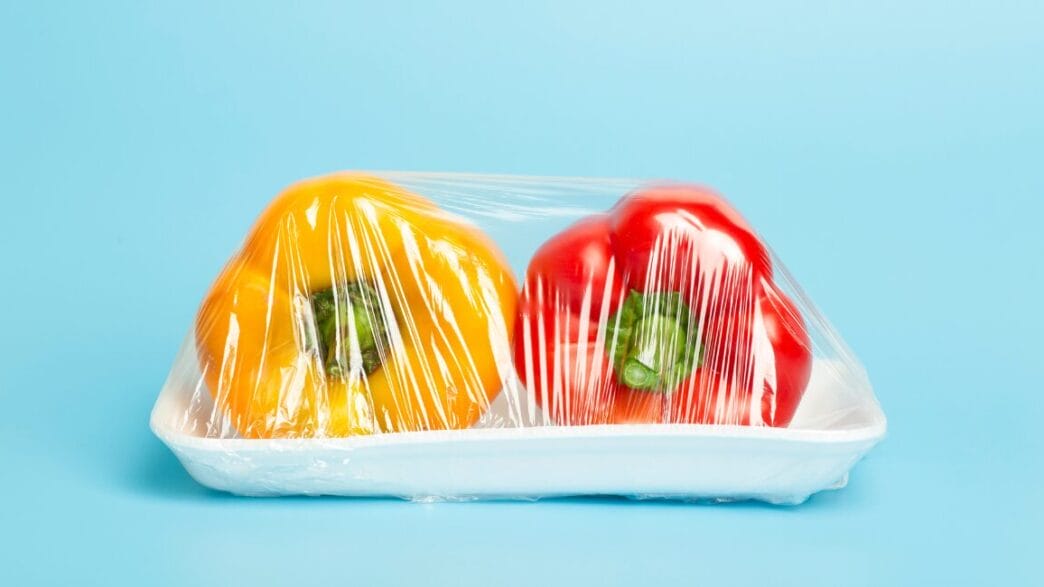
The European Food Safety Authority (EFSA) had called on companies, authorities and research organisations to submit data on the packaging of fresh, unprocessed fruit and vegetables. The deadline for participation is now 30 January 2026. The background to this is the planned implementation of EU Regulation 2025/40 on packaging and packaging waste, which provides for a ban on single-use plastic packaging for pre-packaged fresh products weighing less than 1.5 kilograms. The results are to be incorporated into future European Commission guidelines.
The EFSA was commissioned by the European Commission to draw up a scientific opinion, which is intended in particular to examine exceptions to the planned packaging ban. The focus is on fresh, unprocessed fruit, vegetables and herbs that are packaged in a normal atmosphere and not in a modified atmosphere. Paper-based packaging with a plastic content of more than five per cent is also covered by the regulation.
Focus on microbiological safety and quality
The aim of the data collection is to assess the potential impact of eliminating single-use plastic packaging on the microbiological safety and quality of products. In particular, EFSA is analysing the risks of cross-contamination, the survival and growth of food-borne pathogens and spoilage organisms. Different packaging scenarios in distribution and retail are compared, including plastic packaging, alternative materials such as wood or cardboard packaging with a low plastic content and the complete elimination of packaging.

If this reveals changes in consumer exposure to pathogens or effects on the shelf life and quality of the products, EFSA wants to identify and prioritise the underlying risk factors.
Wanted: Practical data from the supply chain
The respondents included food companies, national authorities, research institutes and universities. Data was requested on the form in which fresh fruit and vegetables are commonly offered today, the reasons for portion packaging, the packaging systems used and the possible disadvantages of alternative materials compared to plastic. Equally relevant was information on handling and hygiene measures along the supply chain and on product-specific microbiological risks.
The deadline for participation was 30 January 2026, and EFSA emphasises that the data submitted will be taken into account for the subsequent assessment without predetermination and will form the basis for further regulatory design at EU level.
Source: EFSA