The demands placed on food packaging are high: maximum product protection with minimum use of materials, recyclability despite high hygiene requirements, regulatory compliance with simultaneous cost pressure. But especially in the food sector, the right packaging determines shelf life, product safety and transportability - and helps to reduce food waste.
According to the UN Environment Programme (UNEP) in the „Food Waste Index Report 2024“, around 1.05 billion tonnes of food are wasted worldwide every year. Between eight and ten per cent of global greenhouse gas emissions are associated with food that is never consumed. Initiatives such as Save Food, founded by FAO, Messe Düsseldorf and interpack, are therefore increasingly focussing on the importance of efficient packaging solutions.
Recyclates in contact with food
The European packaging regulation PPWR further increases the requirements. It provides for binding recycling quotas, the increased use of recyclates and a reduction in packaging waste. The use of recyclates in direct contact with food is particularly demanding.

For the first time, a European recycling plant has received RecyClass certification for sorting food-grade plastics. Swedish Plastic Recycling sorts PET bottles, PET trays and PS packaging from separate household collections in a fully traceable manner. At the same time, the CRISP research project is investigating the food-grade processing of PE and PP.
Material manufacturers are also investing in certified solutions. WIS Kunststoffe offers rPE and rPP materials with FDA approval for direct food contact. The materials already fulfil the PPWR requirements for 2030 and are intended to give packaging manufacturers planning security.
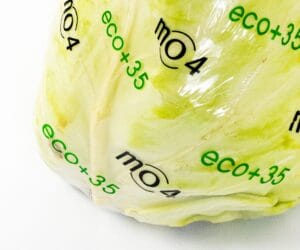
Mopack is pursuing a different technological approach. The company uses 35 per cent chemically recycled PCR for its polyolefin fine shrink films in the eco+35 series. The material is molecularly purified and re-polymerised, which, according to the company, enables high homogeneity and stable machinability. It has been DEKRA-approved for direct food contact since March 2025.
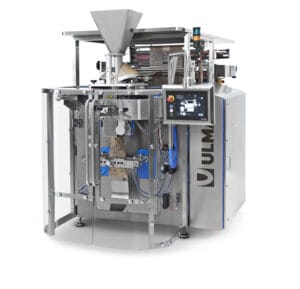
Machine manufacturers are increasingly focussing their systems on recyclable monomaterials. Ulma Packaging uses the VTC 800 vertical high-performance machine to pack cut salads and vegetable mixes in recyclable mono-materials. Multivac also combines sustainable packaging solutions with a high level of automation. A new traysealer line for ready meals, for example, seals cardboard trays with thin, recyclable film in a modified atmosphere. The line is complemented by AI-supported inspection systems, labelling control and cobots for automatic stacking.
Automation as an efficiency driver
As the variety of products increases, so does the level of automation. Stäubli Robotics offers a broad portfolio of HE (Humid Environment) robots that are modified to work reliably even in harsh environments. In meat processing, for example, TX2 robots cut products using a water jet. Vision systems also enable the gentle, high-speed handling of delicate food products.
Ishida recently expanded its range with the acquisition of Swedish company RobotGrader AB to include robot-assisted weighing, sorting and packaging systems. This will benefit processors of meat, poultry and fish, as well as manufacturers of protein products in particular, who can now utilise smart and automated solutions for the precise packaging of their fresh products in trays.
Focus on fibre-based alternatives
At the same time, paper and fibre-based solutions are gaining in importance. Sappi Europe is developing recyclable high-barrier papers with oxygen, grease and water vapour barriers. The heat-sealable Guard Pro OHS is suitable for flow wraps, sachets, pillow bags and doypacks, while Guard Pro OMH has been designed for cold seal applications.
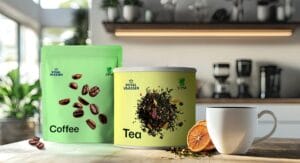
UPM Specialty Papers and Royal Vaassen are replacing aluminium laminates with fibre-based barrier papers for coffee or chocolate packaging. Heidelberg is also integrating barrier coatings into the flexographic printing process with register accuracy in order to apply material only where it is functionally required.
Adhesives as a building block for sustainability
Even seemingly downstream components are becoming a sustainability factor. Jowat uses energy-efficient hot melt adhesives to reduce the energy required for carton sealing in the food and frozen food industries. Thanks to its low melting temperature, a new Jowatherm adhesive is suitable for temperature-sensitive products such as chocolate, while another has been developed for use in the frozen food sector, for example for pizza, ready meals or ice cream packaging. A bio-based variant based on by-products from paper production is also available.
Note: This article was written on the basis of a technical article produced by packaging journal for free use by interested media on behalf of interpack 2026. You can find the original article here. You can find out more about packaging solutions for food live at interpack 2026 from 7 to 13 May in Düsseldorf.