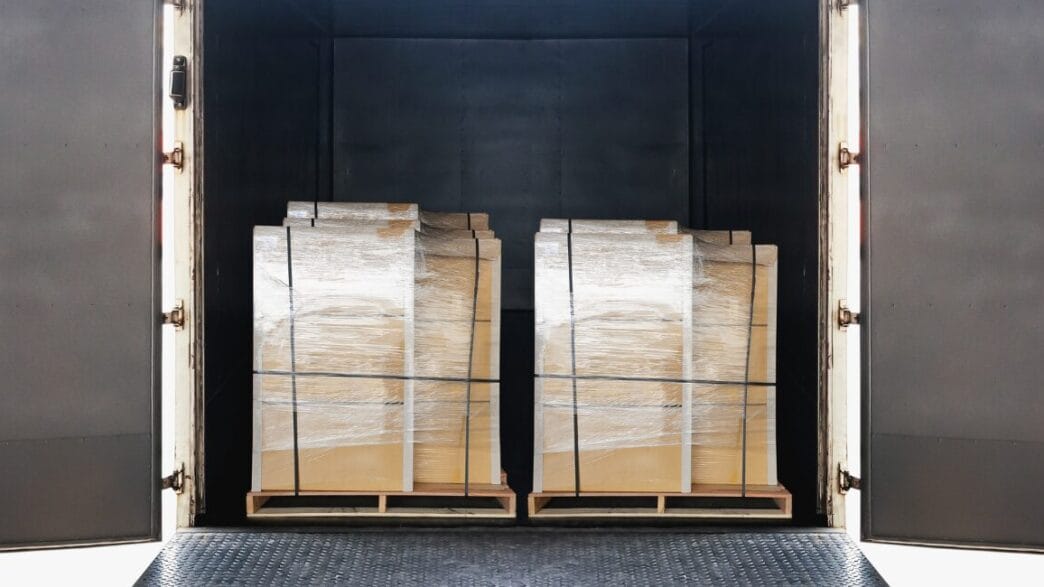
On 25 February 2026, the European Commission adopted a decision on the Packaging Regulation (EU) 2025/40: This exempts companies that use pallet wrapping and strapping from the obligation to carry 100 per cent of this transport packaging in reusable systems. The decision supplements the requirements of the new EU packaging regulation PPWR.
Regulation (EU) 2025/40 provides for binding reuse targets for certain transport packaging from 2030. In principle, a 100 per cent reusable target applies to internal transport and transport between affiliated companies or within a member state. This includes pallets, crates, trays and flexible formats such as film and strapping.
High conversion costs as justification
According to the Commission's assessment, the complete switch to reusable pallet films and straps can lead to disproportionately high customisation costs. Although reusable solutions are available on the market, their widespread use requires high initial investments in new packaging lines and automated systems. These technologies are not yet sufficiently developed.

In the explanatory memorandum, the Commission literally points out that the switch to 100 per cent reusable pallet wrapping requires „high initial investments to redesign packaging lines“ and that the changeover could „disrupt supply chains and lead to costs to the economic operators“.
Derogation from Article 29(2) and (3)
Specifically, economic operators who use pallet wrapping or strapping to stabilise and protect goods on pallets are exempted from the 100 percent reuse requirements under Article 29(2) and (3).
This means that the strict reuse quotas for internal and national transport do not apply to these specific packaging formats. However, the general reuse targets for other transport packaging remain in place.
Source: EU Commission