The results of a representative survey by the German Packaging Institute (dvi) show that more than a third of the population repeatedly fails to recycle packaging. The situation is particularly dramatic among 16 to 34-year-olds - almost half of them.
To mark the 3rd Packaging Day in Germany and Austria on 7 June 2017, tns-infratest surveyed people in Germany on packaging and recycling on behalf of the dvi. The survey asked about the most important tasks of packaging, important solutions for the near future and how consumers in Germany feel about recycling used packaging.
Cycle in the cellar: Younger people in particular fail to recycle
Currently over 70 % of all used packaging into material or mechanical recycling, where they become the starting material for new packaging or other products. „With its high recycling rates, Germany, which is poor in raw materials, secures valuable secondary raw materials and has held the title of world recycling champion for years,“ says Thomas Reiner, CEO of the dvi. „The question is: for how much longer?“

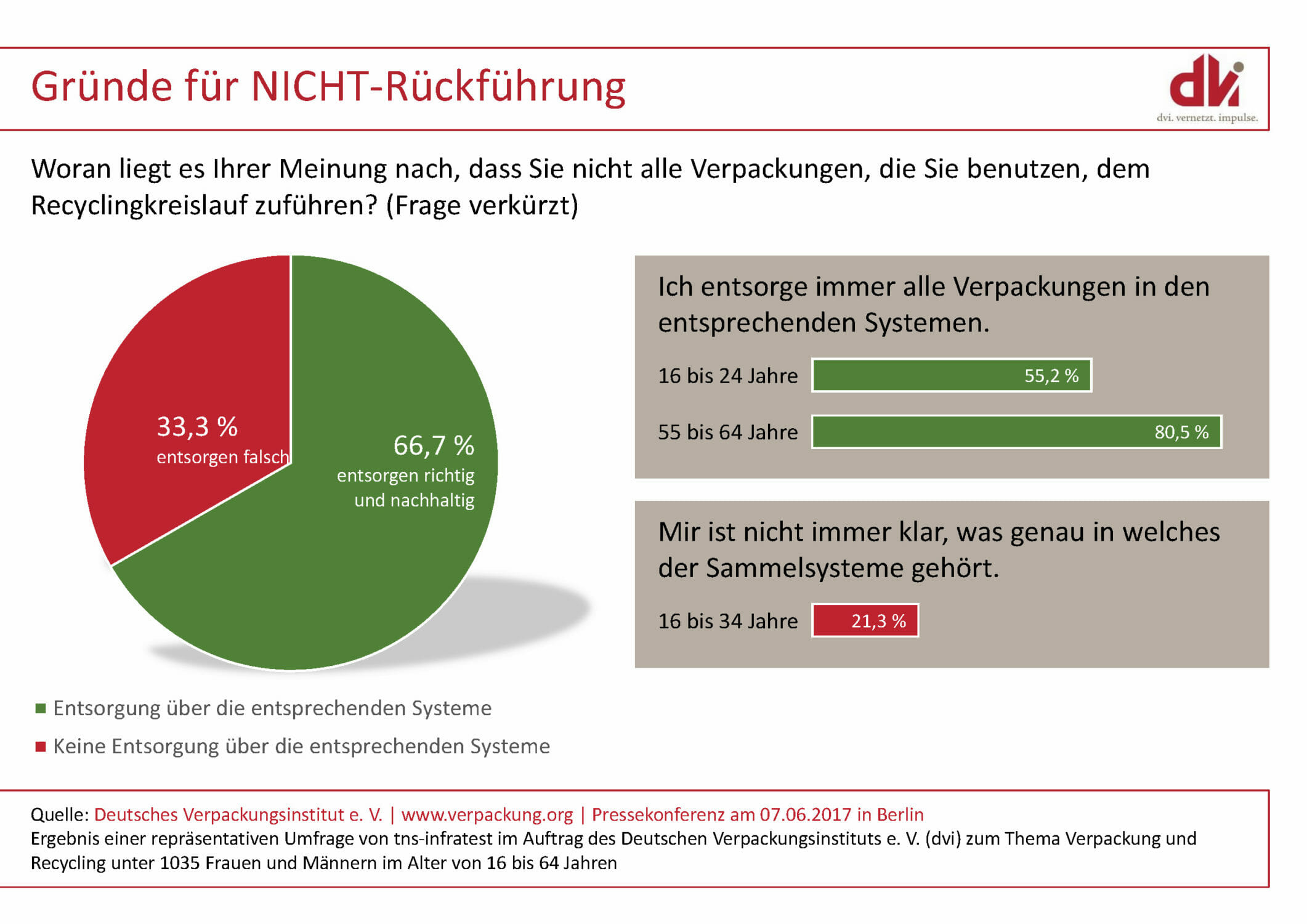
As the dvi survey shows, more than one in three Germans (33.3 %) repeatedly fail to recycle. Even if the reasons vary, the dvi believes that „the aim must be to increase the proportion of those who dispose of all used packaging correctly to over 80 %. Otherwise, too much valuable packaging will be incinerated with the residual waste, become a disruptive factor for recycling material flows or pollute the environment,“ says Reiner. The dvi CEO is particularly concerned about the results for 16-34-year-olds, where the rate is only 55.2 %. This seems to reveal massive basic deficits. „A good quarter of those born in 1983 or later have a major lack of information and knowledge about how and where used packaging is collected. The educational work of the 1990s on waste separation has obviously not reached this generation. There is an urgent need for action here.“
According to Reiner, the dvi has been involved in the area of young professionals for some time with a clear Focus on sustainability and recycling. But recycling only works as a team of companies and consumers. That's why the dvi will also increasingly address the general public - not least with the annual Packaging Day. „Packaging protects against many things, but not against the personal responsibility of each individual to handle it correctly. In a free society, however, personal responsibility requires the necessary knowledge and the necessary competence to act. If this is lacking among younger people in particular, this is a warning sign that we must take seriously,“ says Reiner, who calls for a joint effort by all multipliers and stakeholders.
Packaging protects!
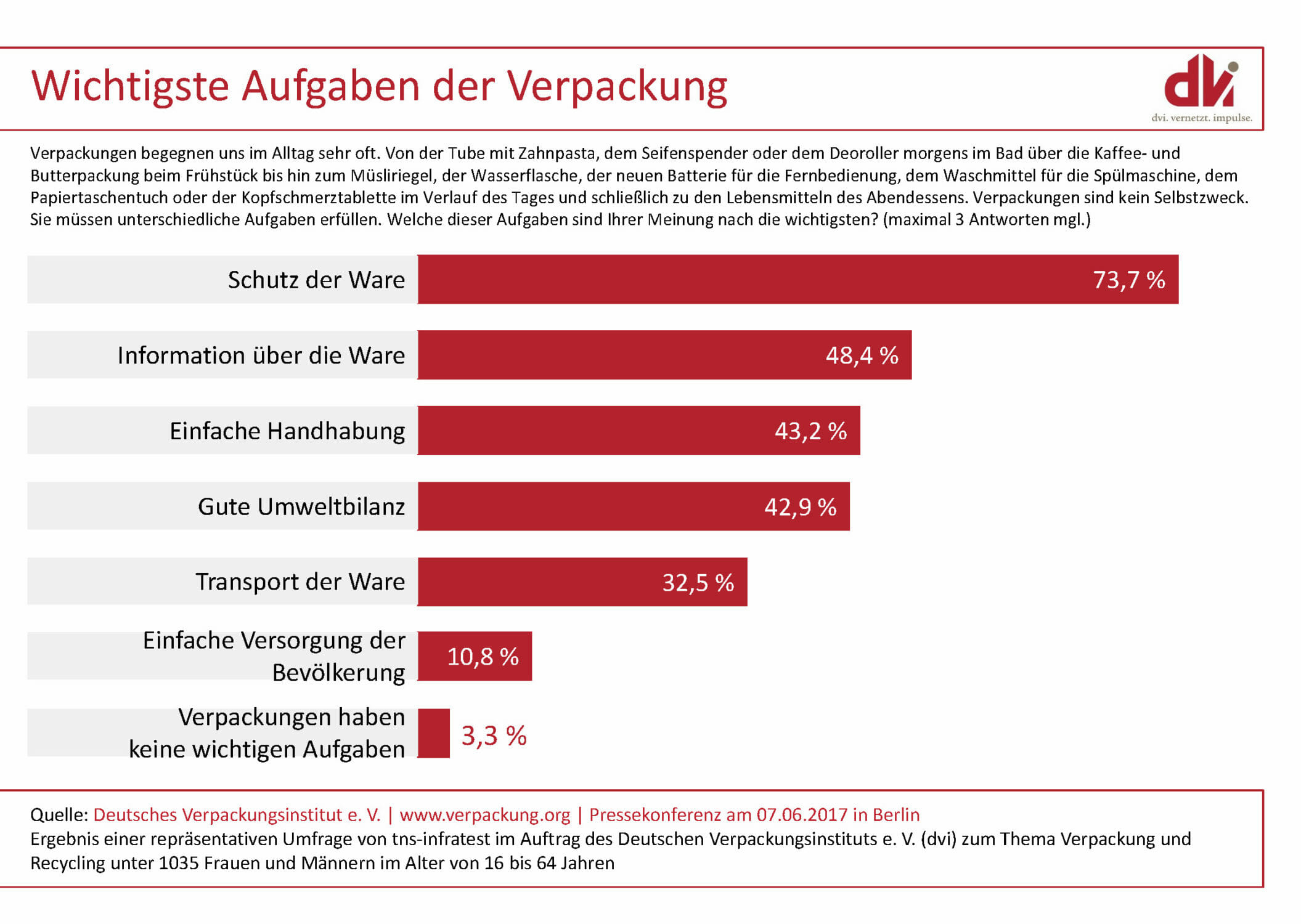
In the survey, over 96 % of the population rated Central functions of the packaginggs such as product protection, easy handling, sustainability and consumer information as important or very important. „In fact, packaging is as fundamental as roads and electricity. It is an indispensable part of the infrastructure. Our progress in terms of hygiene, medical care, increasing life expectancy, but also prosperity and quality of life would not be possible without packaging,“ says Reiner.
Intelligent and active protection for the future
Intelligent and/or active packaging is viewed positively by the population and associated with important solutions. What is particularly important for the respondents are innovative functions for preserving Freshness and quality and to the Protection against counterfeiting. „Consumers have a keen sense of the dangers and risks that counterfeit products pose,“ confirms Reiner. „After all, over a quarter of counterfeits are everyday products such as medicines or care products!“ From February 2019, all prescription medicines must be labelled with individual identification features and other anti-tampering devices, such as first-opening protection and tracking options. „Packaging manufacturers are already supporting the fight against counterfeit products with new technologies such as holograms, synthetic material DNA, coded labels, UV inks and RFID chips. And that is certainly not the end of the story,“ Thomas Reiner is convinced.