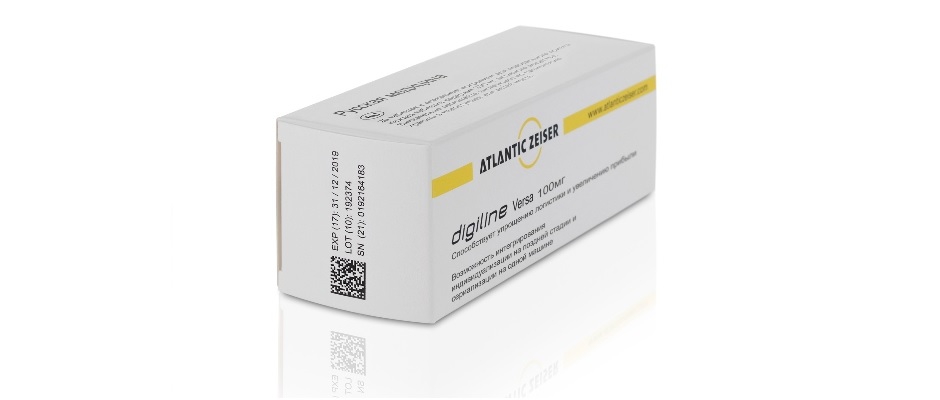
Russia is planning a very comprehensive track & trace approach. It is designed to continuously and seamlessly record the path of medicines from the manufacturer to the end consumer. This goes so far that the authorities can call up information on the storage time of those medicines that are currently in circulation.
What sets Russia apart from other markets are two things: the wealth of data that is collected and, in particular, the declared aim of being able to analyse this data according to very different criteria or to make it available to market participants according to certain criteria. Basically, it is an instrument for intensive Observation and Evaluation of the complete pharmaceutical market. Its main aim is to prevent counterfeit medicines from entering the logistics and supply chains. According to the information available, a key element is to be able to control the prices of important and essential medicines. For example, end consumers should be able to compare the price they have paid with the official price limit. But the competent authorities will also be able to glean a great deal of information from the data.
Software specialist Stefan Öing is Head of Track & Trace at Atlantic Zeiser. He explains which solutions meet the special challenges and what this means in practice.

pj: Mr Öing, the extremely comprehensive approach that Russia has envisaged for the tracing of medicines will go far beyond what is envisaged by the EU as a „rule“ ...
Stefan Öing: That's right, the Russian concept, which is known by its abbreviation FSIS DCM will even eclipse what Brazil had originally planned but has not yet been able to fully realise.
pj: And what is so special about it?
Stefan Öing: This goes so far that the authorities can call up available information on the storage time of those medicines that are currently in circulation. Or that they can trace exactly which medicines were withdrawn from circulation when, where and in what quantity due to quality problems, incorrect authorisation or suspected counterfeiting.
pj: Which identification technology should be used?
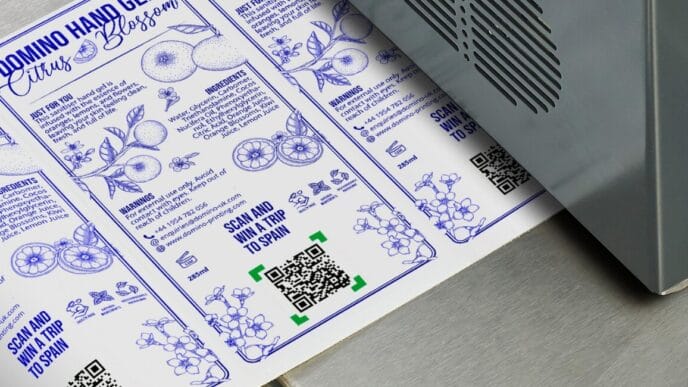
Stefan Öing: To the best of our knowledge, machine-readable serialisation requires a Data matrix code are used. This is evident from several statements and presentations on this topic, especially those distributed by official Russian organisations. In addition, the Aggregation has a key function. Without aggregation, it will not be possible to realise the comprehensive track & trace approach.
pj: What time frame is envisaged for implementation?
Stefan Öing: The Russian authorities are already aware that they want to set up a very complex system. This is why initially only medicines for seven particularly high-volume disease types are affected. The deadline for this is 1 January 2018. One year later, the FSIS DCM will then generally apply to „particularly important“ medicines. Another year later, i.e. from 1 January 2020, all medicinal products for human use must be serialised accordingly. Pilot projects are currently underway involving 16 pharmaceutical manufacturers with a total of 30 medicines.
pj: Then the solutions must also work in practice by the turn of the year.
Stefan Oeing: That is true. The deadlines are a serious challenge. Representatives of the Russian authorities have already warned pharmaceutical companies not to deliberately delay serialisation and GxP projects so that they can then say that there is not enough time. In this country there is a High expectations, which should not be underestimated. And the requirements cannot simply be met by equipping the packaging lines with additional devices. This is about the development and connection of entire information systems.
[infotext icon]There are also Tamper-evident precautions play a role: There is hardly any mention of this in official documents or presentations at the moment. But there are many indications that provisions on proof of originality will be part of the final regulations. The only question will probably be whether cheaper medicines will be excluded. And if this is the case, where exactly the price limit will be[/infotext].pj: How is Atlantic Zeiser prepared for the Russian challenges?
Stefan Oeing: In order to fulfil the very extensive requirements in Russia, a great deal depends on the Flexibility of the software on. We designed our MEDTRACKER from the outset in such a way that it can also cover new, currently unknown and complex serialisation regulations. The requirements in Russia are no exception. The extensive interface library that characterises the solution also benefits us when it comes to linking very different databases, institutions, authorities and manufacturers in one country. Of course, you shouldn't underestimate the time required to configure the interfaces in individual cases. Fine-tuning is necessary.
pj: What is the situation on the hardware side?
Stefan Oeing: We have developed the MEDTRACKER software architecture in such a way that it is compatible with existing, even heterogeneous third-party hardware equipment under certain conditions. It is capable of directly controlling hardware components such as cameras, printing systems or sensors, etc. There is therefore no need to invest in new hardware if the existing equipment can basically fulfil the requirements.
pj: But what do you recommend if a Track & Trace module actually needs to be integrated?
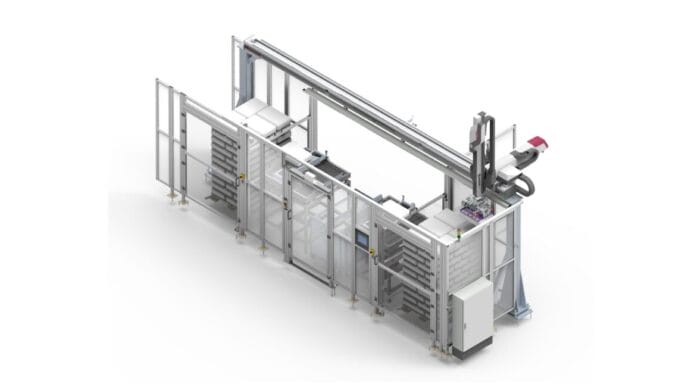
Stefan Öing: We can plan and realise a complete software and hardware solution from a single source. At interpack, for example, we presented a new Track & Trace module that can serialise, checkweigh and tamper-evident seal in a very small space if required - naturally with a built-in interface to MEDTRACKER. This means that the Russian challenge can also be reliably mastered.