The prices of raw materials for plastics production have risen dramatically in recent months. Experts have reported that the supply situation is extremely difficult and that demand is currently clearly greater than the shortage of supply. packaging journal interviewed Klaus Jahn, spokesman of the board of the Industrieverband Papier- und Folienverpackung e. V. (IPV).
The manufacturers of flexible packaging such as bags, pouches, carrier bags and films, which are organised in the Industrieverband Papier- und Folienverpackung e. V. (IPV), recorded an increase in sales last year. Slight increase in sales. The member companies of the IPV see the following as a challenge Uncertain development of material prices, especially in the film sector. In an interview with packaging journal, IPV board spokesman Klaus Jahn explains the causes of the situation and outlines what else is driving manufacturers.

pj: Mr Jahn, what are the reasons for the shortage of supply after prices initially fell at the beginning of the year?

Klaus Jahn: Since March 2015, more and more new Force majeure messages of the few European plastics producers has led to an extreme shortage of raw materials. Delivery quantities that have already been confirmed are being cancelled at short notice. The accumulation of these reports is very unusual and difficult for us to explain. The weak euro is exacerbating the situation and the resulting weaker margins for some raw material manufacturers are also likely to be a reason for the cancellations. It makes Exports of plastic raw materials outside the eurozone attractive, while fewer imported goods are coming to Europe. Small and medium-sized companies are particularly hard hit.
pj: What impact do you think this will have on the production and operating results of your member companies?
Klaus Jahn: If the shortage in raw material prices continues, companies will be unable to fulfil their obligations due to a lack of materials. shut down their production which has already happened in some cases. This will inevitably lead to a decline in sales and earnings. The earnings situation has already deteriorated for many companies, as the dramatic increases in raw material prices of up to 50 per cent often cannot be passed on in a timely manner.
pj: You speak of a significant change in the image of carrier bags to a highly efficient advertising medium with cult status. How does the discussion about banning and possibly labelling plastic carrier bags affect the situation?
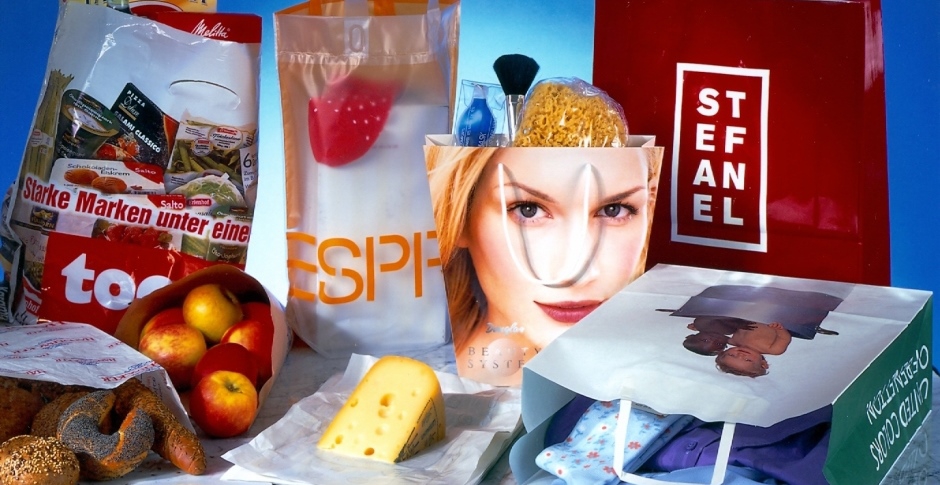
Klaus Jahn: Plastic carrier bags are not an environmental problem in Germany. They are collected and recycled via the dual systems. In many countries with non-functioning collection and recycling systems, the situation is of course different. In Germany, the carrier bag is wrongly seen as a symbol of a throwaway society. In fact, the carrier bag is used on average four to five times (according to a representative survey by TNS Emnid) before it is later collected and recycled.
The emotionally charged debate has already made consumers very insecure and consumption is falling. Politicians should leave the economy room for manoeuvre for voluntary solutions. Even without statutory requirements, Germany has a per capita consumption of carrier bags that is already below the limit of 90 bags planned for 2019.
pj: What tasks do you see for the responsible political representatives?
Klaus Jahn: We are in dialogue with the parties involved. We expect politicians not to engage in symbolic politics, but to recognise that Germany is a world leader in the collection and recycling of packaging. And without pointing a moral finger: Improper disposal (e.g. in nature) is not the responsibility of the manufacturers. Consumer education and comprehensive littering systems in cities or on motorways are certainly also part of the equation when we talk about a better „value economy".toffgesellschaft“. A campaign on the more careful handling of „Secondary raw materials“ would be welcome at any time. A motto „Safe the waste“ - Our association will support the project with ideas and content at any time.
pj: The topic of sustainability is once again a major concern for manufacturers of flexible packaging in 2015. How do they want to score points with customers and consumers?
Klaus Jahn: We want to offer the consumer packaging that first and foremost protects the product - in our industry often the food - and ensures that it arrives intact where it is supposed to be. Because only if the packaging fulfils this purpose is it sustainable and contributes to reducing the consumption of raw materials and thus to lowering emissions. The companies representing our association also produce packaging from very thin, lightweight materials - largely from renewable raw materials.
The recyclability of the raw and auxiliary materials used is already taken into account when designing the packaging. Our production processes are also organised in such a way that energy consumption is low and air and water pollution is minimised. We are constantly working on further improvements to our processes, because only companies that produce efficiently can maintain their marketability. At the same time, the protection, storage, transport and communication functions of packaging demanded by the market must never be ignored. We are working to achieve both goals - Sustainability and efficiency - meaningfully.
pj: What are the differences in packaging materials?
Klaus Jahn: Of course, there are differences between packaging materials such as paper and plastic. As a packaging material-neutral association, the IPV sees sensible areas of application for each material. However, we strictly reject the sometimes very unobjective defamation of plastic materials in packaging production. Many everyday products - whether food or non-food - would not even be available at current prices or at certain times if there were no plastic packaging developed specifically for this purpose.
Which material is selected in each individual case must be measured and decided according to the product and the respective requirements. In many cases, combinations of both materials are the first choice. Research is currently working intensively on substitution solutions and the manufacturers of flexible packaging will leave no stone unturned in their endeavours to offer contemporary packaging concepts in line with market requirements.