Digital technologies for the PoS of tomorrow are presented in the STI Group's „Inspiration Store“ in Lauterbach. Concepts that offer shoppers, brand owners and retailers added value are successful. Whether a personalised approach, a multi-sensory brand experience or a feedback option: digital technologies ensure interaction.
The big advantage in bricks-and-mortar retail is that customers are addressed and advised individually by sales staff. Digital signage applications do not utilise their full potential in addressing customers with their general messages. Intelligent displays, on the other hand, can do more: they offer „interactive infotainment“Thanks to artificial intelligence, the software used in the display recognises the age, gender and mood of the viewer and automatically displays the appropriate information and product messages.
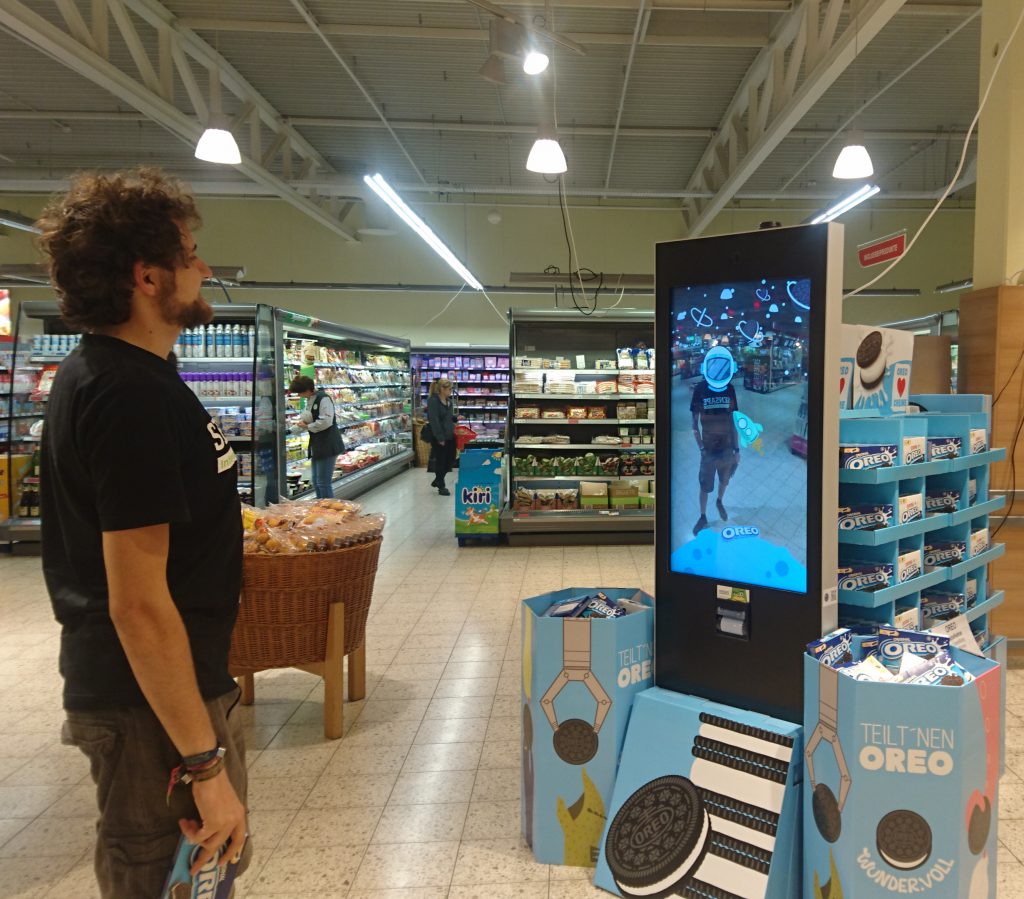
An installation is currently in use for Oreo that prompts shoppers to take a packet of biscuits from the display placed next to the information centre. Rewarded It is presented with a coupon, a recipe or an augmented reality motif from the world of Oreo. The content adapts dynamically depending on who is standing in front of the display.

Product evaluation on the shelf
Reviews from other consumers about their experiences with products are important to consumers in the selection and purchasing process. That Customer ratings The fact that the Internet is the most important purchasing impulse for Germans is confirmed by a recent GfK survey commissioned by the Cologne-based local marketing company Greven Medien. Up to now, these reviews have only taken place on the Internet. But now brands in the USA can join the Customer judgement also Directly on the shelf by „The Like Machine“ use. The mini-rating tool encourages consumers to „like“ the product (by pressing the corresponding button on the device). It is placed directly next to the product and displays the total number of positive reviews, which increase consumer confidence in obviously popular products.
[infotext icon]However, campaigns do not work for all products and not for all target groups. „The brand conducts the campaign orchestra, but the target group sets the tone Frank Rehme, PoS evangelist and former head of the Metro Group Future Store Initiative, visualises the challenge for successful digital PoS campaigns.Virtual instore concepts
Augmented reality applications that link the real world with the virtual world have been around for some time. The success of Pokémon Go has brought them to the forefront of our minds. Fortunately, this technology offers far more possibilities than just hunting virtual monsters. For example, a real-life trading environment and a Virtual display pattern link. When developing displays and packaging, the STI Group uses virtual placement on the shelf or in the retail space to support the sales teams of the branded goods industry in their annual and placement discussions.
Content Bowl and Co.
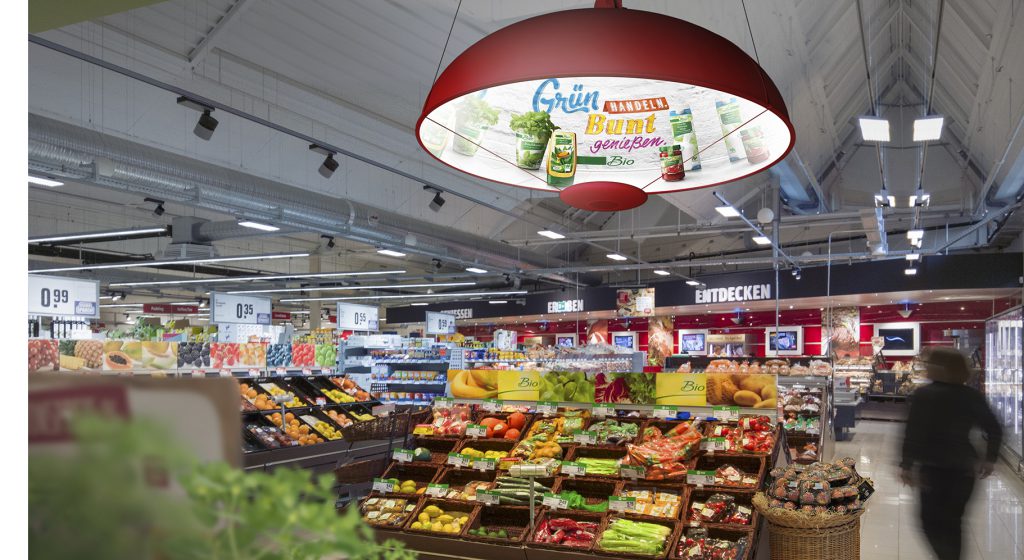
The AUMA 360° Content Bowl gives the shopper in the store a multisensory brand world with film, music and fragrance. It draws the shopper's attention upwards - to the shop ceiling, which was previously virgin in terms of marketing technology. When shoppers enter a defined area near the digital entertainment dome, they are immersed in a multi-sensory brand world.
Also in the area of B2C augmented reality applications now play a role. Bahlsen is leading the way with the launch campaign for PICK UP! minis: With the corresponding App the PiCK UP! bar as a virtual figure visible, with which you can have your photo taken, take a selfie and share it on social networks. The target group as communicator multiplies the positive brand experience. The eye-catching PoS decoration in the form of an oversized PICK-UP! bar, which was realised by the STI Group, is complemented by an archway as a pallet superstructure and corrugated cardboard stands with the campaign testimonial and its „Mini me“.