Decorating a cake is a challenge: real works of art can be created with fondant, sprinkles and pearls. Customers of Städter GmbH from Allendorf an der Lunda can customise their own sprinkle designs. The small sprinkle bottles are labelled with systems and labels from Bluhm Systeme GmbH in Rheinbreitbach.
With sprinkle decorations from Städter, baked goods can be given a special theme in no time at all: In addition to stars, pearls and butterflies, the range also includes seasonal motifs. The baking accessories supplier has more than 3,500 different items permanently in stock.
„We have to label over 300,000 packs per year,“ explains Operations Manager Jens Städter. „As our sprinkle decorations are filled into either round or square plastic bottles, we were looking for a labelling system that could both forms of packaging can be labelled equally reliably can.“

But this is not the only area where Städter wanted to remain flexible: „We also decide on the label sizes depending on the content and shape of the bottle. Full or only partial surface bonding want. Because the content is almost too beautiful to cover up completely,“ explains Jens Städter.
Various forms of packaging
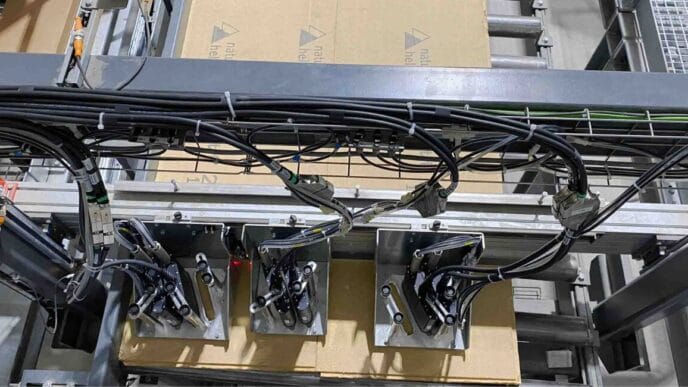
This desire for flexibility is fulfilled by the Geset-749 labelling system from Bluhm Systeme. It labels up to 80 vials per minute. The employees at Städter manually place the products on the conveyor belt of the system. Pneumatic alternating separation guarantees that the vials always move along the belt at the same distance.
As soon as a photocell recognises an approaching product, the label dispenser starts to move and pushes the label towards the dispensing edge. As the product passes by, the label sticks to the bottle and is „picked up“ as the movement continues.
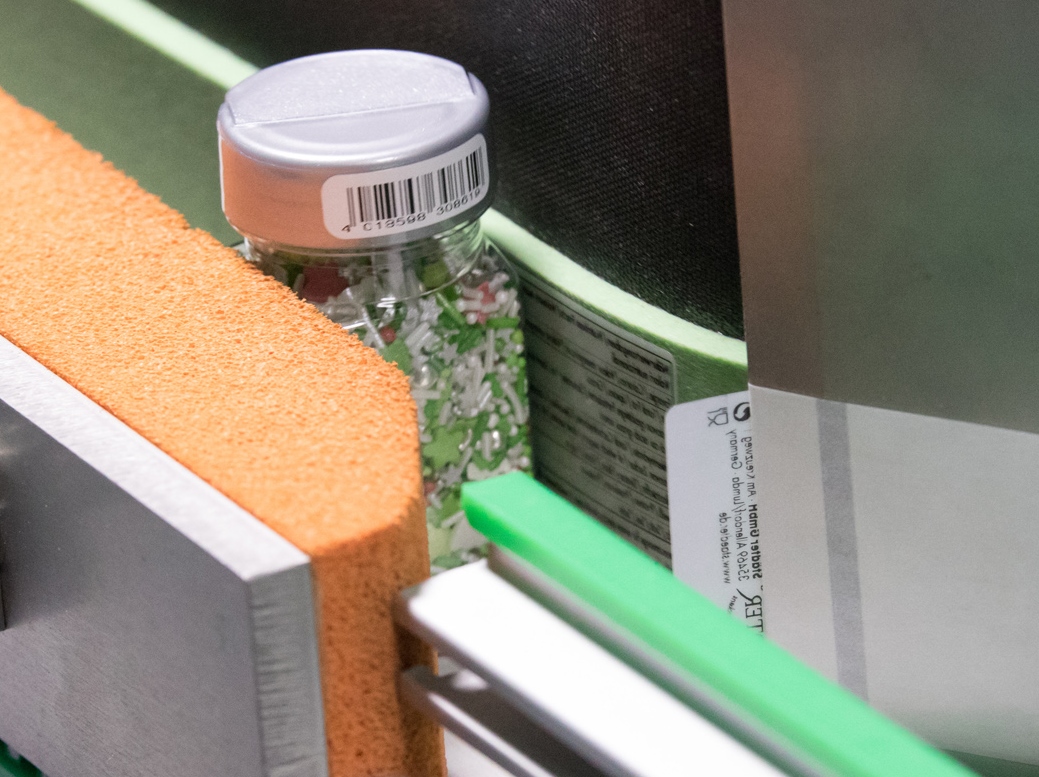
Behind the dispensing edge is a winding belt that sets the products in a rotating motion. To ensure that both round and square bottles can be processed at this point, a sponge rubber strip opposite the wrapping belt provides the necessary counter-pressure. This allows the labels to automatically wrap around different packaging shapes.
Via a Siemens S7 controller, the Labelling time be precisely defined so that the labelling of the square vials is always Exactly on the edge is applied. The products are then transferred to an outfeed turntable, from where they can be packed manually.
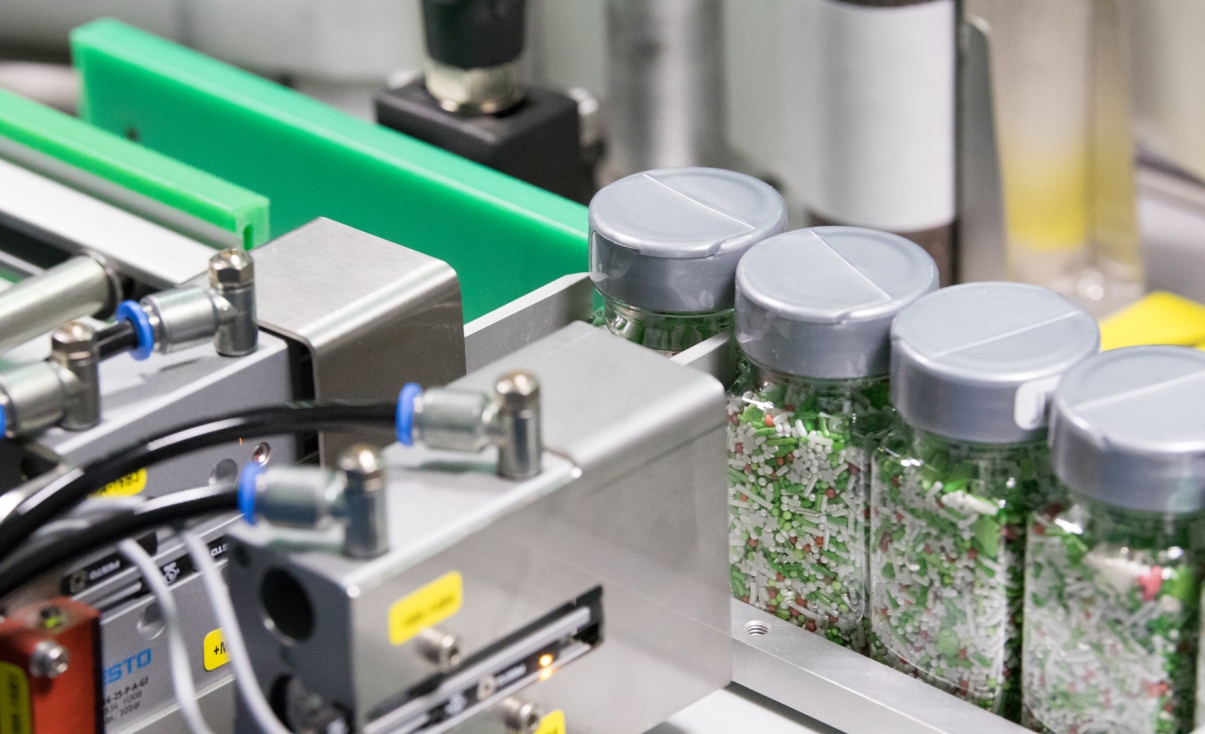
Different label materials and sizes
Städter uses labels from bluhme's own label production. „For all-round labelling, we use so-called No-label look labels made from transparent PE film “, explains Jens Städter. „They allow the contents of the packaging to show through and are coated with a special adhesive that doesn't create bubbles.“
The square bottles are covered on three sides with light grey labels so that the Package contents visible on the fourth side remains. These labels are shorter than the „wrap-around labels“. The font size has been reduced so that the same amount of information fits on the smaller surface. Thanks to the label material made of white film, the smaller font is still easy to read.
In accordance with the Food Information Regulation (LMIV), the labels on Städter products must contain a A wealth of information ingredients, possible allergens, batch number, best-before date and processing instructions. And as the company exports to more than 40 countries, this information is also required in various languages.
Jens Städter is from the Simple creation of print data enthusiastic: „Our employees create the various label layouts using a label design programme on the PC and forward them to the label dispenser's print module via the network. The labels are printed in batches.“

Printing process and labelling decoupled
As the printing of each individual label takes a few seconds longer than the actual labelling process, the Geset 749 diverts the freshly printed labels into a kind of queue: The developers at Bluhm call this movable dancer roll „Shuttle“. The labels collect on the separate roll before being dispensed onto the products at a higher speed. In this way, the „shuttle“ enables the printing process to be decoupled from the labelling process.
Customisable modular system
The Modular system of the Geset labelling systems from Bluhm Systeme allows individual adaptation to the respective customer requirements. The different series fulfil different tasks: The Geset 100 systems are, for example, favourable Entry-level models for simple labelling tasks.
Devices in the 300 series can be set up for various tasks such as wrap-around labelling via a separate control unit. The most flexible machines are the 700 series, which can be upgraded to print-and-dispense systems with an additional print module.