Euro Pool System has joined forces with project partners to work on a practicable solution for greater transparency, efficiency and sustainability in fruit and vegetable logistics in the IoF2020 research project.
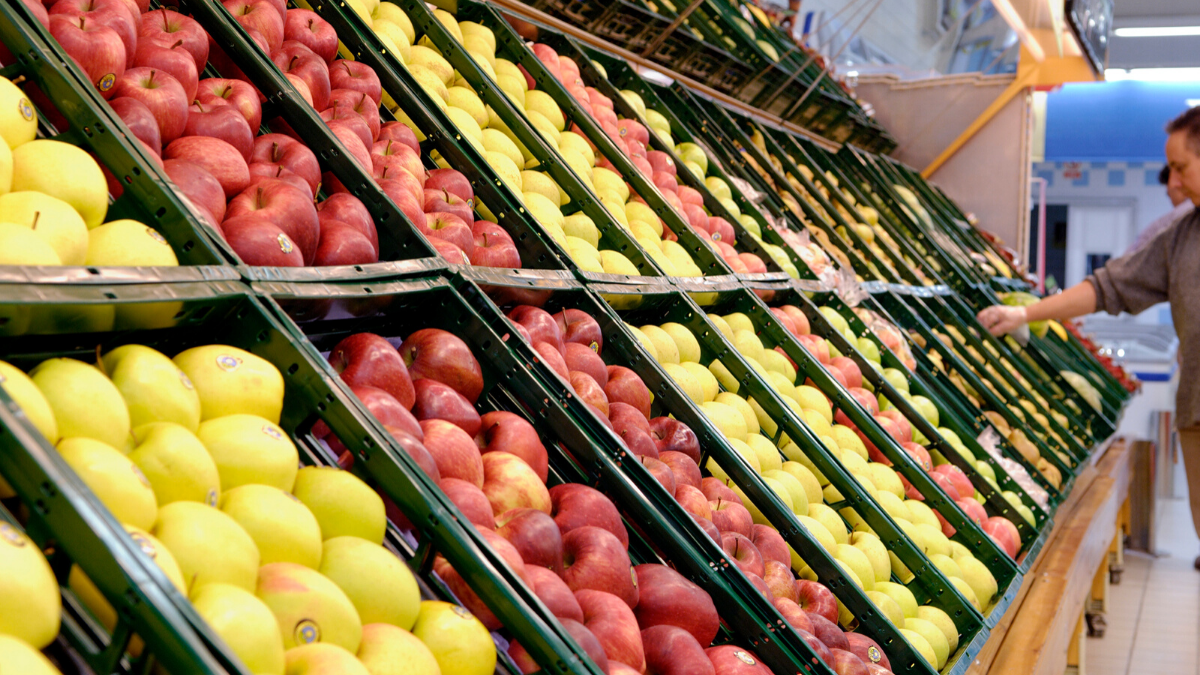
It actually sounds quite simple: a Fruit producer borrows a fruit crate from a pooling provider, The pooling provider sends it loaded to its marketer, from where it is sent to the retailer. The retailer sends the empty container back to the pooling provider, where it can be cleaned and made available to the next producer.
But the reality is often different: „There is still a lot of potential for optimisation along Steigen's delivery routes and stations. For example, more containers than needed often accumulate in one place instead of returning directly to the point of departure,“ says Dr Robert Reiche, Traceability Project Manager at Euro Pool System, the European market leader in reusable packaging for fresh produce chains. It becomes particularly challenging when the delivery routes extend beyond Germany throughout Europe.

As a result, the production of additional reusable containers increases and a sustainable circular economy remains just theory. „In order to establish a functioning circular economy, the aim must be to use all crates as often as possible,“ says Reiche. The prerequisite for this is, that the reusable containers are returned directly to the pooling provider after use, so that they can be checked, cleaned and made available to the next customer on time.
Euro Pool System has therefore joined forces with the Project partners ATB Institute for Applied Systems Technology Bremen, GS1 Germany, Mieloo & Alexander and NXP have joined forces to IoF2020 research project on a practicable solution for more transparency, efficiency and sustainability in the Fruit and vegetable logistics to work.
The partners have already successfully tested their solution in practice together with Euro Pool System customers in several pilot projects: an IoT-based traceability system, which is realised with the help of GS1 standards and sensor technology can record and log the locations of reusable containers and irregularities in the cycle and, in the second phase of the project, their ambient temperature.
Smart Tray: The smart reusable container reports movement
With the help of IoT and GS1 standards, the partner companies have succeeded, Establish a traceability system, which can be used to reliably track and localise every fruit branch.
„The prerequisite is the precise identification of each individual container. For this purpose, an individual identification number - the Global Returnable Asset Identifier (GRAI) - is encoded in a barcode on each crate.“
Sabine Kläser, Senior Manager Identification + Data Carrier at GS1 Germany
Another attached IoT chip from NXP sends information about its location to an IoT network. The data is stored in a cloud-based tool from Mieloo & Alexander aggregated and forwarded to the Euro Pool System. The project consortium is relying on EPCIS for this and is already anticipating some features of a future version 2.0 of the GS1 standard as part of the project. The transmitted data can be used to recognise any irregularities in the delivery route of a returnable container and identify unknown locations.
„Together with the customer, for example, it is possible to analyse whether a filled fruit crate stays too long in a place that is too warm, deviates from its planned delivery route or whether containers are stacked in a certain place. The project team has thus created a future concept for multi-way crate logistics based on EPCIS with IoT sensors.“
Dr Robert Reiche, Project Manager Traceability at Euro Pool System
Temperature sensors for more quality and freshness
As part of a further project phase that has already begun, the partners are also trialling the following at the request of market participants the benefits of temperature sensors in the IoT chips, to detect irregularities in the refrigeration area, for example. „This function is particularly helpful for the fresh produce sector,“ says Kläser. „If, for example, strawberries delivered from Spain have already spoilt by the time they arrive in stores, temperature sensors could provide information about where in the supply chain the refrigeration has failed.“
Such insights help, processes, ensure quality and ultimately reduce product losses. „In principle, the Internet of Things is also very suitable for this application,“ concludes Reiche. „The next step is to check whether this also applies to continuous temperature measurement along the entire value chain.“
Source: GS1