Alongside robotics, digitalisation and machine learning, 3D printing is one of the major topics of the future in industry. Krones AG is also focussing on the generative production of parts and components and is currently testing 3D-printed can turners.
In the process, also known as Additive or generative manufacturing A 3D model created in CAD is converted into two-dimensional layers, which are then applied one after the other during printing. Components from 3D printers can already be found in products from the automotive industry and aircraft manufacturers, as well as in medical technology.
But is the process also for plant engineering, in particular special machines for the beverage and liquid food industry, suitable? Or do their small batch sizes and high product customisation prove to be limiting factors?

Ideal for the production of prototypes
Krones has been dealing with these questions for several years and is convinced that the Additive manufacturing of parts and components offers many opportunities and possibilities for mechanical engineering. Because 3D printing can be used to Even the smallest quantities, This can be realised cost-effectively, for example in the production of prototypes.
For the Spare parts supply for older machine generations this aspect is also interesting. It is no longer necessary to keep the parts in stock; instead, companies can reproduce them at short notice following design adaptations - without the need for specially manufactured tools and, ideally, even in a decentralised manner. The customer benefits not only from rapid availability, but also from components customised to their machine.
However, a number of factors need to be taken into account when realising such 3D printing applications: The additively manufactured components must be able to withstand the loads that occur during production and the material requires a high mechanical and chemical load limit, depending on the area of application.
„Every installed part simply has to meet the high requirements of Krones' line performance. In addition to stability, this also includes the elasticity and resistance of the material to cleaning agents. For this reason, we have Focus on a combination of application areas, materials and printing processes laid the foundation. In development projects, we then manufactured various parts and components using the 3D printing process in order to test their industrial application.“ Reinhard Ortner, Production technologist for additive manufacturing at Krones
Shorter procurement time for can turners
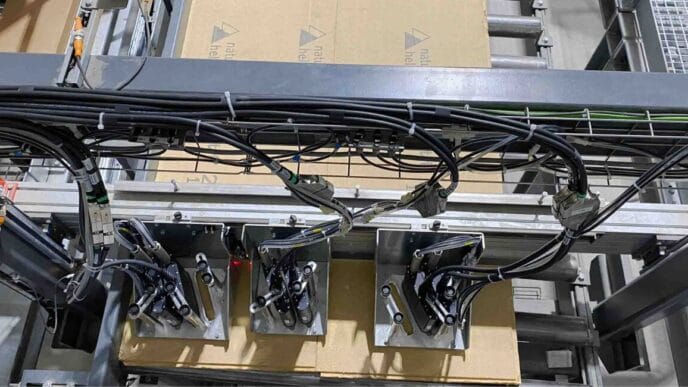
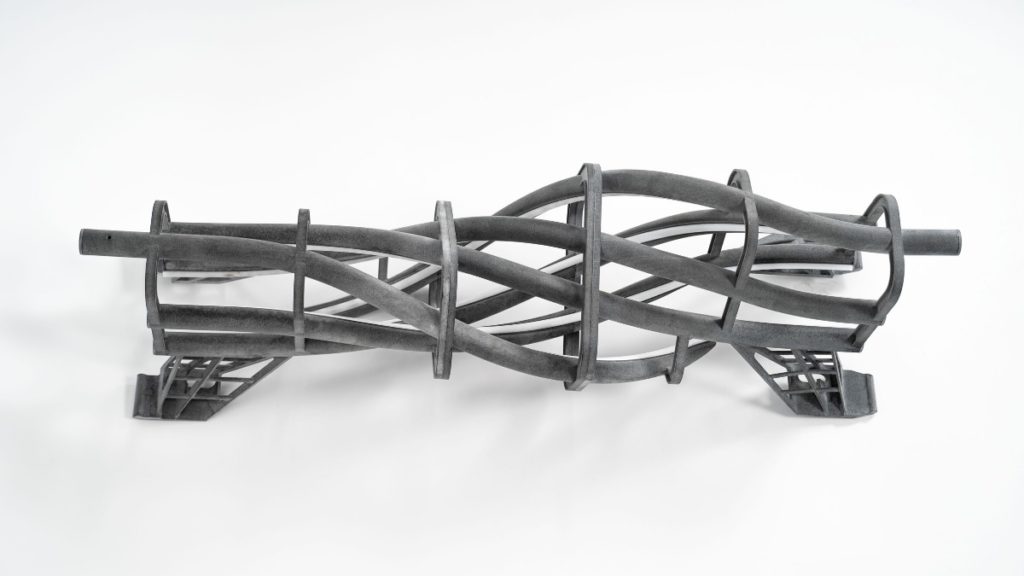
One of these projects, for example, is the can turner from the 3D printer. „Producing a can turner generatively poses a number of challenges. The development team had to analyse a number of points, such as the kinematics, i.e. the the optimum movement sequence of the cans when turning. The tribological properties, i.e. the frictional behaviour between the cans and the material, were also taken into account,“ explains Andreas Neuber, technology expert for additive manufacturing.
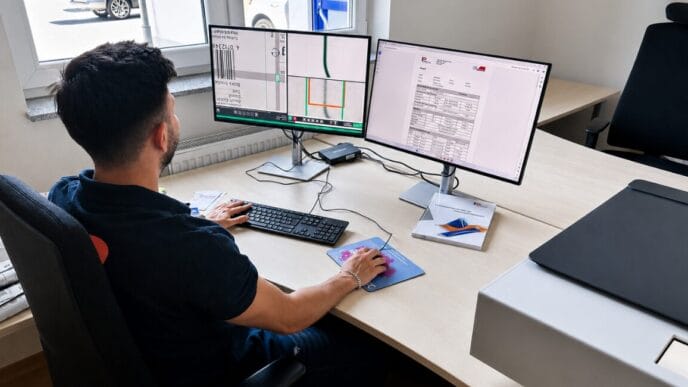
For this reason, a simple but high-performance base material and used this combined with a particularly robust wear profile. „Of course, there were several attempts at development. The 3D model of the can turner, which was customised for additive manufacturing, was designed in CAD and then printed. The test quickly revealed the need for adjustments, which we were able to implement promptly,“ explains Neuber.
The result is a 3D-printed can turner that, thanks to additive manufacturing is subject to a significantly shorter procurement period. Another advantage: with conventional can turners in particular, there are always deviations in the shape due to manual processing. With the 3D printing, the ideal can guide can be reproduced as often as required and can also be quickly and easily adapted to new container formats. Project manager Thekla Herrmann adds: „In the next step, we are now subjecting the can turner to in the field test a close examination. Over the next few months, we will see how it performs there.“
Source: Krones AG