Robots are now an integral part of work equipment in many industries. Cobots are a special type of robot. As an expert in the automation of industrial manufacturing processes, Berlin-based SKDK GmbH helps its customers to utilise these collaborative robots efficiently.
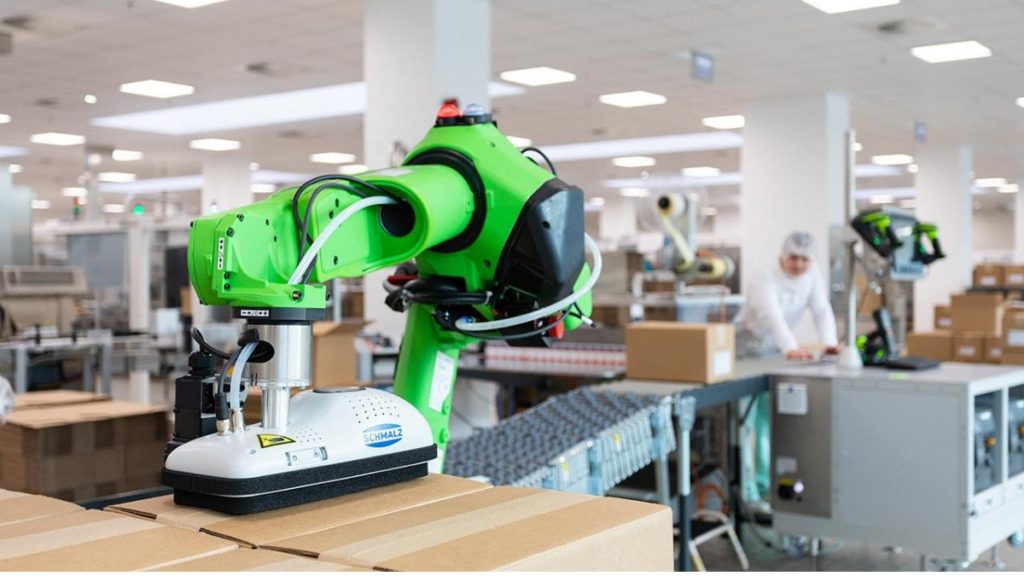
The Japanese pharmaceutical company Takeda is now using its Cobot for palletising cartons. While the robot itself comes from the manufacturer Fanuc, SKDK took over the Programming the system. The cobot now scans the labels on the packages and then picks up the carton so that it can stack it on the pallet with the label facing outwards. For Takeda's production staff, heavy lugging of cartons is now a thing of the past.
Customised solutions for the industry
For SKDK GmbH, the focus is on offering its customers Customised solutions for automation to be able to offer the best possible service. This is why the Berlin-based company attaches great importance to a customer-centred development process. In addition, updates can be imported directly by the customer and the user interface can be customised.

And SKDK is also making provisions for future growth in production. The The system can be extended and expanded at any time. This means that intelligent automation in the pharmaceutical industry is also ideally equipped for the future.
Cobots for employee relief
Cobots are now available in numerous production areas, where they are intended to relieve employees. As the collaborative robots are specially for cooperation between humans and robots are designed to work without a cage, the cobots have no cumbersome housing or safety equipment. Instead, the robots work without a cage, which is also known as human-robot collaboration - 24/7. So while employees change shifts, the robot continues to work non-stop.
As the collaboration eliminates the need for a separating protective device, not only can space and costs be saved, but the cobots can also be used in many different ways. be more easily integrated into existing processes. This makes them an enormous asset for many applications - including at Takeda.
SourceSKDK GmbH