Consumers' expectations of the quality and sustainability of beverages and their packaging are increasing. The beverage industry is responding to this with intelligent technologies, resource-saving machines and recyclable materials.
5 November 2020
(Image: Fox)
Consumers' expectations of the quality and sustainability of beverages and their packaging are increasing. The beverage industry is responding to this: with intelligent technologies, resource-saving machines and recyclable materials that can be used in closed cycles. An overview.
Recycling, the circular economy and sustainable materials are also currently the focal topics for beverage packaging. It doesn't matter whether the packaging is in glass bottles, aluminium cans, beverage cartons or PET bottles. There are innovative solutions in every segment.
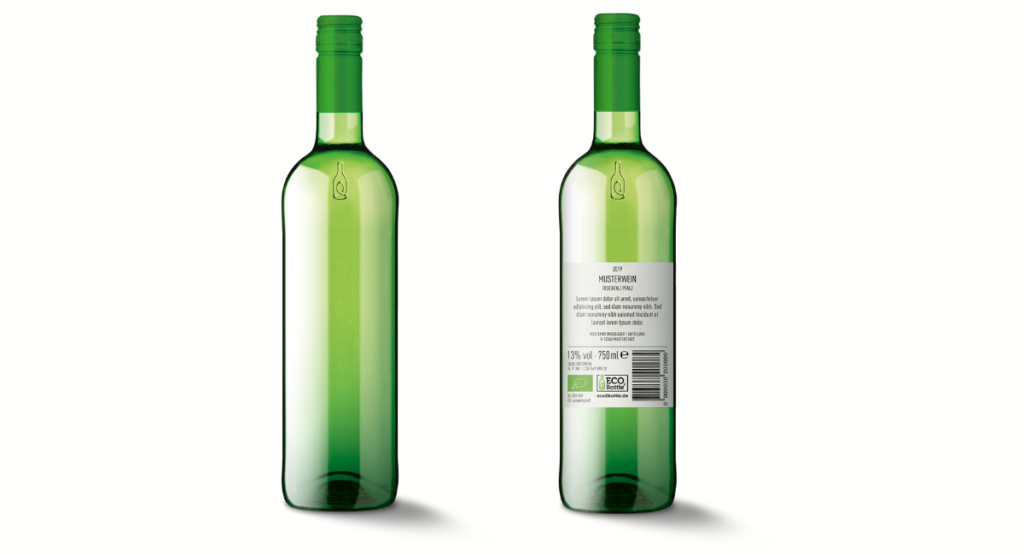
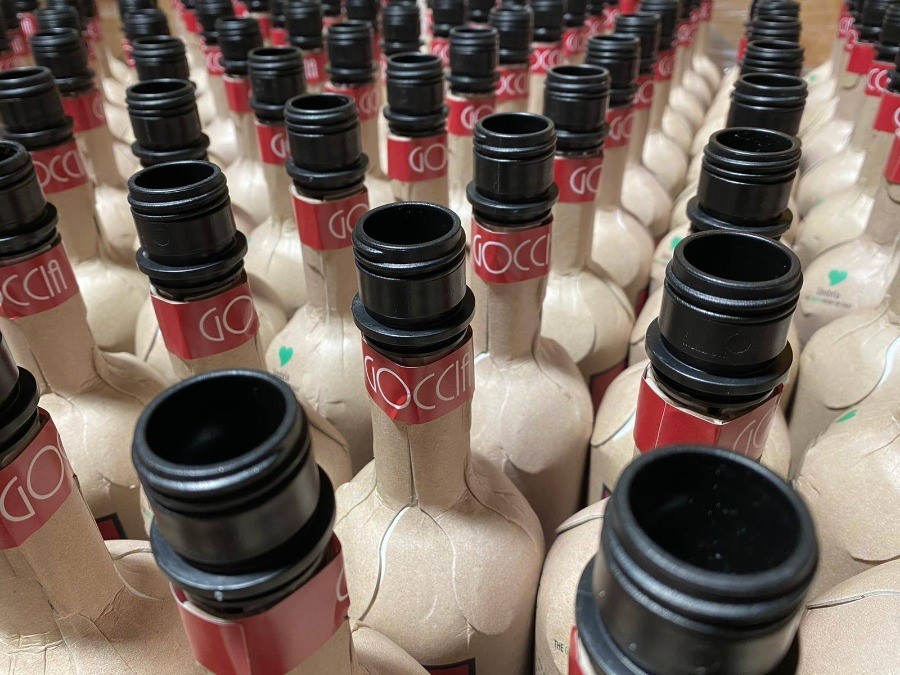
Wine in the climate-neutral lightweight glass bottle
The Eco2Bottle is the first climate-neutral lightweight glass wine bottle made from 93 per cent recycled glass. From the glass production process through to transport, manufacturer Wiegand-Glas takes care to minimise CO2-emissions as low as possible. In production climate-neutral electricity from 100 per cent hydropower usedin the melting process, the very high proportion of used glass reduces the CO2-emissions, as old shards melt more quickly.
(Image: DOC Sicilia)
To offset the emissions that are still unavoidable today, the glass manufacturer is investing in a climate protection project in collaboration with ClimatePartner. A German winery is now the first company to bottle its vegan organic wine in the Eco2Bottle.
The drinks can celebrates a revival
Beverage cans are popular again in Germany. In summer 2019, sales rose by ten per cent year-on-year to almost four billion units - the highest level in 17 years. After the beverage can largely disappeared from the market in 2005 with only 100 million units sold, it is now increasingly returning to the shelves. In addition to the classic canned drinks Increasingly also wine-based drinks in cans bottled: Sales here rose by 22.6 per cent to 29.8 million units in 2019.
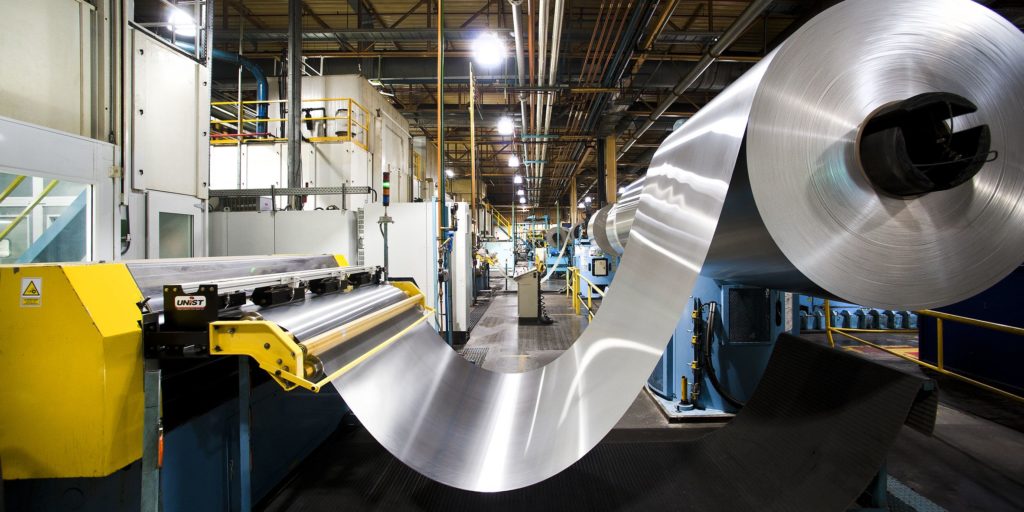
The Aluminium Stewardship Initiative (ASI) certifies the resource-conserving use of aluminium products. (Image: Ball)
The resource-conserving handling of aluminium products along the entire value chain can now also be certified. The Aluminium Stewardship Initiative (ASI) aims to do what the Forestry Stewardship Council (FSC) certification has done for paper and wood - make the sustainable actions of the aluminium industry visible to the general public. Ball recently became the first beverage can manufacturer in the world to receive ASI certification, demonstrating that it fulfils all ASI principles in the areas of environmental, social and corporate governance.
(Image: Forum Beverage Can)
"Unfortunately, we do not yet have reliable figures on the development of the beverage can in corona times. Basically, beverages in cans are a good choice in times of pandemic due to their long shelf life and good storability, and the can's environmental footprint has also improved significantly since the introduction of the deposit. Drinks in cans now often have significantly shorter transport routes than in individual reusable bottles - with all the positive consequences for CO2-emissions and the climate. What's more, with a recycling rate of 99.1 per cent, the beverage can is the recycling champion among all beverage packaging in Germany." Stephan Rösgen, Managing Director of Forum Getränkedose
Pioneer in PET recycling
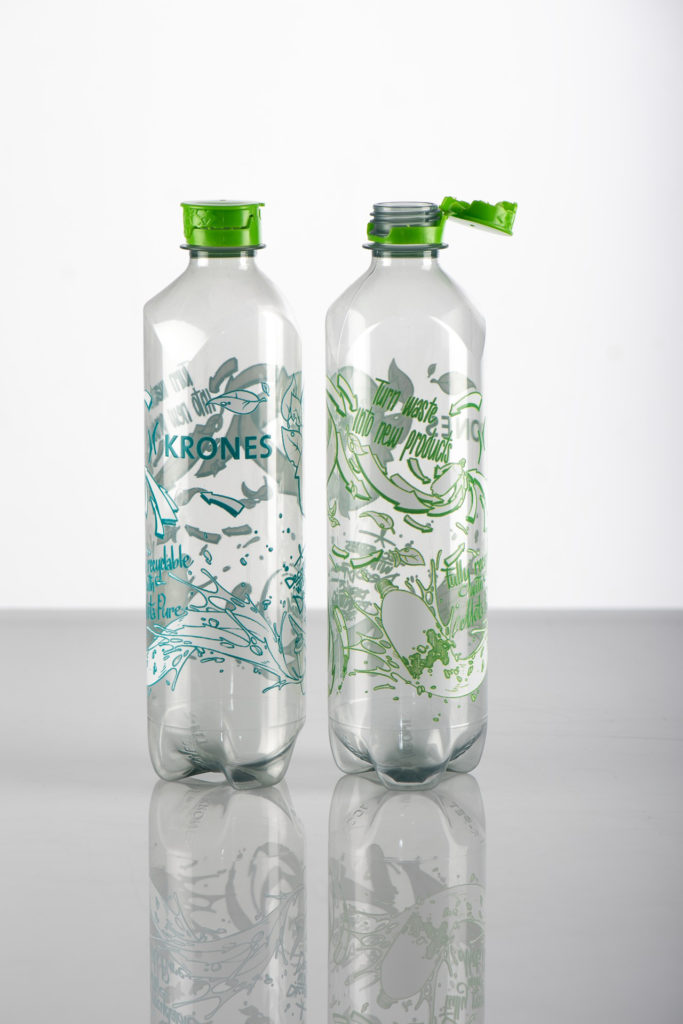
The recycling of PET bottles in Germany is already at a high level: more than 93 per cent of all PET bottles find a new use after use. In the single-use beverage segment with a deposit, the recycling rate is even more than 97 per cent. In an international comparison, Germany is regarded as a prime example here. In the case of the 3 Circles bottle recently developed by Krones AG and its subsidiary Dekron, not only all the elements but also the entire life cycle is designed sustainably. The bottle is made of 100 per cent recycled PET and can be fully recycled again after use.
(Image: Krones AG)
Instead of using a label, which is generally not recyclable, the bottle is decorated using digital direct printing. The inks used for this dissolve without leaving any residue during the recycling process. Therefore the bottle material can also be used in subsequent life cycles to repackage food without loss. Krones chose a tethered cap as the closure. This remains firmly attached to the bottle body even after opening and therefore fulfils the requirements of EU Directive 2019/904. The guiding theme of sustainability is even reflected in the design of the bottle body. This is because the idea of the three-legged base is based on the globally recognised recycling icon.
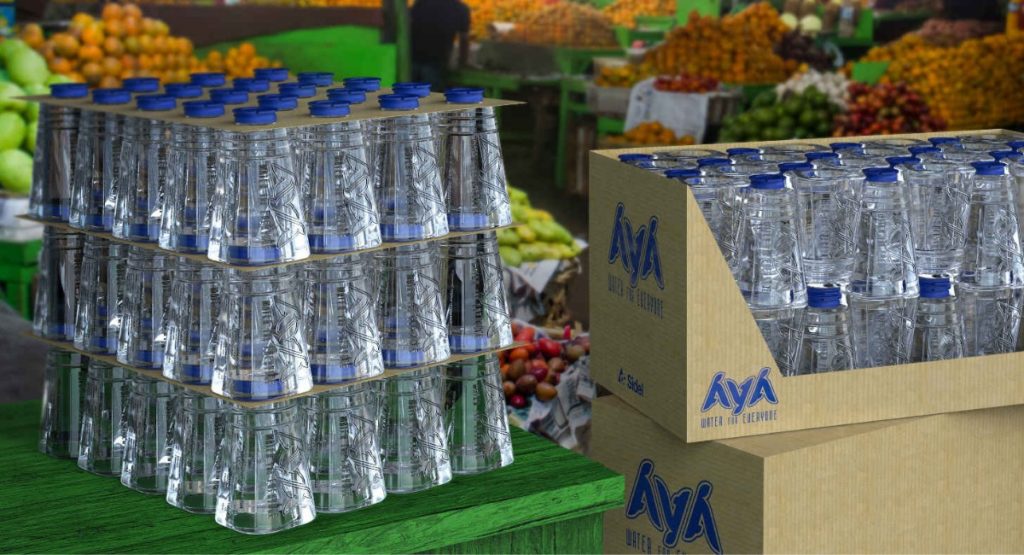
Sustainable packaging design for the circular economy: primary packaging made of 100 per cent rPET, secondary packaging made of cardboard. (Image: Sidel)
Drinks in paper - is that possible?
The Danish brewery group Carlsberg was a pioneer in the development of the paper bottle. However, the so-called Green Fibre Bottle is not yet completely biodegradable. The reason: the thin layer of plastic on the inside, without which it is not yet possible. Now they also want to Replace this layer in the beer bottles with biodegradable material. However, this must be resistant to water and carbon dioxide.
Alcohol bottler Diageo has followed suit and founded Pulpex Limited, a company that is to develop the first paper-based whisky bottle. This will be completely plastic-free and made entirely from sustainably sourced wood. Diageo plans to bottle Scottish Johnnie Walker whisky in these bottles from the beginning of next year.
(Image: Frugalpac)
And another paper bottle: the British company Frugalpac already has a bottle in use that 94 per cent recycled paper and a food-safe plastic liner consists of. The Frugal Bottle weighs just 83 grams and, according to Intertek's life cycle analysis, is expected to produce up to six times less CO2-emissions than a glass bottle and more than a third less than a bottle made from 100 per cent recycled plastic. The thin liner can be easily separated from the paper body, but can also be disposed of with it.
Reusable or disposable - a complex issue
The Federal Environment Agency recently published figures on the proportion of reusable drinks. According to the figures, the proportion of beverages filled in reusable packaging was only 41.2 per cent in 2018, one percentage point less than in 2017. According to the UBA, the downward trend is continuing. In contrast, according to a survey by the GfK Consumer Panel FMCG, the reusable share of non-alcoholic beverages increased in 2019 (from 23.1 to 24.2 per cent). The increase is due in particular to the Growing market share of returnable glass bottles to this. The 0.7/0.75 litre containers in particular grew here.
Beer brewers in particular are increasingly using their own customised bottles instead of relying on standardised bottles from a Germany-wide pool. According to the UBA, only 15 per cent of reusable bottles were individualised in 2012, compared to 42 per cent in 2017. In order to strengthen the reusable system again, four large breweries - Bitburger, Krombacher, Radeberger and Warsteiner - have now joined forces to a shared bottle pool for 0.33-litre longneck bottles build up.
(Image: Bundesverband Glasindustrie e. V.)
"The container glass industry remained fairly constant in terms of production during the peak of the coronavirus pandemic, particularly in the food and beverage sector. Increased home consumption meant that more household jars and bottles were produced. The closure of catering establishments did not have as great an impact as expected, as a lot of beer is delivered to the catering trade in kegs, particularly in the beer segment. The decline in sales of bottled beer to the catering trade was offset by increased consumption at home. Overall, the container glass industry recorded an increase in production value of 8.5 per cent in the first half of 2020 despite the COVID-19 crisis." Dr Johann OverathManaging Director of the Bundesverband Glasindustrie e. V. and spokesman for the Glass Packaging Action Forum
Half a dozen also hold together to save material
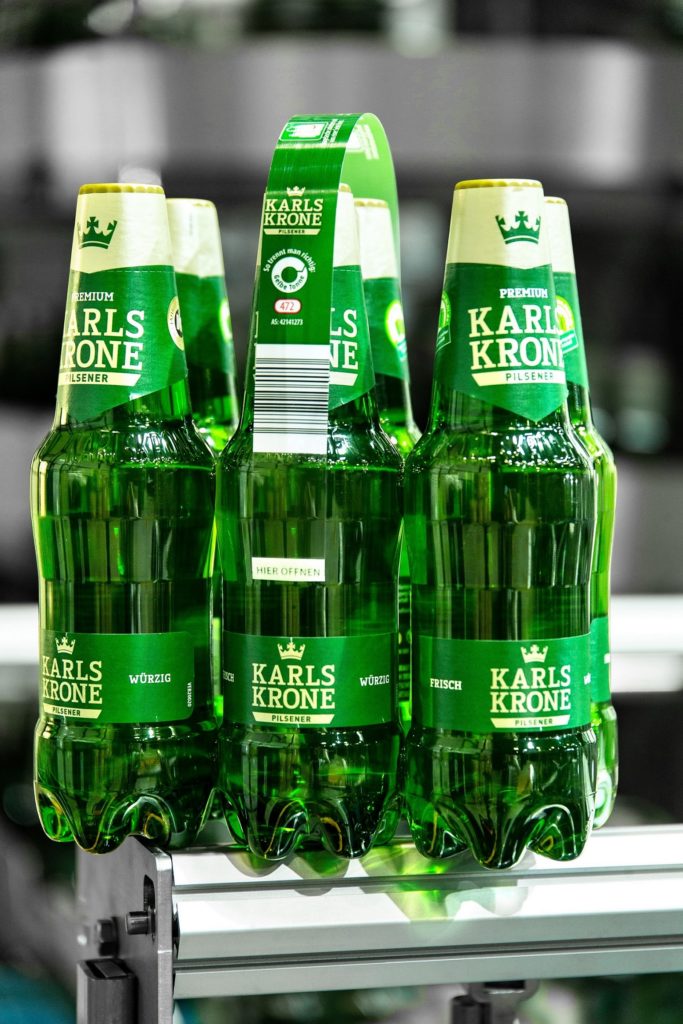
There are now new solutions for saving plastic in six-packs. Belgian brewery Martens, for example, now packs its Karlskrone beer in a film-free KHS Nature MultiPack. The newly designed 0.5-litre PET bottles are made from 100% recycled material instead of being shrink-wrapped. only connected by dots of adhesive to form a stable but easy-to-dissolve bundle. The brewery thus saves up to 90 per cent on packaging.
(Image: KHS)
And the LitePac Top carton carrier from Karl Knauer eliminates the need for the shrink film previously used for six-packs and avoids unnecessary plastic. It holds the 6-pack containers of 0.5 to 2.0 litre PET bottles or drinks cans firmly together and is simply attached to the top - adapted to the bottle or can design.
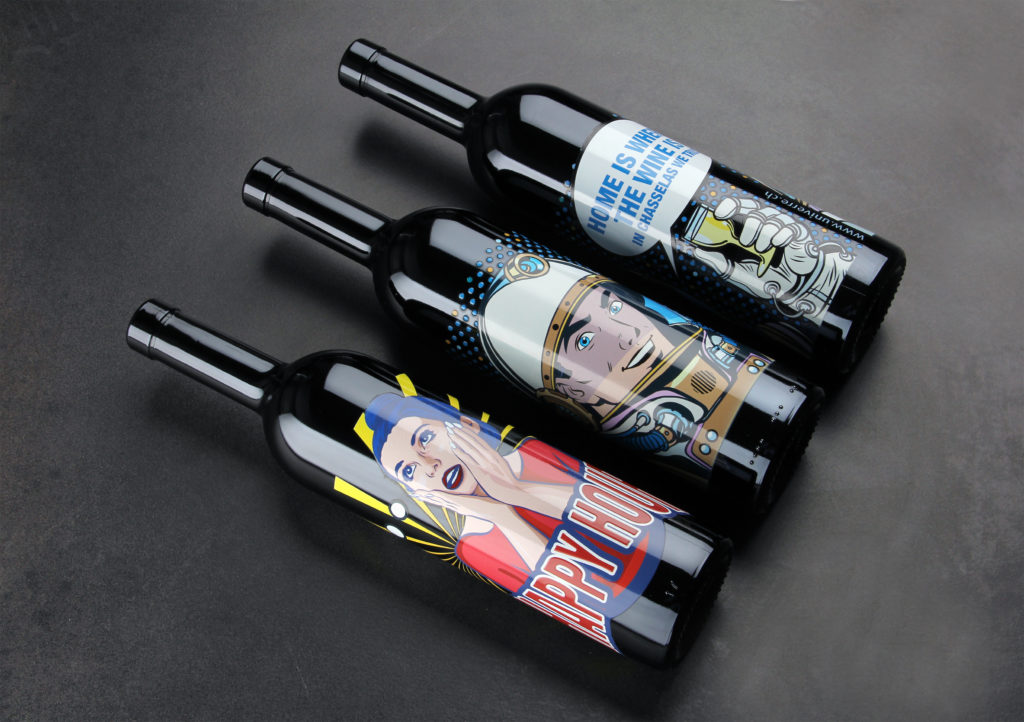
Digital printing on glass offers many opportunities for personalisation. Craft beers or seasonal products can be marketed in customised bottles. (Image: Univerre Pro Uva SA)