Profol, SN Maschinenbau and the Institute for Polymer Materials and Plastics Technology at Clausthal University of Technology are working together on the development of pouch packaging made from bio-based plastics. They are funded by the Federal Ministry of Food and Agriculture (BMEL).
Capri-Sun was the pioneer: in 1969, the fruit juice drink was launched on the market and with it the stand-up pouch, which has enjoyed great popularity as packaging. In recent years, it has experienced is growing at double-digit rates and is now used not only for beverages, but also for a wide variety of productsThe range extends from dry products such as nuts to ready-made products such as soups, grated cheese and sauces, vegetables and fruit as well as pet food and cosmetics.
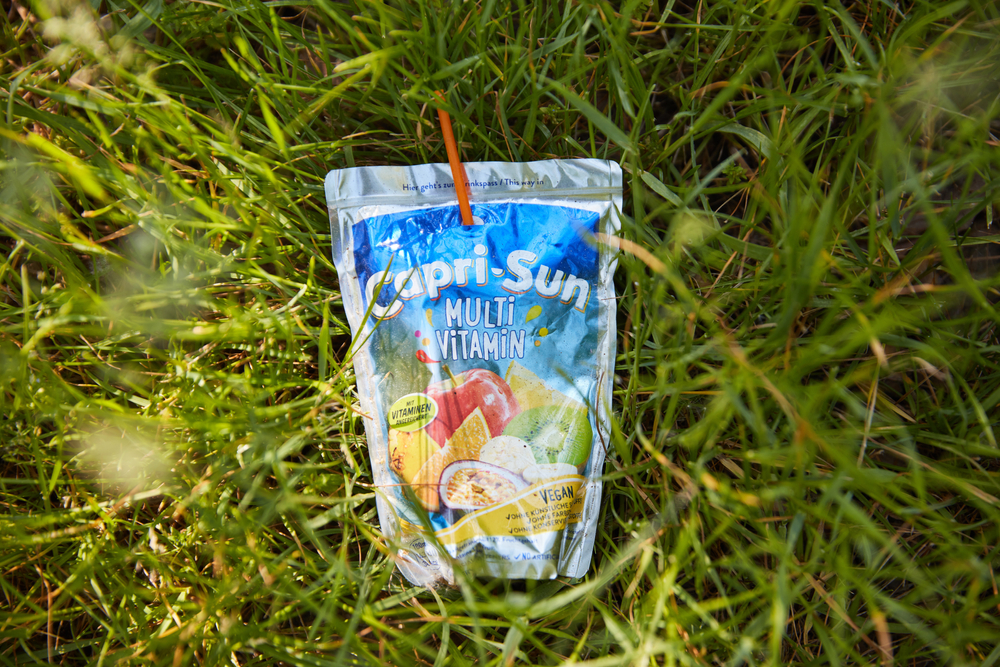
Jointly developing pouch packaging made from bioplastics
Pouch packaging has a low net weight and is characterised by the fact that it is easy to open and reseal. However, there is a need to catch up on two points: they are are neither recyclable nor are they available in bio-based plastic films.

This is where the recently launched Research project „Technology development for bio-based pouch packaging“ on. The Profol Kunststoff GmbH as a film manufacturer, the SN Maschinenbau GmbH as a manufacturer of pouch packaging machines and the Institute for Polymer Materials and Plastics Technology Clausthal University of Technology as a scientific institution want to develop pouch packaging made from bio-based plastics.
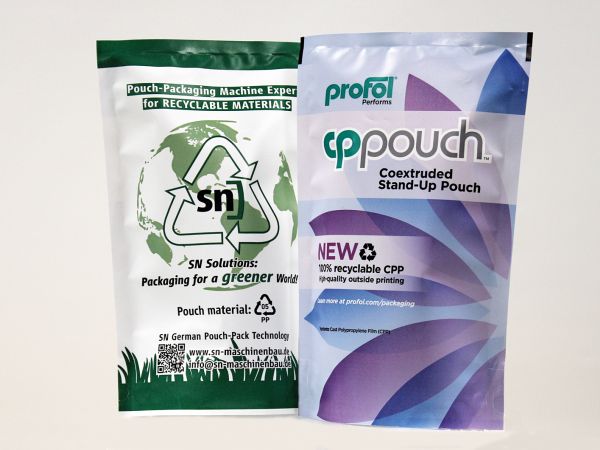
Test facility for bioplastics
Depending on the requirements profile, the films to be developed should be at least 80 per cent bio-based. The aim is to develop a monofilm that enables simple material recycling. This Films are further processed on a pilot plant that is specially equipped for bioplastics. The sealing of the seams, which must take place within an efficient and reliable production window, poses a particular challenge for mechanical engineering.
In addition to providing scientific support for film and processing development, the Institute of Polymer Materials and Plastics Technology is also responsible for developing a design that is suitable for recycling. So that the entire production process from the material to the packaging machine to the stand-up pouch can be considered in the joint project. As the focus of the work is on bio-based food packaging, food manufacturers are involved as associated partners.
Source: FNR