The Dortmund breweries are backing the beverage can: they have placed an order worth millions with the KHS Group, which is to realise a new filling line for beverage cans this year.
The background to the million-euro order is the growing trend towards beverage cans: more than four billion units are likely to have been sold nationwide in 2020, filled with beer, non-alcoholic soft drinks and more. Ten years earlier, the volume was still around 980 million units. In their bottling plans, the Dortmund breweries have not only focussed on the sale of beverage cans in Germany, but above all on a Growing export business at a glance.
Dortmund breweries strengthen their can business
"Even if reusable packaging continues to make up the lion's share in our company: Retail customers and consumers are increasingly demanding beverage cans again since the introduction of a Comprehensive take-back system with deposit machines," explains Uwe Helmich, Managing Director of Dortmund breweries. Brinkhoff's No.1 and Dortmunder Kronen Pilsener are not the only brands now available in cans. Dortmunder Brauereien mainly offers DAB Export in this form of packaging.

"Little packaging, high light protection and a good transport balance are plus points, especially in the export business: so when our DAB Export in cans makes its way overseas, 100 per cent of the total weight only three per cent packaging and 97 per cent product," summarises Helmich. For comparison: while a standard, empty 0.5-litre bottle weighs around 365 grams, a beverage can only weighs around 12 grams. Incidentally, when the first beer can came onto the market in 1935, it weighed around 100 grams.
Conservation of resources planned
The lighter the modern beverage can is today, the more sophisticated the system on which it is filled tens of thousands of times an hour must be. As one of the leading manufacturers of filling and packaging systems in the beverage industry, the Dortmund-based KHS Group specialises in this and relies on a Sustainable concept. Dirk Dünnhaupt, KHS Sales Manager for North Rhine-Westphalia, explains: "We have designed a state-of-the-art system for the Dortmund breweries that will save around 50 per cent electricity and 65 per cent water compared to the previous model currently in operation." By way of comparison, these savings would enable around 215 four-person households to cover their entire electricity requirements for a year, and 20 households of the same size to cover their water consumption.
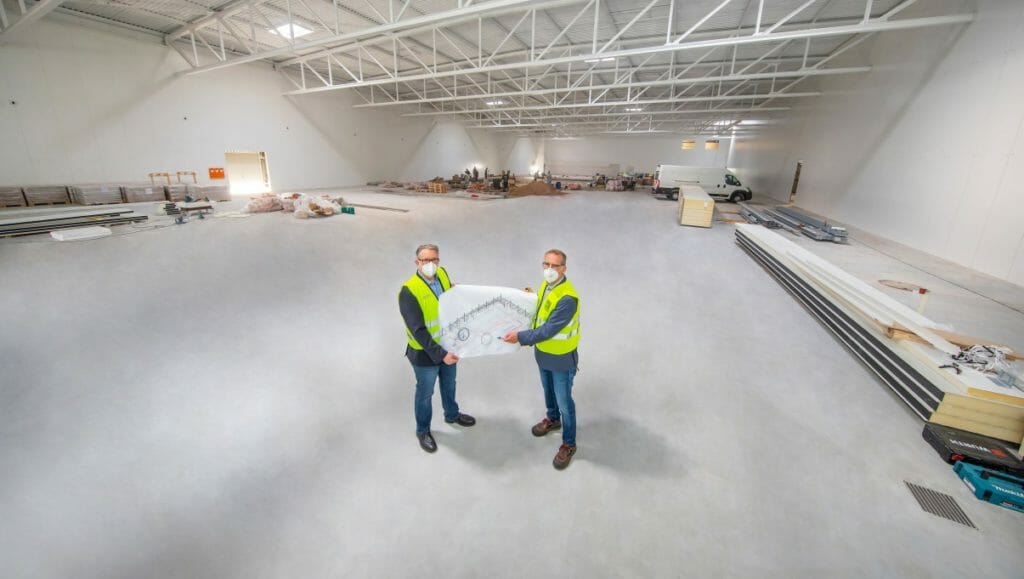
The decisive factor for the award of the contract to the also Dortmund-based KHS Group The local proximity and short distances between the Dortmund breweries and KHS were probably also decisive factors. Planning for the conversion work on Steigerstrasse is already in full swing: the system, which weighs several tonnes, is to be delivered in individual parts, brought in and assembled on site as early as the summer so that it can then be integrated into the production process during ongoing operations. A challenge for the teams from Dortmund Breweries and KHS, which, according to current planning, will be completed by the end of the year. until November should be completed by 2021. The aim is that Up to 80,000 cans per hour by the end of the year over the new bottling line.
SourceKHS Group