What does it take for the transition to a circular economy to succeed? Five associations from the plastics and recycling industry have now positioned themselves on this in a joint paper.
The transition to a circular economy means major changes in the way we manufacture, use and recycle plastic products in the future. At the same time, it offers great opportunities for sustainable growth in our industry. But what does it take?, for this transformation process to succeed? Five associations from the plastics and recycling industry have now positioned themselves on this issue. The representatives of the plastics value chain are thus sending out a clear signal in favour of constructive cooperation among themselves.
The declared goal is a functioning circular economy for plastics in order to benefit even more from the advantages of the material. However, the positions and proposed measures are also an appeal to politicians and the public, to actively take on the shared responsibility for more resource conservation and climate protection and to boldly seize the associated opportunities.

The associations behind the position paper are Plastics Europe Germanythe SHI General Association of the Plastics Processing Industry, VDMA Plastics and Rubber Machinery Association and the organisations of the waste disposal and recycling industry BDE and bvse.
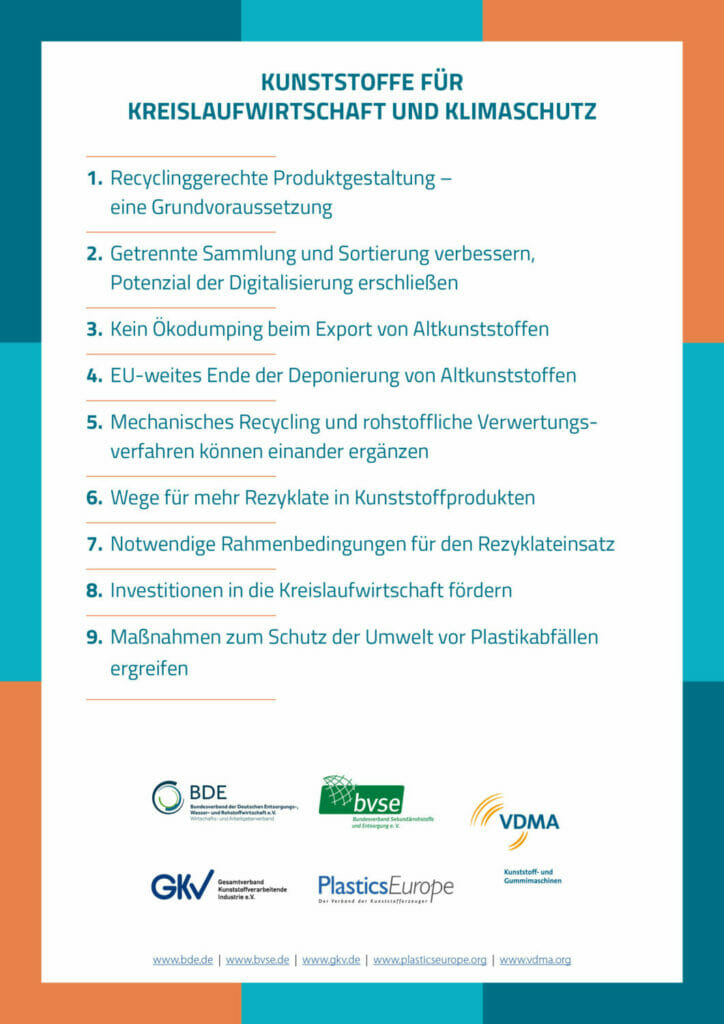
Catalogue of measures for a more circular economy
In the Position paper you will find detailed suggestions in which areas need to be changed to provide the necessary impetus for a more circular economy. In addition to recycling-friendly product design, the handling of exports of used plastics or the EU-wide end of their landfilling and the expansion of disposal and recycling structures, this also includes improving the market conditions for the use of recyclates. This requires a clear political roadmap and the necessary legal framework.
The associations also see their position and their proposals as a good start to the dialogue with other partners from the plastics industry, but also with representatives from politics, science and civil society. After all, they are also key players on the road to a circular economy.
Source: PlasticsEurope Germany