
The circular economy is the big buzzword for the packaging industry and will continue to dominate the coming years. In most cases, the focus is on single-use packaging and the recovery of raw materials through good recycling. However, new reusable solutions also offer attractive alternatives outside of the functioning reusable system in the beverage industry, the potential of which has not yet been fully utilised.
Legislation has now significantly increased the pressure on reusable packaging: Paragraph 33 of the Packaging Act commits the to-go sector, a reusable alternative to the standard single-use packaging from 2023 to offer. This means that the Increased pressure on paper-based disposable packaging.
First reusable solutions already on the market
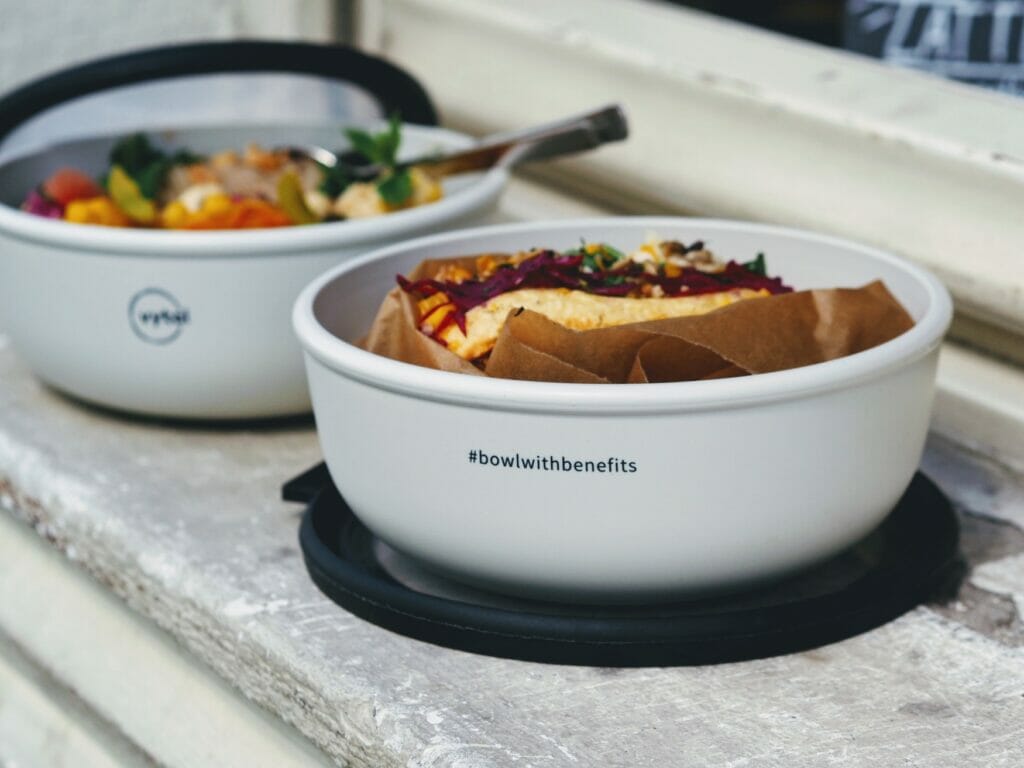
In general, it can be assumed that reusable packaging will become a successful concept in the coming years, as shown by the Beverage containers from e.g. Recup, Faircup or Loop-it in Sweden. The coffee mugs have been supplemented in recent months by Bowls for salads and to-go products, such as the examples Vytal, Relevo, ReCircle, Rebowl or Pfabo show. In the USA, Terra Cycle's Loop system has developed new products for FMCG brands and the fast food industry. PizzaBow also offers a tray, although it has not yet replaced the entire corrugated cardboard component.
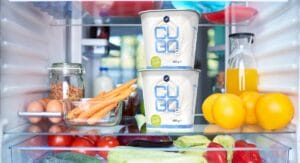
Some of these Solutions are now also making their way into the supermarket. Some food start-ups are already using the reusable yoghurt jars widely available in Germany for soups or vegetables, for example. The organic retailer Alnatura uses its own jar for several products from its own-brand range, while the start-up Circujar wants to establish a new reusable jar for soups, spreads or antipasti on the market.
The challenges for reusable systems
What all the solutions mentioned have in common is the fact that it Isolated solutions which only work in closed loops and require consumers to go through a certain amount of suffering to find participating dispensing points where the reusable container can be purchased or „rented“. Simple, localised collection will remain one of the biggest challenges in the future in favour of the simplest possible use of reusable packaging.
The withdrawal is also accompanied by the Need to individually serialise the individual packaging elements such as the base and lid of the cup, i.e. unique codes. This enables precise identification and billing and allows the packs to be traced and checked throughout the entire cycle process. Today, reusable containers are returned to the retailer or bottler and are cleaned there before the next filling is due. However, the cleaning process itself is very cost-intensive and still prevents many small suppliers from switching to reusable containers. The Solution of the future will be that Return and cleaning take place centrally and the bottlers order and receive cleaned containers: Pay per use instead of buying containers themselves. This will significantly reduce the necessary investment in packaging and therefore the barrier to entry.
However, this also results in important compatibility criteria for centralised cleaning, industrial cleaning cannot yet randomly clean different containers of different shapes, sizes and materials on the same line. Today's Isolated solutions will therefore have to adapt to a certain standard, to minimise the complexity of cleaning and logistics. This applies to stackability and destacking, modular shapes and sizes that are based on standardised sizes in logistics, surface properties for dirt adhesion, easy cleaning and resistance to grease, oils, salt and acids, scratch resistance and migration resistance - to name just a few factors.
Many materials to choose from
Even the Material selection imposes some restrictions on reusable systemsGlass is brittle and comparatively heavy, but has very good barrier and migration factors. The possible circulation figures vary in the low to high double-digit range, depending on how the containers are handled. The newly founded company Circujar offers its own glass containers for soups, sauces and other products - also for bottlers of pre-packed goods on supermarket shelves. Circujar does not use serial coding, but takes back and cleans the containers and then makes them available to the bottlers, who pay a usage fee.
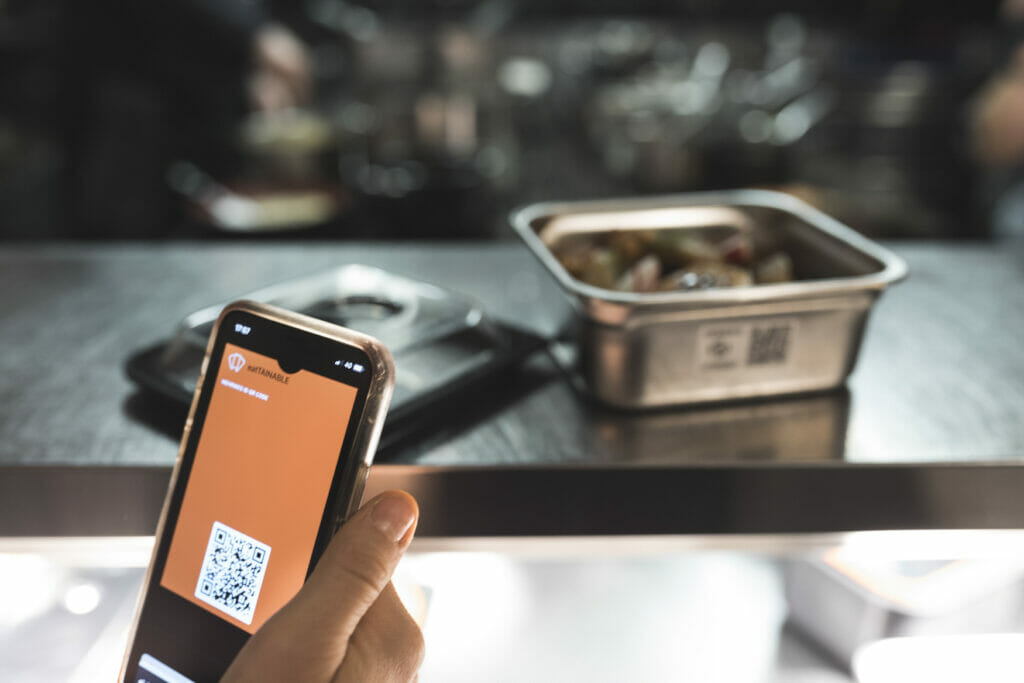
Metal is very stable, comparatively heavy, expensive to produce, offers a high barrier, but also certain migration restrictions. However, the possible circulation figures are in the high hundreds to thousands. Since the 1960s, a solution to the Rieber GmbH & Co. KG on the market. EaTainable, a reusable system from Rieber for the food service industry, shows how a serialised, digitalised system of metal containers in the food service industry can offer added value for consumers and distributors. Here you have a cloud-based code on each container of different module dimensions applied and permitted control and tracking of the containers via its own app and provides information for users. Although the metal containers are significantly more expensive than their plastic or glass counterparts, this is quickly relativised by the very high circulation figures. An adaptation for the to-go sector or for food producers is conceivable. The use of the app and cloud-based database is open to other packaging solutions.
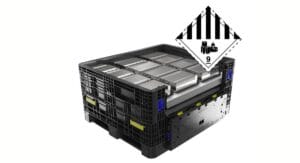
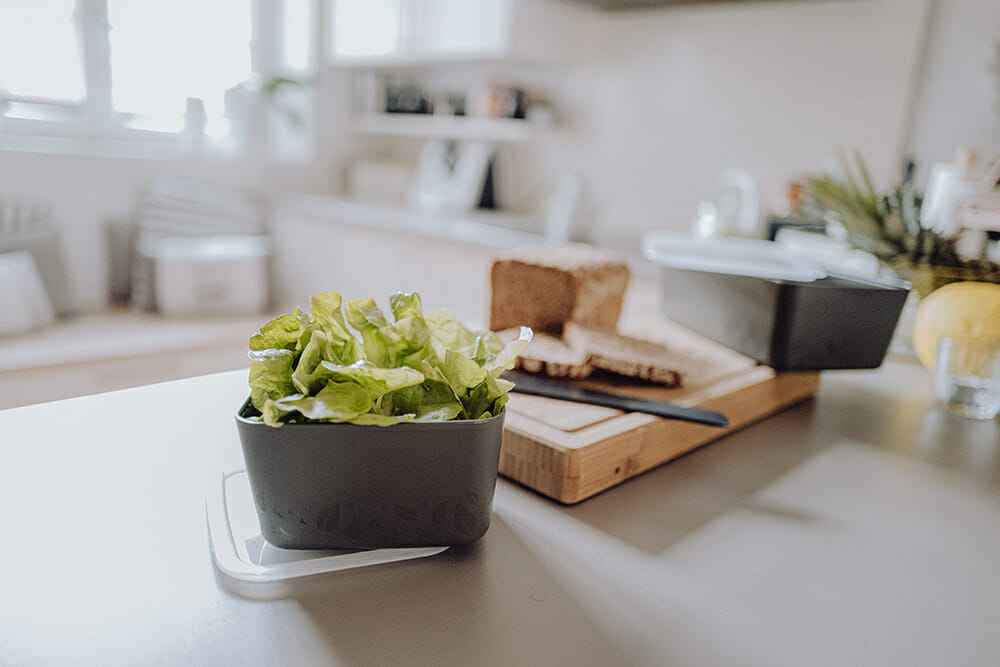
An example of the wide range of plastic-based reusable containers provides the Start-up Pfabo. Since summer 2021, its modular deposit boxes with serial coding have been in use at the food retailer Bio Company. A cloud-based database can then track these boxes from the filling of fresh salads and to-go products, for example, to their return, cleaning and reuse.
Recycling at the end of the end-of-life scenario
Glass and metal offer very good Recycling opportunities through existing collection infrastructures in Germany and international markets. The recycling of plastic packaging is somewhat more complex. These are lightweight, comparatively cheaper and offer good barrier properties, but in some cases low migration functions. Depending on the application and use, the number of cycles varies from tens to several hundred. Mechanical recycling can be easily realised with separate collection of worn containers, However, the recyclate is not yet approved for food applications.
Deposit as a question of faith
The Pledging is different for all companies. While Pfabo and Rieber require a higher deposit in order to return the containers quickly, the deposit amount for Circujar is to be in the range of the yoghurt jars we know today. The founders see the risk of the jars being „collected“ by consumers as a temporary development until they have „stocked up“ on sufficient containers and return them. The option of whether a deposit is necessary at all or rather a security deposit is also being discussed, However, this would require registration.
Mrs Huber knows just how diverse the landscape is in the area of reusable packaging. Dr Anika Oppermann from the consulting firm Shafuto - shapingthefuturetogether. She monitors developments in reusable and reuse concepts and advises companies that are interested in this alternative to single-use packaging. At the same time, she is involved in reusable communities, in which Pacoon is also driving the development towards an international reuse system. She realises that numerous companies nationally and internationally already offer a wide range of solutions. This shows that many providers are pursuing similar approaches, although one Most of the energy is invested in acquiring sales partners and building cycles would. In order to make reusable packaging easier for suppliers, bottlers and consumers in the future and to establish it on a large scale, a Collaboration and standardisation of all stakeholders.
Networking is the key to success
The response from bottlers and retailers to reusable packaging is very positive, but there are some important challenges to overcome for a comprehensive reusable packaging system. Urgent need for action for the further establishment of reusable systems exists in particular in the Standardisation of processes and containers, digital tracking of containers and harmonised return, cleaning and transport logistics. A bottle-neck is the established checkout system in food retail, which also has to process the new serial coding. German retailers have positioned themselves in such a way that they will not realise such a system before 2027. The next few years will show whether coding will lead a shadowy existence until then or whether alternative data systems will develop in parallel. What is certain is that Establish reusable solutions on the market very quickly especially as the new law will see a large amount of packaging in the to-go sector from 2023 onwards, ready to be adapted for products in supermarkets.
Guest authorPeter Désilets, Managing Director at Pacoon
Magazine articles


Packaging machine manufacturer in flow

Powerful automation for mills

Decentralised signal processing with the Schmersal Safety Fieldbox

One hundred years blue tin