The demand for more environmentally friendly packaging is constantly increasing. Politicians are also calling for higher recycling rates. Packaging manufacturers therefore urgently need to use more recycled plastics. Sourcing high-quality recyclates in sufficient quantities can be a challenge - as can processing them. Packaging manufacturers should therefore consider certain steps to ensure that they succeed in making the switch.
In Germany, 63 per cent of plastic packaging must be recyclable by 2022 according to the Packaging Act. Last year, the rate was still around 55 per cent. For packaging manufacturers, this means that they now have to step up their game and use more recycled materials. However, high-quality recycled material is often not available in sufficient quantities due to decentralised market structures. Raw material shortages and price fluctuations can be the result. However, in order to replace conventional materials with alternatives in production in the long term, a certain Planning security. Manufacturers can increase this if they know at an early stage which secondary materials are suitable for their applications.
Find the right material
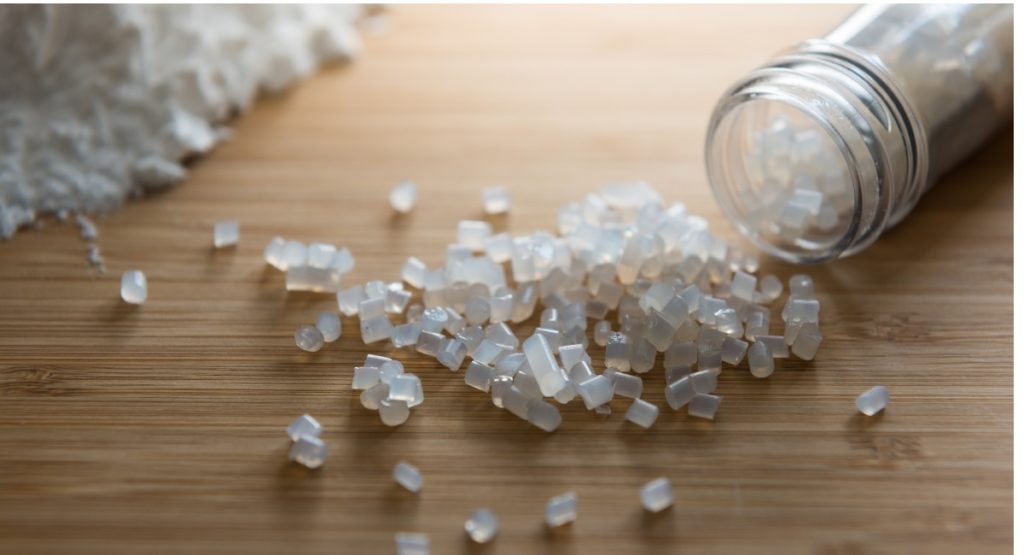
Conventional materials can be easily replaced by recycled materials in packaging. These include rPET, rPE, rPP, rPS/ABS or rCompounds. However, not all recyclates are suitable for every application. In the non-food sector, for example, recycled PET, PE or PP are relevant. They are suitable for films, transport packaging such as pallets or crates, but also for flower pots. rPET is suitable for food contact, but only to a limited extent due to the high material safety; for example, for drinks bottles or vegetable nets.

Developing the right recipe
It is fundamentally important that the recyclates are of a comparable quality to the previously used prime material. The quality must also remain the same for series production. However, because recyclates naturally differ depending on their origin, different batches are homogenised. This means that they are mixed to produce large quantities of consistent quality. Detailed testing and initial sampling is essential. This is a technical process for material characterisation in which it is precisely tested whether recyclates are actually suitable for the intended use.
Every material development starts with a detailed definition of the desired technical properties. The proportions of recyclates, primeware and other ingredients must be harmonised to suit the application. Additives can be added as required to improve the properties.
Secure the best sources
If packaging manufacturers know which materials are suitable, they should look for a suitable partner who can supply them. To do this, they need to know the recyclate market very well. Strictly speaking, they would have to scrutinise potential suppliers or even carry out extensive audits to ensure that the raw materials are actually processed in the desired quality and quantity. Small and medium-sized packaging manufacturers in particular can hardly afford such an approach. Not only does the research take time, it also requires technical knowledge of the production of recyclates.
It is therefore advisable to work with a distribution partner who specialises in the procurement of prime and recycled materials. In contrast to pure recyclate manufacturers, who can only supply what they are currently producing, such distributors have a dense network of audited supply partners for regranulates and recompounds. This enables packaging manufacturers to ensure that they actually receive the recyclates in the required quantities and in the best quality. A supplier that also offers primary material has another advantage: the broader portfolio covers the material requirements for many applications from a single source. In addition, suitable alternatives can be quickly found in the event of supply bottlenecks.
Select suitable production processes and machines
Packaging manufacturers must also precisely harmonise process technologies, tools and the right material. To avoid faulty production, parameters on the machines - such as material throughputs, cycle times or processing temperatures - must be set according to the material. A broad-based distribution partner can also provide support here; for example with technical services and on-site services in application technology. Among other things, this involves selecting the most efficient production processes and tools and setting individual parameters correctly. If required, the technical experts can also provide advice if new machines and tools need to be purchased specifically for processing recycled materials.
Prove sustainability
The interest in products that are as environmentally friendly as possible is enormous, especially among consumers. The use of recycled materials has long been an additional sales and marketing argument. It is advisable to make it clear on end products that recycled materials have been used. Recognised certificates such as EuCertPlast or the Blue Angel are suitable for this purpose. EuCertPlast is an EU-wide certification programme that focuses on the traceability of plastic materials throughout the recycling process and the entire supply chain. The Blue Angel is a seal of the German Federal Ministry for the Environment that plastic products can receive if they consist of at least 80 per cent recycled material.
In conclusion, the use of recycled materials must be well thought out and requires comprehensive process engineering expertise. Packaging manufacturers need to rethink and act quickly - and not just because of the stricter legal situation. In this way, the packaging industry is also taking a big step towards a closed circular economy by consistently working to supplement conventional materials with recycling innovations.
Guest author: Marc Stachura, Director Product Management Recycling at Meraxis
More articles on the topic of recycling


Vilsa bottle combines the advantages of glass and PET

Anja Siegesmund leaves the BDE

BDE calls for improvements to the Packaging Act

UBA and ZSVR: packaging recycling works