ERP software solution for products with variable unit weights

ERP systems simplify the goods management of food products where price and weight vary. This makes it easier to record and track catch weight items.

Food product management is often a particular challenge for packaging processes. In particular, products with varying prices and weights require special handling. This must be taken into account not only in quality control, but also in costing, warehousing and packaging. The right enterprise resource planning (ERP) software can make a decisive difference here.

Steak, sausage or cheese - many of these products are packaged in small quantities for retail sale. At the end an individual price and an individual weight on each product. Such products are known as Catch weight articles and represent a particular challenge in production, packaging and order picking represent. To prevent potential problems and ensure optimised production processes, inventory and financial planning as well as product quality, ERP software is needed that is also specifically tailored to these catch weight items.

Warehouse must be accurately recorded

By default, the number of items in the warehouse is determined based on their quantity. However, this is not so easy for products with varying unit weights. Therefore Two parallel units of measure can be used: Quantity and weight. This is the only way to accurately assess how many goods are actually in the warehouse. To do this, the actual weight of the sales unit (also known as „Catch Weight“) and the number of items are recorded separately as parallel units of measure, passed on and often linked to a production batch in order to ensure the traceability of the product. This Linking with production batch and lot is essential, especially in the food industry, to enable quick product recalls through simple traceability and thus optimise product safety.

The However, recording variable weight per unit is a major hurdle for many ERP systems, as they do not have the required database structures. They often have to be expanded to include the relevant functionalities with the help of external software. However, if several thousand articles and therefore data records are processed every day, linking two or more software solutions can lead to performance problems. A suitable ERP that offers native catch weight functions, enables manufacturers to maximise Efficiently manage the requirements for variable weight products - from goods receipt to goods issue. This simplifies the sale of goods in parallel units of measure and minimises the Accurate valuation and pricing of stored and sold goods ensured become.

Display

Reliable quality control

The Packaging process can be organised more efficiently with the right software. Regardless of the manufacturer, scales can be integrated directly into the production line via the ERP system. They record the weight of the catch weight articles and send it to the ERP system. The Reduces additional manual steps and thus also sources of error and simplifies the process.

But Even without integrated scales, the catch weight functionality can make work easierAfter the items have been weighed manually, the data is also entered into the ERP system. This checks whether the registered data meets the weight specifications previously defined by the company. for the respective catch weight article. For example, whether the piece of meat with the target weight of 500 grams is still within the 15-gram weight variance specified by the company. If this is not the case, the ERP system automatically issues a warning and the item is removed from the production chain.

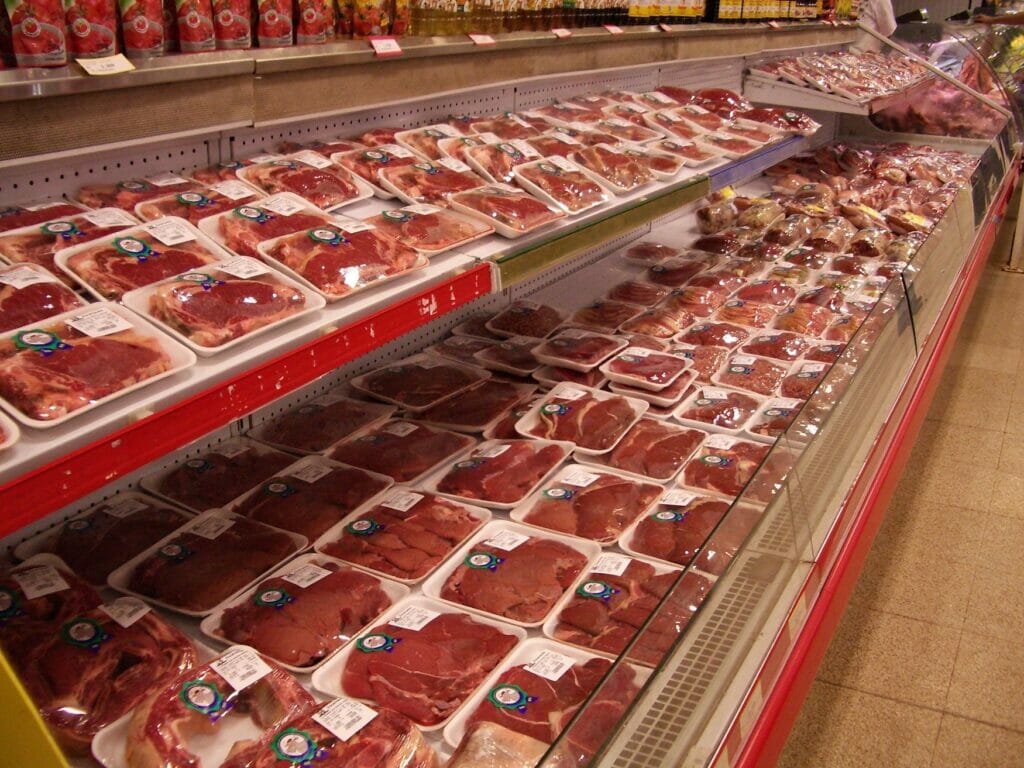
View of a supermarket refrigerated shelf with packaged meat products, which are often catch-weight items.
Products such as steak or sausage are often catch-weight items, as they are individually packaged and balanced. (Image: Deacom)

The input of specific tolerance values for each product not only ensures accurate valuation, but also reliable quality control. Fluctuations in the weight of a product can even be recorded and monitored over a longer period of time. Repeated weighing thus contributes to quality control - for example in the case of items that lose moisture and therefore weight during storage. This makes it possible to check whether the expected standard weight loss has been exceeded or not. Here too the weight values are recorded in the ERP and an automated warning is issued if the deviation is too high. Products that deviate from the standard are then not released for delivery.

Create customised labels automatically

Sales units that have gone through this process are ready for packing and despatch. The data recorded in the ERP system can be used to Labels simply created automatically be displayed. In addition to information such as the product name, the ERP system also sends the individual catch weight, the batch and lot number and the best-before date to the labelling station.. Particularly important: the price, which varies according to weight, is also calculated correctly by the ERP system and automatically printed on the label. It is also stored in the ERP and enables easy tracking of finances and stock.

The The right software has the potential to minimise a high level of manual effort., which is at the expense of staff, to reduce. At the same time, costly errors and inaccuracies are avoided. The automated recording of data means that there are no gaps in the documentation, and Each item remains easily traceable in accordance with legal requirements. It is important that all these functions do not unnecessarily prolong the production process or create waiting times. Simplicity and user-friendliness should always take centre stage. With a well thought-out and holistic ERP solution, this can be easily realised in practice.

Guest authorScott Deakins, Deacom Business Unit Leader

Magazine articles

One hundred years blue tin

Since 1925, the Nivea cream can has borne its deep blue colour, white lettering and round shape - a design that has remained stable over generations, markets and crises and is now celebrating its 100th birthday.
Read more "