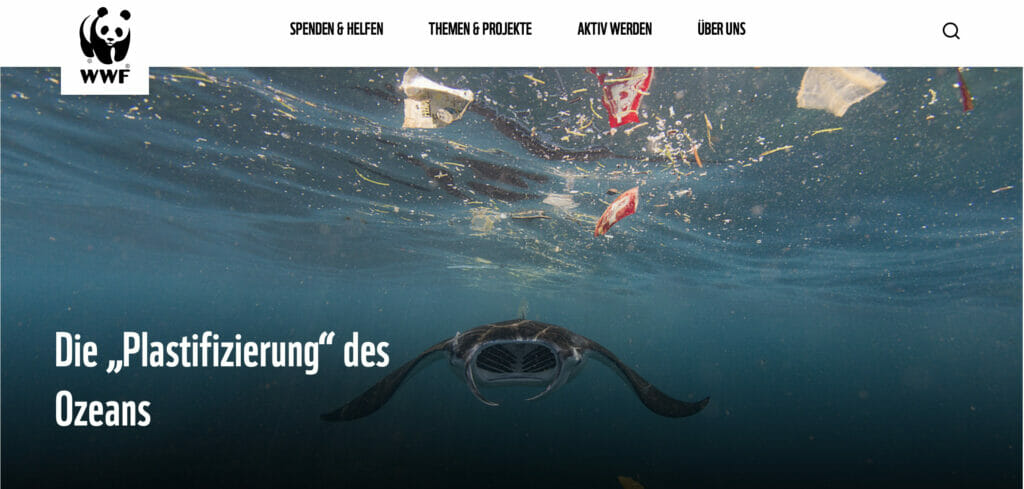

WWF predicts massive increase in plastic waste in the sea

A study presented today by the WWF and the Alfred Wegener Institute (AWI) sheds light on the effects of plastic waste on ocean species and ecosystems. According to the study, the concentration of plastic waste in the sea is expected to increase fourfold by 2050.

A study presented today by the WWF and the Alfred Wegener Institute (AWI) sheds light on the effects of plastic waste on ocean species and ecosystems. According to the study, the concentration of plastic waste in the sea is expected to increase fourfold by 2050.

Plastic pollution in the ocean is growing exponentially and will continue to increase. This is the conclusion reached by environmentalists and scientists in their study. By the end of this century, marine areas two and a half times the size of Greenland could exceed ecologically risky threshold values for microplastic concentrations, as the amount of marine microplastics threatens to increase 50-fold by then.

This forecast is based on a chain reaction: plastic production is expected to more than double by 2040. As a result, the larger macroplastics in the ocean will quadruple over the next 30 years. Over time, this will break down into smaller and smaller pieces, right down to microplastics and nanoplastics. In some hotspot regions such as the Mediterranean, the Yellow Sea, the East China Sea and the Arctic sea ice, the concentration of microplastics has already exceeded the ecologically critical threshold value. 

The WWF presents the results of its study on its website

WWF is calling on governments to give the United Nations a mandate to negotiate a legally binding global agreement on marine plastic pollution at the UN Environment Assembly this month.

Display

The results of the study can be downloaded here as a PDF become

More news

Change at the top of VVK

Change of leadership at the Association of Solid Board Cartons (VVK). The long-standing Managing Director Thomas Pfeiffer retired on 1 February and handed over operational responsibility to his successor Karsten Hunger.
Read more "