Circulation solution for food trays

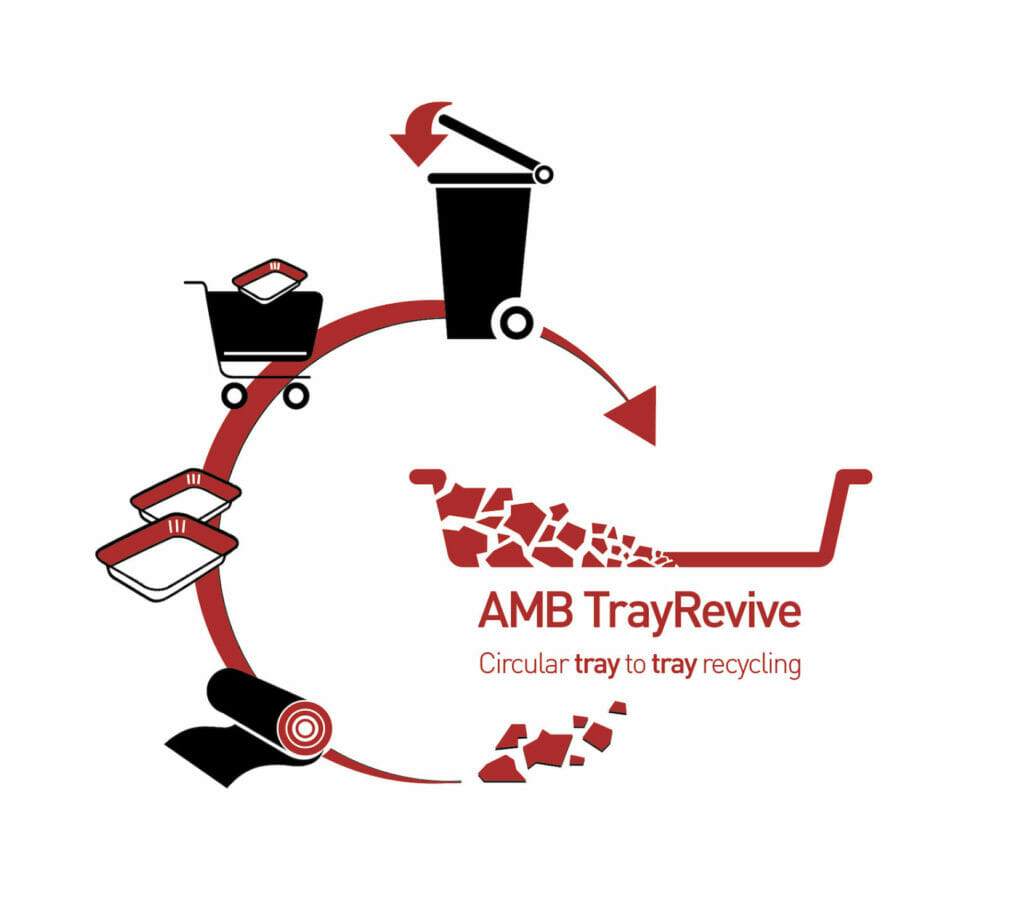
AMB Spa is launching a sustainable use for used food trays. For AMB Tray Revive, the material from used trays is used to make new trays.

AMB Spa is launching a sustainable use for used food trays. For AMB Tray Revive, the material from used trays is used to produce new trays. The company offers customers an end-to-end process from packaging design to mould making, prototype production and film production. 

AMB concluded that the demand for recycled bottles will drive rPET for tray solutions in a different direction. It is expected that the demand from the bottle industry for bottle-to-bottle recycling up to 0.5 million tonnes of rPET needed, which will lead to bottlenecks in the production of recycled tray material. In collaboration with an Italian recycler, AMB has now launched an initiative to collect post-consumer trays in order to minimise the Promote the recyclability of PET trays from the food segment.

High demand for rPET

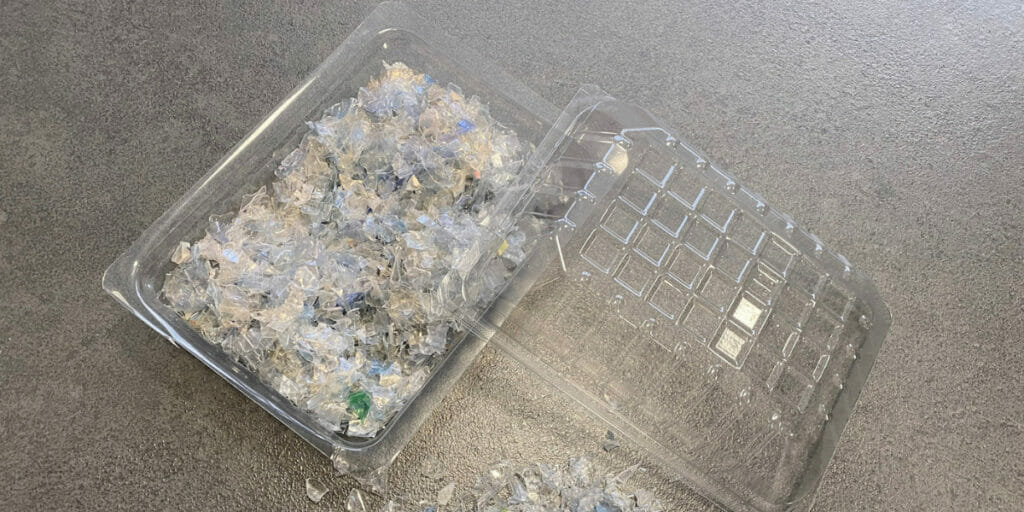
The material is first shredded into flakes, which are then returned to the Production of a tray-to-tray product can be used. As the demand for PET flakes is constantly increasing, European recycling guidelines are currently being developed for transparent multilayer trays made of PET/PE.

Picture of a food tray containing PET flakes.
AMB Tray Revive utilises the material from used food trays to produce new trays. (Image: AMB Spa)

In order to produce high-quality shells, the raw material comes from 95 per cent from recycled food trays and is subject to a strict analysis procedure. The post-consumer tray material is subjected to a process to counteract contamination. The quality of the flakes is then analysed. AMB examines the material in terms of its behaviour in the extrusion process and its mechanical performance. The resulting New film is extensively checked, so that its appearance and quality as well as its behaviour in the thermoforming process can be evaluated.

Display

With these tests, the company guarantees its customers the high quality of the finished packaging: The Mechanical performance of the material and the thermoforming properties on FFS systems remain unchanged. The material thickness also corresponds to that of standard PET/PE or mono-PET. AMB's Tray Revive concept promotes the recyclability of trays and helps customers to improve their own environmental footprint in order to convince food retailers and consumers, who are increasingly demanding environmentally friendly packaging solutions.

Logo of the AMB Tray Revive solution
(Image: AMB Spa)

In accordance with the EU action plan, AMB has committed itself to contributing to the EU market for recycled plastics to increase to 10 million tonnes by 2025, by reducing the environmental impact of the products. The tray revive concept is part of a strategy with which the company is further optimising partnership-based cooperation between all AMB stakeholders.

Source: AMB Spa

More news on the topic of recyclate

🎧 Podcast: What to do about the recyclate shortage?

In the new Packaging People podcast, Patrick Neumann and Jonathan Scheck from Interzero talk about the results of the latest Circular Packaging 2030 study. They show why the packaging industry is heading into a dangerous supply gap for post-consumer recyclates - and which strategies urgently need to take effect now.
Read more "

Recycling industry sounds the alarm - bvse calls for reforms

Recession, plant shutdowns, price pressure: the recycling industry sounds the alarm at the bvse annual conference. President Forster calls for political backing - and warns of dangerous export restrictions on secondary raw materials. The association sees an acute need for action, particularly in plastics and textile recycling.
Read more "

Circular Packaging 2030 - Strategies against the PCR shortage

Time is of the essence: EU quotas for recyclates will apply from 2030 - but there is already a shortage of high-quality PCR. A new study commissioned by Interzero shows a looming gap of around 1 million tonnes. Those who do not act now risk high costs, bottlenecks and penalties. How companies can take countermeasures and secure competitive advantages.
Read more "