The BDE has published facts and figures on the production, processing and utilisation of plastics and the use of recyclates in Germany for 2021. Overall, the demand for plastic remains high and the important role of the circular economy has become clear.
Accordingly, total plastics production in 2021 (including adhesives, paints and varnishes, etc.) amounted to around 21.1 million tonnes (2019: approx. 20 million tonnes). 14 million tonnes were used for processing into plastic products, of which around 12 per cent recycled plastics. Despite a challenging environment, these volumes remained stable. As in the past Packaging and construction are the dominant segments for plastic products. This is followed by the technical application areas of vehicles and electrical/electronics. According to the survey, domestic consumption of plastic products by end consumers was around 12.4 million tonnes, while the Plastic waste volume increases to 5.7 million tonnes totalled.
Current image of plastic in Germany
The material flow diagram Plastics in Germany 2021: Facts and figures on the life cycle of plastics is compiled every two years and has been providing reliable life cycle data on plastics since 1994. The study, which is an important reference source for administration, science and industry. promotes fact-based dialogue on the circular economy with plastics and resource conservation in the value chain.

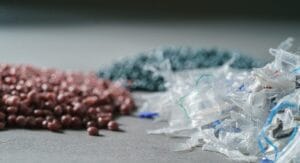
The question of the raw material base is playing an increasingly decisive role. Here, too, the material flow picture provides a clear trend: the The use of recycled plastics has become an essential part of the raw material supply for the plastics industry. established. Overall, the proportion of recycled plastics used in the processing volume in Germany in 2021 was just under 12 per cent. In some plastics segments, the use of recyclates has been firmly established for some time, as the study now presented confirms: According to the study Recyclates mainly used in the construction, packaging and agricultural sectors. The use of recycled materials in products reduces the need for primary, i.e. fossil, raw materials; Circular economy thus contributes to securing the supply of raw materials and conserves resources.

The utilisation figures in detail: 99.4 per cent of the plastic waste collected in Germany was recycled in 2021. Of this, 1.98 million tonnes (35 percent) was recycled (34.6 percent mechanical; 0.4 percent chemical). Just under 65 per cent of plastic waste continues to be used for energy recovery and is thus lost to the material cycle. Less than one per cent was sent to landfill because this form of disposal is largely prohibited, unlike in other European countries. In a challenging economic environment, the overall use of recyclates from post-consumer waste improved only slightly from seven per cent in 2019 to nine per cent in 2021. The plastics value chain must make faster progress here so that more recyclates are used in new products in the future.
Methodology of data collection
In the previous material flow diagram with data for 2019, the input quantity into the recycling process was used as the basis for calculating the recycling quantity. The current survey now shows Data both on the basis of this calculation method and in accordance with the EU implementing decision for packaging waste under the EU Packaging Directive out. The present study thus achieves a significantly higher level of detail.
The current study also distinguishes between the A distinction is made between the recycling of post-industrial waste and the reuse of by-products from the production and processing process. In accordance with current legislation, the use of these by-products for re-compounding or processing is no longer categorised as recycling. The distinction is necessary due to the current legal requirements at EU and German level.
In order to accelerate the closing of material cycles, not only must recycling and the use of recyclates be further promoted, but also a recycling-friendly product design, the export of used plastics outside Europe curbedThe associations and organisations behind the material flow picture are calling for an EU-wide end to the landfilling of plastic waste without delay, investment in modern sorting and recycling facilities and open-technology recycling. In this context, the associations and organisations behind the material flow diagram are calling for an innovation and investment-friendly climate, a clear political roadmap, the necessary legal framework and open markets for secondary raw materials to strengthen the circular economy.
Source: BDE e.V.
More news on plastics and composites


New packaging law passed

Adapa expands skin portfolio for meat packaging

Bio-based disposable cup with self-degrading function

Cycle for strapping bands