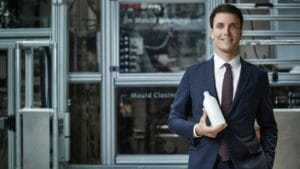
With the new „Canupak“ beauty care packaging, Alpla is creating a climate-optimised sample solution as a showcase for future products. With the ultra-light packaging system with a bottle made of 100 per cent recycled HDPE (rHDPE), the company wants to underline its sustainability strategy and offer customers further potential for reducing emissions and expertise for future developments.
Around 71 per cent less CO2-With the ultra-light „Canupak“ packaging system, the internationally active packaging and recycling company Alpla has created climate-optimised packaging for the beauty care sector that is lighter than comparable packaging, completely recyclable bottles and caps and weighs just 14 grams. To achieve this, the bottle is made from 100 per cent recycled HDPE (rHDPE) from our own plants in the EU. Production is based exclusively on renewable energies.
As a prime example, the „Canupak“ the potential already available today to minimise CO2emissions for high-quality packaging systems.
„Step by step, we are reducing CO2-emissions and expand our expertise in all processes from design to production and logistics. The climate-optimised ‚Canupak‘ is the next milestone on the road to the sustainable packaging of the future.“
DisplayKarina Pölzl, Innovation Project Manager at Alpla
Partnerships for future solutions
The calculation of the CO2-footprint was realised in cooperation with ClimatePartner. The Product Carbon Footprint (PCF) is made up of all CO2-emissions over the entire life cycle of the product - including disposal. The areas not relevant to the climate impact of packaging, i.e. the filling material, trade and use phase, were not taken into account.
As there are currently no binding standards for climate-neutral products and offset certificates, Alpla is focussing on reducing CO2-emissions in our own sphere of influence. „We are concentrating on further optimising our products, focus on maximum recyclability in Design for Recycling and are looking for partners who want to take the next step with us to reduce their CO2-footprint,“ continues project manager Karina Pölzl.
„The demand for sustainable products is increasing - among our customers and end consumers. Climate-optimised packaging plays a key role in this. We already have the expertise and experience to produce forward-looking solutions.“
Philipp Lehner, CEO Alpla
Global sustainability strategy
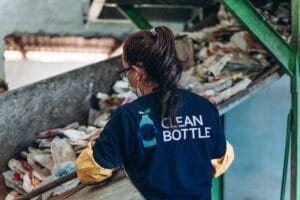
At Alpla, the development of climate-optimised packaging solutions with a high PCR content, maximum recyclability and minimum material consumption goes hand in hand with investments in sustainable projects and the global expansion of renewable energies and the circular economy. By 2025, all packaging should be 100 per cent recyclable and 25 per cent post-consumer recycled material (PCR) should be processed. To this end, the company invests 50 million euros annually in recycling activities. Alpla already relies extensively on renewable energies in its plants, high-quality recycled material from its own production and the minimisation of transport routes through in-house plants directly at the customer's premises.
Source: Alpla
Alpla - More news


From laundry room to global brand: ALPLA celebrates 70 years of packaging innovation

Alpla with new management in Western Europe

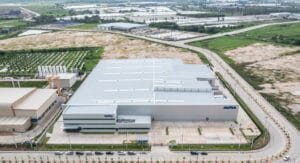
Alpla opens second plant in Thailand

ALPLA expands into HDPE recycling in Brazil