Today, the company owes its considerable growth potential and the clear differentiation of its solutions from other market players to its strategic vision and the conscious entrepreneurial decision to invest in the in-house development of automation solutions. Michael Lang, Vice President of the Systems Division at MULTIVAC, provides information on this in an interview.
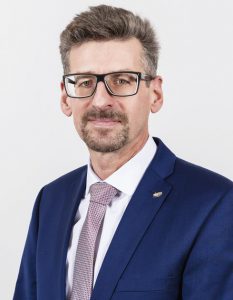
pj: Mr Lang, in the Systems division you develop customised solutions for the automation of packaging processes. What prompted you to set up the systems business exactly ten years ago?
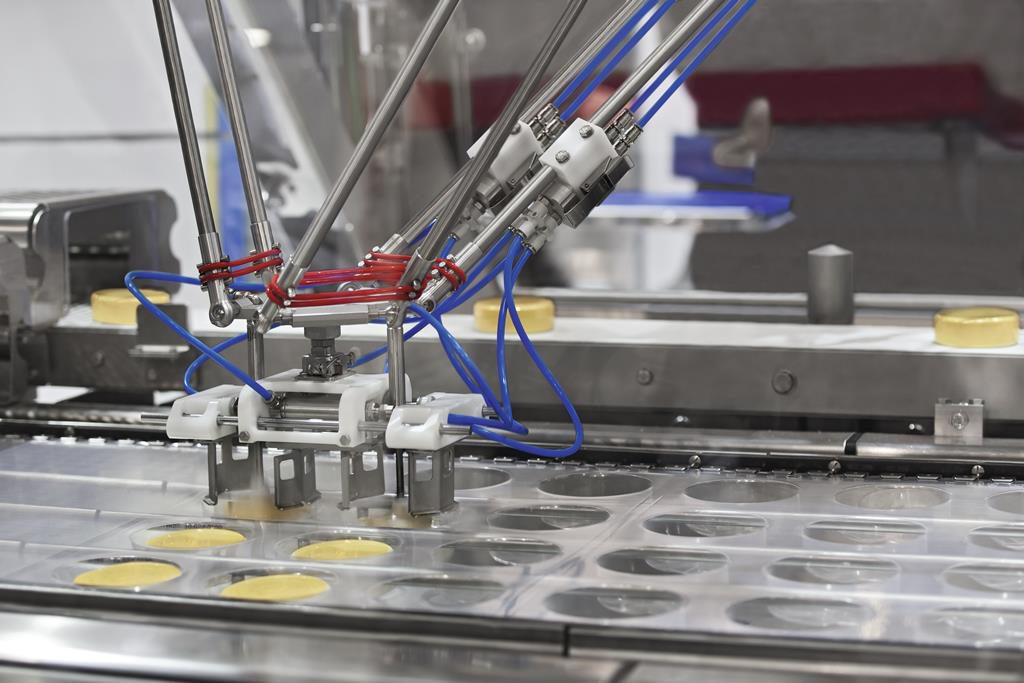
Michael Lang: As is so often the case, there was not a single decisive trigger, but several factors. At the time, more and more customers from the food industry were expressing an interest in automation solutions. However, there were no hygiene-compliant robot systems available on the market and the established robot manufacturers simply did not have the development of solutions for this requirement on their radar. At the same time, important patents in the field of Delta robots were expiring.

MULTIVAC's management recognised the signs of the times and decided to take the strategically important step of entering the In-house development of automation solutions to invest.
pj: What expectations were associated with the foundation at the time?
Michael Lang: The declared aim was to consistently press ahead with the expansion of MULTIVAC's automation expertise, to develop further market potential and to establish our company as a leading supplier of automation solutions in the long term. Supplier of complete packaging lines position. As the world's leading manufacturer of thermoforming packaging machines and traysealers, we must permanently secure our technological leadership and strengthen our core business. This is only possible if we work on solutions for tomorrow today and are always a few steps ahead of our competitors.
pj: This also includes the realisation that considerable additional growth can be generated not only by robotics, but also by Reliable inspection units. As you know, high-performance handling modules and control systems are indeed an integral part of the packaging process today. The decision to invest in this area was therefore made at exactly the right time.
pj: The key factor for success is the employees with their market, technical and project expertise. In your opinion, what other skills do they need to have in order to successfully realise specific customer projects?
Michael Lang: The key to success is above all good teamwork and a positive attitude with a high level of motivation and a great sense of responsibility. This is the only way to master the challenges that arise in a project, which can definitely be very complex and cross-departmental in the case of complete packaging lines. For this reason, we also attach great importance to a professional project management, in order to coordinate this cooperation in the best possible way and to always Customer benefits to keep an eye on.
pj: What were the most important Milestones in the last ten years?
Michael Lang: The development of our first H 100 robotic cell was certainly an outstanding highlight - and the starting signal for the subsequent continuous expansion of our portfolio of handling solutions. In my view, 2008 is also a milestone in the history of MULTIVAC's systems business. With a solution, which we presented at the PackExpo in the USA at that time, we were already in a position at that time to realise the Industry 4.0 concept, which is now the focus of media attention. „smart“ production at least in parts. This system produced packaging with flexible content according to individual customer requirements in quantities of one.
Today, we offer an enormously wide range of solutions - from compact units such as the H 050 and H 130 handling modules to scalable models that are designed for use in both white and grey rooms.
Another important step was certainly your first customer project ...
Michael Lang: Yes, of course. The solution consisted of two carton loaders for date packaging, and it was so decisive for all employees because we managed to convince them without any reference project. This was followed shortly afterwards by the realisation of a Lighthouse project at Heinz Ketchup, where we were able to develop a packaging line with a capacity of 1,500 portion cups per minute. The functions included a thermoforming packaging machine, a filler as well as vision inspection, laser scoring, pack removal, carton loading with intermediate layers and carton handling. We are currently working on a large, redundant packaging line for baked goods, in which we have designed the integration of third-party machines in addition to our own product transport, thermoforming packaging machine, loading, separation, inspection and carton loading functions.
In total, we have successfully realised over 400 customer projects with more than 600 robots this decade - in the food industry as well as in the pharmaceutical, medical and consumer goods sectors. In my view, that's a proud record.
pj: What requirements from the industry are you currently confronted with?
Michael Lang: In recent years, we have seen a massive increase in demand for automation solutions, particularly from the food industry, but also from the medical goods industry. Our order intake in the first half of 2017 was almost twice as high as in the same period of the previous year. The requirements cover the entire spectrum, from the automatic loading of products into the packaging machine to intelligent separation concepts and fully automatic crate and carton loading.
Overall, we can see that today more than ever, customers are opting to purchase complete packaging lines in order to utilise the clear advantages in day-to-day operations. At the same time, we are observing growing interest in our superordinate line functionalities.
All of these trends affect both larger industrial processors and, increasingly, smaller companies that are venturing into an automated packaging process. They know that they will hardly be able to advancing digitalisation will come by.
pj: Mr Lang, can you briefly outline the advantages of a higher degree of automation?
Michael Lang: Gladly. Example 1: Efficient handling of large volumes reduces costs, especially when our solutions are used in multi-shift operation, as the systems then amortise particularly quickly. Example 2: Automated processes improve hygiene because human contact with the products is significantly reduced or even tends towards zero. Example 3 concerns process reliability and quality: by automating the process, including higher-level control and comprehensive sensor technology, reproducible results with consistently high quality can be achieved.
pj: What other specific advantages does the comprehensive line and automation expertise and the bundling of expertise in a separate business unit offer your customers?
Michael Lang: We are a reliable partner for our customers, even and especially for very demanding projects. This is because we offer a very broad and differentiated portfolio. We also develop and manufacture most of the components ourselves. And we have extensive expert knowledge and market expertise from over 400 projects. Our customers therefore receive a Complete line from a single source, whose components are perfectly harmonised and individually designed to meet specific requirements. We bear clear responsibility not only for each individual machine, but for the entire line, including the interfaces and the perfect interaction of the individual modules.
We are available not only during project planning and realisation, but also with fast and reliable service, spare parts, new settings, conversions or adapting the line to current requirements. As a supplier of complete packaging lines and the associated benefits, we clearly differentiate ourselves from our competitors.
pj: You have successfully mastered the first ten years. What is your strategy for the future?
Michael Lang: We strive for the permanent Optimisation of overall solutions for the respective market segments in various scales. This is important as we are now also increasingly offering solutions in the area of processing and thus positioning ourselves in the market. In addition, the expansion of higher-level line functionalities is on our agenda, as digitalisation is progressing very rapidly. Last but not least, we are continuously expanding our global presence in order to be as close to our customers as possible.
Multivac at Anuga FoodTEC 2018: Hall 9.1, Stand A020