
FIFA bans reusable bottles from World Cup stadiums
The regulations apply to all venues during the 2026 FIFA World Cup.
Read more " 

As part of the European Green Deal, the EU is pursuing ambitious plans to optimise the sustainability of packaging. This is demonstrated by the new draft of the European Packaging Ordinance (PPWR), which was discussed today in the Bundesrat and must be implemented by Germany once it has been adopted by the EU.
63 points comprise the recommendations of three Bundestag committees on the planned EU Packaging Ordinance. Most of them were approved by the Bundesrat at its meeting today (12 May 2023).
In principle, the national parliament welcomes the European Commission's plans. In particular, they are intended to reduce the volume of packaging waste, organise a circular economy for packaging in a cost-efficient manner and promote the use of recycled materials in packaging.

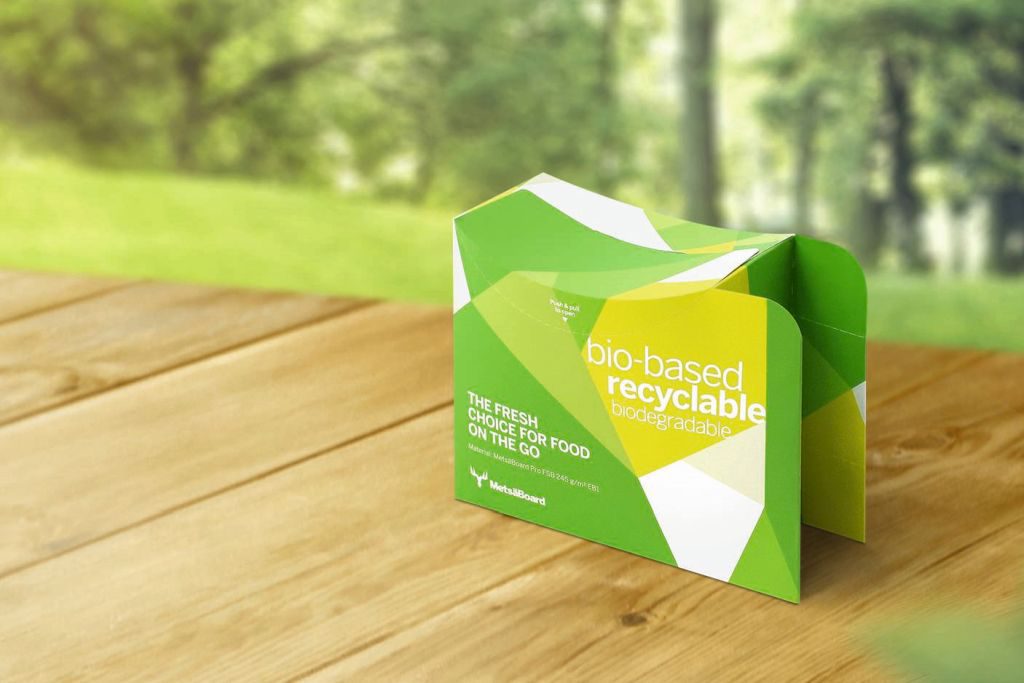
However, „appropriate and practicable solutions must be found“ to achieve the desired goals. The ambitious measures should not lead to the development of a bio-based circular economy being hindered through the back door. The Federal Council states that a functioning circular economy for plastic-based and plastic-containing packaging will not be possible in the future without virgin material. To this end, the use of sustainably produced, renewable raw materials in virgin packaging materials should be made mandatory.
The Federal Council expressly criticises the fact that the Commission can define the criteria for recycling-oriented design and the performance characteristics for recyclability.
In the packaging journal TV studio at interpack Dr Wolfgang Trunk from the EU Commission on the proposals from Brussels for a new EU packaging regulation.
Among other things, the Federal Council rejected making the gradually increasing use of renewable raw materials mandatory in the proposed ordinance.
The minimum requirements for recyclates should also not be apply exclusively to plastic-based packaging. The Chamber of the Federal States spoke out against chemical recycling being recognised in the European regulations.
A recommendation by the Environment Committee stated that the use of food contact packaging, which is made up of several layers of different types of plastic glued together and is therefore usually not recyclable or only recyclable with difficulty, should remain possible in cases where this is necessary. The Federal Council rejected this in its vote.
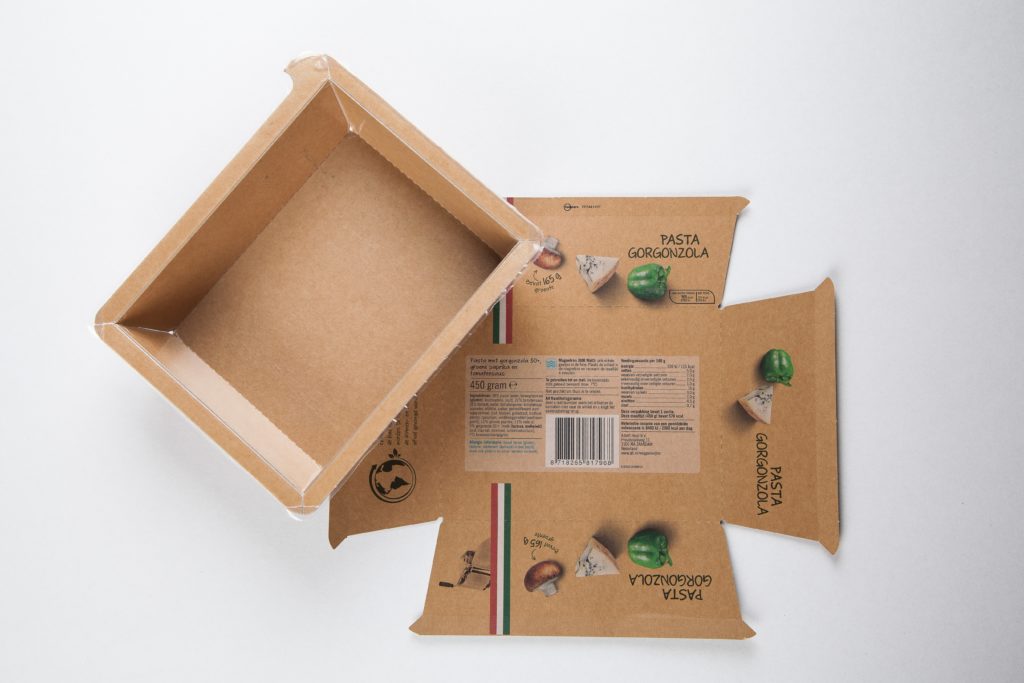
Contrary to the committee's recommendation, the Federal Council is not in favour of taking a holistic view of the life cycle of packaging in e-commerce in its statement today. Originally, the Economic Committee was in favour of exempting paper-based packaging from the requirements for reusable packaging in the non-food mail order business due to the high recycling rates across Europe.
In its final statement, however, the Federal Council dropped this criticism of the current draft of the EU Packaging Regulation.

The Federal Council has missed an opportunity here to advocate for recyclable, customer- and transport-friendly packaging at EU level. For a sustainable, climate-friendly future, new regulations must be based on facts
Björn Schumacher from Schumacher Packaging
In total, the Bundestag adopted around 50 of the 60 recommendations made by the parliamentary committees. We document here in detail which recommendations were accepted and which were rejected.
The Federal Council welcomes the aim of the proposal to update the EU legal framework for packaging and packaging waste to reduce the negative environmental impact of packaging and packaging waste while improving the functioning of the internal market. In particular, the aim is to reduce the generation of packaging waste, to organise a circular economy for packaging in a cost-effective manner and to promote the use of recycled materials in packaging.
The Federal Council supports the Commission's objective of creating a standardised framework for the sustainable use and recycling of packaging and packaging materials with the proposed Ordinance on Packaging and Packaging Waste. It points out that appropriate and practicable solutions must be found to achieve the desired objectives. The ambitious measures must not lead to the development of a bio-based circular economy being hindered through the back door.
The Federal Council notes that the proposed regulation includes a broad group of addressees, which is why a very clear and concise structure is essential for implementing the measures and monitoring the obligations. However, the obligations of the economic operators and requirements for packaging are in part only fragmented in the draft. Against this backdrop, the Federal Council asks the Federal Government to advocate a re-examination of the structure in order to ensure even better clarity for all addressees.
In its current form, the draft relates exclusively to the principle of the free movement of packaging on the internal market in accordance with Article 114 TFEU. The Federal Council considers it necessary to also base the regulation on the principle of environmental protection in accordance with Article 192 TFEU. Further measures taken by the Member States for a more sustainable management of packaging waste should not be restricted by this Packaging Ordinance.
- because paragraph 4 adopted -
The Federal Council considers the requirements for sustainability and recyclability to be an important step towards a circular economy for various packaging materials. The Federal Council considers it necessary that, in addition to the use of recyclates, the gradually increasing use of renewable raw materials should also be included in the proposed ordinance on a binding basis.
The Federal Council recognises that a functioning circular economy for plastic-based and plastic-containing packaging will not be possible in future without virgin materials. The Federal Council considers it necessary to make the use of sustainably produced, renewable raw materials in virgin packaging materials mandatory and to gradually increase their proportion.
The Federal Council considers the Commission's definition of innovative packaging using novel materials to be ambiguous. In order to create legal certainty, the Federal Council considers it necessary to include innovative polymers in the definition and to create a 10-year exemption from the measures for recyclable packaging for these. These polymers can thus be combined into recyclable material streams and a recycling system can be established
The Federal Council welcomes the fact that outer packaging and transport packaging in the form of cardboard as a fibre-based packaging material are excluded from the scope of reusable quotas and reusability. Instead of a blanket prioritisation of reusable solutions, the Federal Council considers holistic life cycle analyses of packaging to be necessary in order to find the most suitable packaging solution. Fibre-based packaging has the highest recycling rate in Europe. The Federal Council is therefore in favour of creating exemptions for fibre-based packaging for transport and secondary packaging in e-commerce as well
The Federal Council criticises the fact that the Commission can define the criteria for recycling-oriented design and the performance characteristics for recyclability by means of delegated acts. The Federal Council considers it necessary for these criteria to be regulated in consultation with economic operators by already established organisations such as the European Committee for Standardisation (CEN).
The Federal Council suggests that the minimum requirements for recyclates should only apply to plastic-based packaging. The use of recycled plastic in fibre-based packaging that contains plastic for technical reasons or to comply with hygiene requirements has neither been researched nor tested and is therefore not technically feasible.
The Federal Council notes that no data is available to date on the material testing of recyclates in contact with hazardous goods. The Federal Council therefore considers it necessary that contact-sensitive packaging in accordance with Directive 2008/68/EC is not regulated within the Packaging and Packaging Waste Ordinance.
In the opinion of the Federal Council, the ordinance should take into account the principle of technological openness with regard to recycling and the minimum content of recycled material. The Federal Council calls for chemical recycling to be recognised in European regulations.
The Federal Council welcomes the proposal to minimise packaging. However, the Federal Council considers it necessary to introduce a mandatory quota for the maximum void ratio here as well.
In the opinion of the Federal Council, monomaterials have an advantage over composite materials with regard to the recyclability of packaging. The Federal Council points out that financial incentives for particularly recyclable packaging within the framework of EPR licence fees are an important lever for achieving the objectives of the proposed ordinance.
The Federal Council welcomes the proposed regulation in principle. However, it believes that it contains provisions that could potentially have a negative impact on food safety and considers it essential that regulations on packaging and packaging waste are consistent with EU food safety requirements.
The Federal Council considers it necessary to consider the inclusion of exemptions for certain food packaging from the obligation under Article 6(1) of the proposed regulation, according to which all packaging must be recyclable. The use of food contact packaging, which consists of several layers of different types of plastic glued together and is therefore usually not or only with difficulty recyclable, should remain possible in cases where this is necessary. Such packaging enables the incorporation of barrier layers that, for example, keep oxygen away from the food or retain protective gases in the packaging, thus contributing significantly to a longer shelf life and therefore to the health safety of food. The general obligation to recyclability would mean that such packaging could no longer be used. However, alternative packaging materials that are recyclable are less effective at protecting food from negative influences. In addition to these aspects of food safety, the Federal Council recognises the risk that the faster perishability of food in packaging with a lower level of protection could lead to more food having to be disposed of. This would encourage food waste, which should be avoided at all costs when considering the consumption of resources in the production of food and therefore also for environmental reasons.
In the opinion of the Federal Council, the definition of minimum recycled content for food packaging in accordance with Article 7 of the proposed regulation should be seen in the context of the relevant EU regulations on safety (Regulation (EU) 2022/1616). Certain harmful substances („not intentionally added substances“, NIAS) can be produced by the current recycling processes and the ageing of the plastic, which then transfer to the packaged food, making it unfit for human consumption.
In recent years, numerous plastic materials and recycling processes have been assessed by the European Food Safety Authority (EFSA) for their suitability for use as food contact materials as part of authorisation procedures, of which only recycling processes for polyethylene terephthalate (PET) have so far been positively assessed due to the NIAS problem. According to the Federal Council's assessment, it is not foreseeable that safe processes will be available in the medium term for plastic types other than PET that can fulfil the required recycled content and do not cause any unacceptable changes to the food. The Federal Council therefore considers it necessary, in order to ensure food safety, to evaluate the specification of minimum proportions of recycled materials in conjunction with Regulation (EU) 2022/1616 for food packaging made of plastics other than PET.
The draft Packaging Ordinance makes an important contribution to promoting the circular economy and conserving resources, particularly in view of the fact that packaging generates such a high volume of waste and has a high littering potential. In this respect, the Federal Council believes that the proposed quotas for reuse and refilling as well as the recycling targets and the use of recycled content can still be improved and asks the Federal Government to speak out in favour of stricter targets. The welcome instruments contained in the draft will only lead to significant improvements in the circular economy if the level of ambition is set correspondingly high.
29 The Federal Council considers it an important signal that the draft provides for extensive minimum recycling quotas in order to promote the use of secondary raw materials and stabilise their use in production. The Federal Council therefore sees the following need for adjustment:
a) The Federal Council notes that the licence fees for plastic packaging should be calculated on the basis of both recyclability and recyclate content. This represents a special regulation compared to packaging made of other materials, as recyclability alone is taken into account for the latter. The Federal Council points out that both the steering effect of the licence fees should be as clear as possible and the calculation should be as simple as possible. This will enable the licence fees to have the best possible effect. This realisation is also contained in the impact assessment for the Packaging Ordinance, but was not taken into account in the draft ordinance. The Federal Council therefore asks the Federal Government to work towards ensuring that the basis for calculating the licence fees for plastic packaging should be exclusively recyclability in the negotiations at EU level.
b) The Federal Council is aware that the recyclate content in plastic packaging is comparatively low in contrast to other packaging materials and that effective measures must therefore be taken to increase the recyclate content. One effective measure could be the tightening of the requirements for the assessment of recyclability in Annex II, Table 2 of the proposed regulation. The Federal Council asks the Federal Government to work towards tightening the requirements for the assessment of recyclability in Annex II Table 2 in the negotiations at EU level, for example, the performance levels D and E standardised in Annex II Table 2 should be dropped, as these allow a recyclability of less than 80 percent - based on the weight of the packaging.
c) In order to take appropriate account of the differences between industrial/commercial and household packaging, particularly in terms of size, material and recycling structures, industrial/commercial packaging should also be included in Table 1 of Annex II to the proposed regulation.
d) The Federal Council points out that the currently envisaged assessment criterion for so-called large-scale recyclability, which provides for a recycling infrastructure that covers the packaging waste of at least 75 per cent of the packaging waste of the EU population, is not very meaningful. This could already be achieved by a few large Member States. The expansion of infrastructures and recycling capacities in the Member States would not be sufficiently promoted by this assessment criterion alone. Instead, large-scale recyclability could be based on the available recycling capacity in relation to the amount of packaging waste generated.
e) The recyclability requirements are only based on the packaging itself and do not take into account possible interactions with the contents, which could, for example, lead to residual adhesions, which in turn could impair the recyclate quality. In the opinion of the Federal Council, packaging containing hazardous substances should be collected and recycled separately in accordance with the provisions of the Packaging Act. To this end, it asks the Federal Government to advocate the inclusion of a definition of filling goods containing hazardous substances in the ordinance.
The fulfilment of the recycling requirements of the proposed regulation also requires that effective measures are taken to combat under-participation by actors who evade their extended producer responsibility. The Federal Council therefore sees the need to amend the proposed regulation accordingly:
a) The obligation of distributors in Article 17 (2) must be supplemented by an examination of the individual or collective authorisation to fulfil the obligations of extended producer responsibility in accordance with Article 39. The Federal Council points out that Article 17(2)(a) in the draft regulation incorrectly refers to Article 39 instead of Article 40 and asks the Federal Government to advocate a correction.
b) Similarly, the obligations of online platform providers in Article 40(3) and fulfilment service providers in Article 18 should be supplemented by the obligation to verify individual or collective authorisation by means of the authorisation certificate from the competent authority, which must be submitted by the manufacturer; the submission of a self-certificate only provided for in the draft is inadequate.
It should be noted that the quotas for reuse and refilling provided for in Article 26 of the proposed regulation are not very ambitious in some cases and the implementation deadlines of 2030 and 2040 are still a long way off. The Federal Council asks the Federal Government to advocate the following amendments and additions:
a) Due to the varying degrees of development in the Member States, it is necessary to include an authorisation basis that allows Member States to set stricter quotas in order to be able to abandon more ambitious targets in existing re-use systems.
The reuse and refill quotas for packaging for food in the take-away sector in paragraph 3 of the proposed regulation should not be limited to the catering industry, but should be extended to all final distributors of food in the take-away sector in the same way as the reusable offer obligation under the Packaging Act.
c) Furthermore, it should be examined whether an extension of the reuse and refill obligations in other areas that are considered sensible can be implemented in the medium term. Here, for example, packaging for drugstore items or glass packaging such as for cooking oils would be predestined groups.
d) In order to ensure a Europe-wide exchange and use of packaging for reuse, the Federal Council considers it sensible to specify EU-wide standardisation. A negative example is individual bottles in the beverage sector, which have to be transported back to the bottler, possibly over long distances, as they are not poolable due to their individual design features.
The Federal Council asks the Federal Government to advocate that an additional ambitious recycling quota for liquid cardboard packaging be defined in Article 46 of the proposed regulation. Liquid cardboard packaging is sorted out of a collection mix and recycled as a separate material stream.
a) The Federal Council takes a critical view of the provisions of Article 8 of the proposed regulation regarding compostable plastics with regard to the national recycling infrastructure for biowaste (plants for composting and/or fermentation) and the existing national legal framework (in particular the Biowaste Ordinance). In addition, compostable plastics do not add any value to the compost or digestate produced and are merely (ideally) completely degraded, i.e. disposed of rather than recycled. Compostable plastics lead to problems in the majority of biowaste recycling plants (composting and fermentation) (insufficient degradation or disintegration in practice) and jeopardise the acceptance of this resource-conserving recycling method due to the visible plastic residues in the composts and fermentation residues. This applies in particular to tea and coffee capsules. The Federal Council therefore asks the Federal Government to advocate that the packaging referred to in Article 3(g) (so-called tea and coffee capsules) be deleted without replacement in Article 8(1) of the present draft.
b) The Federal Council also sees the risk that a large proportion of these compostable plastics will be recognised as foreign matter in the inlet of the biological treatment plants, separated together with conventional plastic contaminants and (usually) sent for thermal recycling. During this process, a considerable proportion of organic matter is lost for further high-quality recycling due to adhesions. This applies in particular to the very light plastic carrier bags referred to in Article 8(1) of the proposed regulation when they are sent to the majority of national biological waste treatment plants. The Federal Council therefore asks the Federal Government to work towards transferring the very lightweight plastic carrier bags from paragraph 1 to paragraph 2.
c) The Federal Council is of the opinion that the use of compostable packaging and its supply to biological waste treatment plants should be limited to an absolute minimum for the reasons mentioned above. It therefore takes a critical view of the delegation of power to the Commission in Article 8(5) of the proposal for a regulation on the adoption of delegated acts amending paragraphs 1 and 2 of Article 8. Against this background, the Federal Council asks the Federal Government to advocate the deletion of Article 8(5) without substitution.
The Federal Council therefore recognises the Commission's proposal in Article 39 that manufacturers can transfer their registration obligation entirely to producer responsibility organisations. It assumes that this transfer will be accompanied by a corresponding reduction in the bureaucratic burden of registration obligations for the packaging users who place the manufactured packaging on the market. Otherwise, exemptions should be created for micro-entrepreneurs, in particular for agricultural direct marketers.
The Federal Council requests that additional burdens on micro-entrepreneurs, in particular for agricultural direct marketers, be averted during further discussions at EU level. This also applies in particular to the design of the proposed authorisations, such as those relating to the additional labelling requirements under Article 4(5) of the proposed regulation.
The Federal Council also considers exceptions to the labelling obligation (Article 11) to be necessary for micro-entrepreneurs, in particular for agricultural direct marketers, in order to avoid the additional work involved in adapting the labels. At the very least, clear and practicable requirements are necessary to enable these small businesses to implement the labelling easily and with legal certainty.
All other figures not mentioned here were APPROVED in a single vote. The complete Bundesrat printed matter you can find here.