Innovative Packaging Concepts from BASF
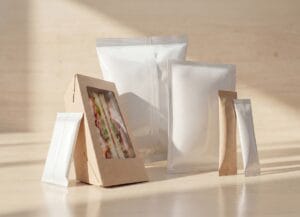
BASF is presenting solutions for the packaging industry at interpack 2026 that focus on sustainability and efficiency. The emphasis is on materials that reduce the ecological footprint.
Read more " 



The study compares flexible multilayer packaging with the same packaging based on fossil raw materials. Rigid mozzarella packaging based on fossil raw materials was also analysed. The study was reviewed by a panel of three independent experts.
„This study helps us to better understand the environmental impact of both the packaging format and the raw material source within the entire life cycle of a mozzarella pack.“
Dr Paul Neumann, New Business Development & Sustainability Polyamides Europe, BASF.
The The packaging format plays an important role in terms of environmental compatibility: Compared to flexible multilayer packaging, the rigid hard-shell packaging system, which consists of a mono polypropylene cup in combination with a multilayer lidding film, has the highest potential environmental impact in almost all categories. This illustrates the potential positive effects of flexible packaging, as significantly fewer raw materials are used and therefore less packaging waste is produced.

„With our partners South pack and Sphera we have additionally analysed the use of various sustainable raw materials in flexible multilayer packaging for mozzarella, be it the sustainable polyamide Ultramid Ccycled BASF, which is made from chemically recycled raw materials, or Ultramid BMBcert, which is made from renewable raw materials, in combination with polyethylene,“ explains Neumann.
The results show that by using flexible multilayer packaging with a high proportion of chemically recycled or renewable raw materials significantly lower environmental impact, in particular a reduction in CO2-emissions, can be achieved.
In addition Various technical and methodological scenarios including the use of green electricity and chemical or mechanical recycling at the end of the packaging's life cycle.
The Study is based on the international standards for life cycle assessments (ISO 14040:2006 and 14044:2006) and the CO2-footprint of products (ISO 14067:2018).
SourceBASF