The Fraunhofer Institute wants to combat counterfeit medicines with a new barcode system. The SmartID system creates a counterfeit-proof barcode based on the surface texture of the packaging.
The market for counterfeit medicines is flourishing worldwide. About Every tenth medicine purchased on the Internet is a counterfeit, This affects a wide range of products - from lifestyle medicines such as slimming or hair growth products to essential medicines such as drugs for cancer, pain or high blood pressure. In order to give consumers the opportunity to confirm the authenticity of medicines and products of all kinds, the Fraunhofer-Institutes for Applied Polymer Research IAP, for Secure Information Technology SIT and for Open Communication Systems FOKUS Innovative labelling system developed - SmartID.
„With SmartID, anyone in the supply chain can verify and authenticate a product bearing a SmartID code directly via smartphone - offline, i.e. without having to access a database. We utilise the fact that each packaging has a unique, characteristic surface texture - like a human fingerprint - and that standard smartphone cameras are able to capture this surface texture.“
Dr Tobias Jochum, who coordinates the project and works at the Fraunhofer Centre for Applied Nanotechnology CAN in Hamburg, a research division of the Fraunhofer IAP
Display
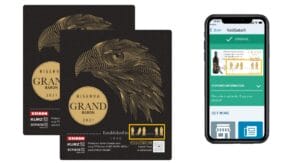
The Information about the texture of the surface is digitised, converted into a barcode and printed on the packaging. The SmartID app developed in the project is then used to check whether the information stored in the barcode matches the data from the recorded surface structure. The result is a tamper-proof barcode, which also contains further information about the product. can. The advantage for manufacturers is that no IT infrastructures need to be set up, This is because verification and authentication take place exclusively within the SmartID app on the smartphone. This means there is no need for a database. The system can also be easily integrated into commercial printing processes during the production of the packaging.
„An important requirement for the SmartID concept is that the barcode and the area for synchronising the surface textures should be as small as possible. As the project progresses, we are therefore optimising the system in terms of its required surface area and also its sensitivity. Quantum materials play a key role here. They make it possible to detect significantly more features of the surface texture in a smaller area.“
Dr Tobias Jochum
The research team has been continuously developing the labelling system for three years and is attracting attention. »The interested parties for SmartID come from a wide range of industries in which high-quality products are sold - e.g. from the interior design, mechanical engineering, the printing industry and the medical sector. This also includes protective textiles such as respiratory masks,« explains Jochum.
»Although we are currently still in the project development phase, we are already implementing First licence negotiations for SmartID technology«, says Jochum happily. The partner is evia research GmbH. It wants to use SmartID in the fashion industry.
„The variety of enquiries we receive shows us that we are on the right track. We are already looking forward to interesting discussions and to familiarising ourselves with new areas of application for SmartID at MEDICA. Companies can get a direct impression of our demonstrator here.“
Dr Tobias Jochum
Source: Fraunhofer IAP
More news on counterfeit protection


RFID inlay for the microwave

Collaboration for interaction at the PoS

Partnership to combat counterfeiting

Paper labels with first-opening protection