The packaging industry is looking for more sustainable packaging materials and is finding them in monomaterials, paper-based packaging and cardboard packaging. However, sealing these sensitive materials securely and visually flawlessly poses a challenge for conventional joining processes. Ultrasound offers an efficient and precise sealing technology that can fulfil these requirements.
The use of monomaterials is an important tool on the road to a sustainable packaging industry. As mono-material packaging can be recycled, it makes a decisive contribution to achieving the goal of a truly circular economy. The following applies: The more homogeneous the packaging material, the better it can be reused. The use of mono-materials in the industry has increased enormously in recent years in order to fulfil legal requirements and also to achieve self-imposed sustainability targets. This trend can already be observed in wet animal feed in particular, but also in film packaging, such as for sliced salad.
The spread of monomaterials is still hampered by the complex requirements for further processing. Single-layer films or recyclable composites such as OPP/PP are extremely susceptible to thermal damage due to their sensitive material properties. Conventional joining methods, such as heat sealing, therefore reach their limits.

Ultrasound enables a gentle sealing process
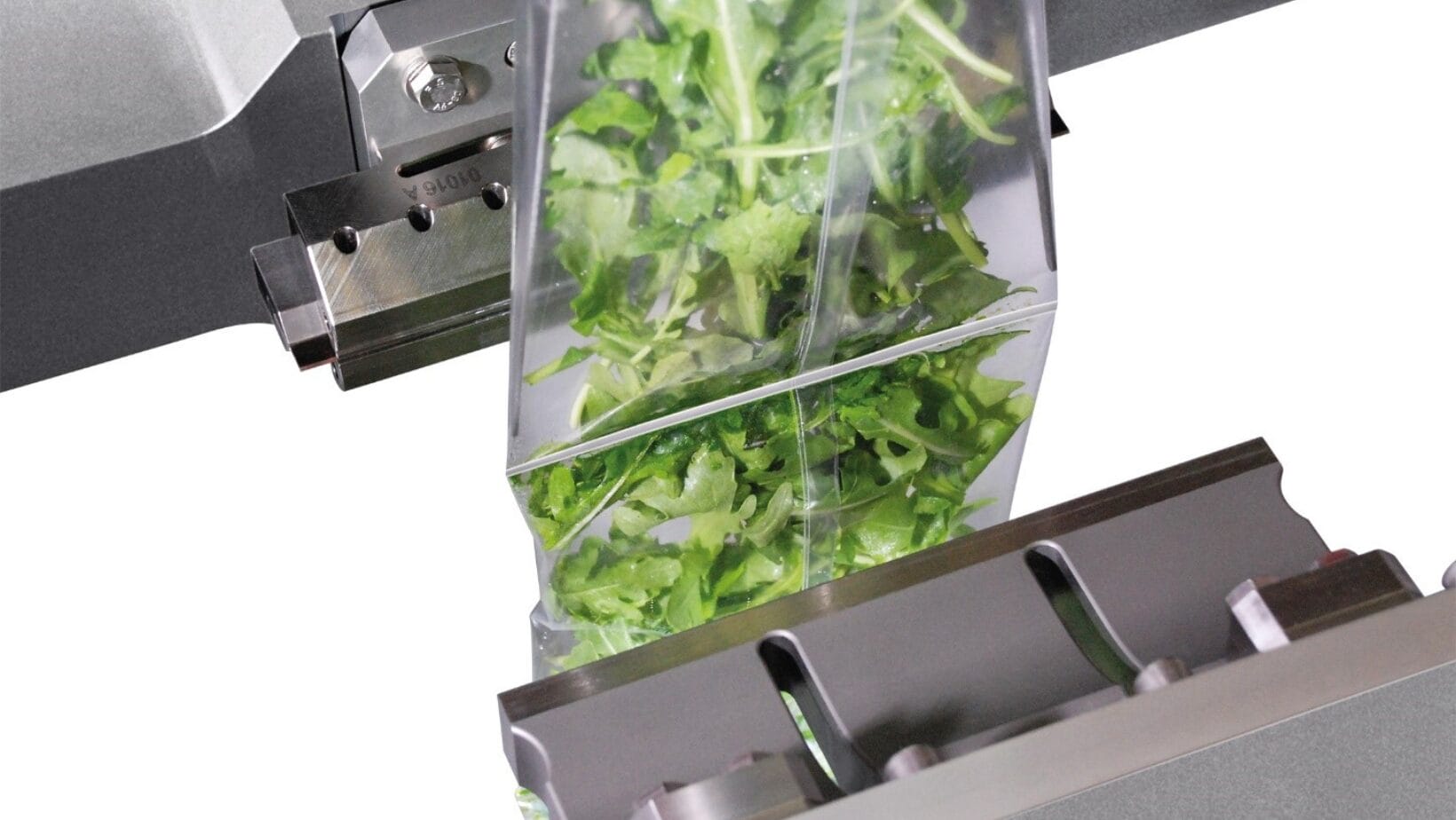
Ultrasonic sealing has proven to be a more efficient sealing process for monomaterials. In this process, thermal energy is only generated inside the seam area due to friction between the materials. The welding tools remain cold during the entire sealing process. As a result, the carrier layer remains completely intact, while the layers on the inside bond together on a molecular basis to form a material bond that is absolutely tight.
The energy input during an ultrasonic sealing process is only a fraction of the energy requirement for sealing processes that work with external heat input. It can also be precisely controlled and customised to the properties of the mono material. This guarantees a reproducible sealing result with an impeccable appearance, even with narrow process windows. However, due to the lower resistance of recyclable materials compared to conventional packaging materials, it can happen that with a smoother sealing process must be worked. This may result in a longer welding time and thus influence the cycle rates.
Paper as a sustainable alternative?
In addition to monomaterials, the use of paper-based packaging is also increasing in the industry. They are not made of pure paper, but also contain a small proportion of plastic, which is serves as a barrier to protect the food. How high this percentage may be varies from country to country.
While only five per cent plastic is permitted in Germany, this figure is over 20 per cent in other countries. Although a high proportion of plastic makes it easier to process the packaging material, it can have a negative impact on the quality of the packaging. poorly recycled or no longer recycled at all are used. Only paper packaging that uses very little plastic and can therefore be returned to the paper recycling cycle without major losses is therefore truly sustainable.
Here, too, the Ultrasound as a safe joining technology that joins packaging with a plastic content in the low single-digit percentage range can. Burns on the paper and other visual impairments that can occur when using heat-sealing processes are avoided thanks to the cold ultrasonic sealing tools. This applies to both thinner paper layers and thicker cardboard packaging materials, such as those used for drinks cartons. This application currently uses often with a thin layer of aluminium on the inside which makes it possible to seal the packaging using induction welding. For ecological reasons, however, more and more companies are planning to remove this layer from the packaging. As a result, alternative joining processes such as ultrasonic sealing are also required for these applications.
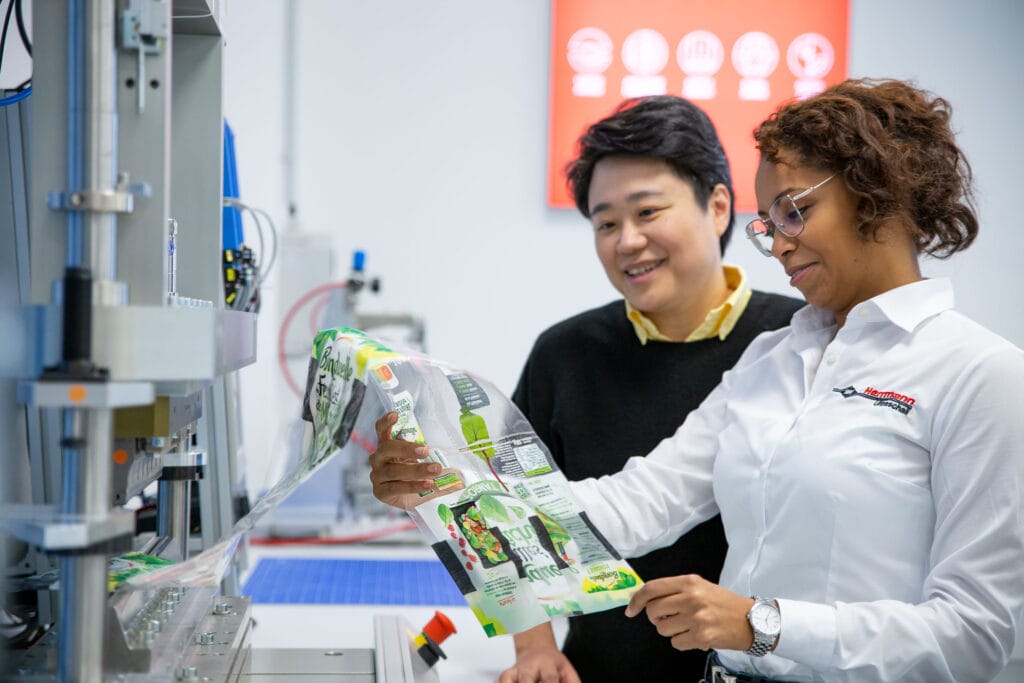
Herrmann ultrasonic technology)
Welding tests provide safety
Switching to mono-materials or other recyclable packaging materials can help to save plastic, improve the circular economy and achieve sustainability goals. Which materials and compositions can be ultrasonically sealed can be be evaluated in feasibility tests in ultrasound laboratories. In these tests, the materials are first tested for their ability to be activated by ultrasound. For this purpose, laboratory tools and settings are selected that are as close as possible to the later production conditions. The quality of the weld is assessed using various analysis methods, including optical evaluation, tensile tests and a leak test. Finally, application engineers make recommendations regarding further steps or estimate the effort required to solve the application.
When switching to monomaterials or paper-based packaging materials, it may be sufficient to adjust the welding parameters. But especially When using new types of film, it may be necessary to develop a completely new welding process. An application-specific welding concept is created together with the customer and, if necessary, new ultrasonic welding tools are designed and manufactured. This is the only way to guarantee a reliable process with tight seams and a flawless appearance.
Source: Herrmann Ultrasound