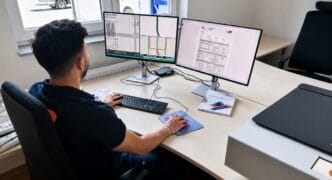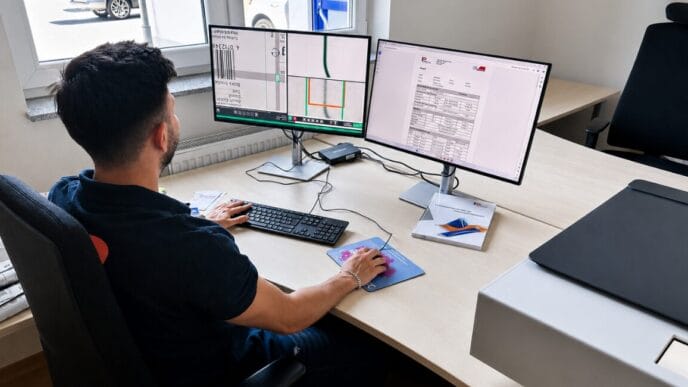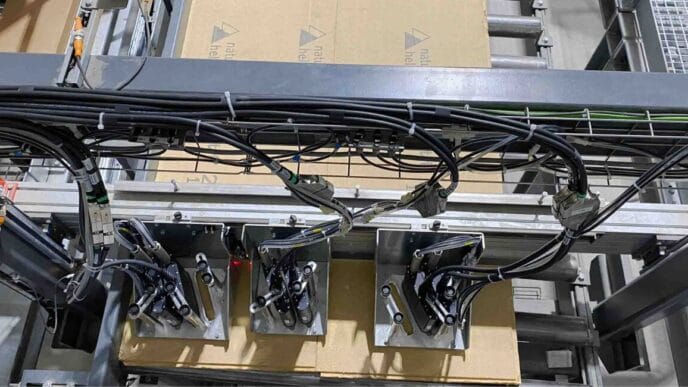
Increasing sustainability in the paper recycling cycle and countering the shortage of skilled labour: In the BMWK joint project „KIBAPap“, the Fraunhofer IVV is working with project partners to develop a self-learning assistance system for machine operators that will help to reduce the resources required in the complex process of paper production from waste paper. The project was recently honoured with the European Paper Recycling Award 2023.
The joint project „KIBAPap“ also enables the sustainable safeguarding of expertise within the company and thus offers an answer to the challenges posed by the shortage of skilled labour. The research project was honoured in Brussels with the European Paper Recycling Award 2023 in the „Innovative Technologies and R&D“ category. The European Paper Recycling Council (EPRC) honours the following with the award forward-looking projects that contribute to achieving the ambitious goal of the European Declaration on Paper Recycling. The aim is to achieve a waste paper recycling rate of 76 per cent by 2030.
Strengthening the sustainability of the circular paper economy
However, the paper manufacturing process remains resource-intensive. In particular, the fluctuating quality of waste paper has a significant impact on resource consumption. The aim of the project is therefore to Proactive adjustment of production parameters to the actual quality of the raw material and digitalisation of the recycling cycle to significantly reduce both water and energy consumption. For the project partner Leipa, for example, the process experts assume a reduction in energy requirements of up to five per cent, which would correspond to around 108,000 MWh of energy for an annual production volume of around one million tonnes.

Optimisation of paper production through data networking
The novelty of the technology solution is the cross-company networking and utilisation of process data from the individual value creation steps, that do not yet exist. This makes it possible to holistically record the causal chains of the paper production value-added cycle, describe them across processes and derive targeted optimisation approaches from them.
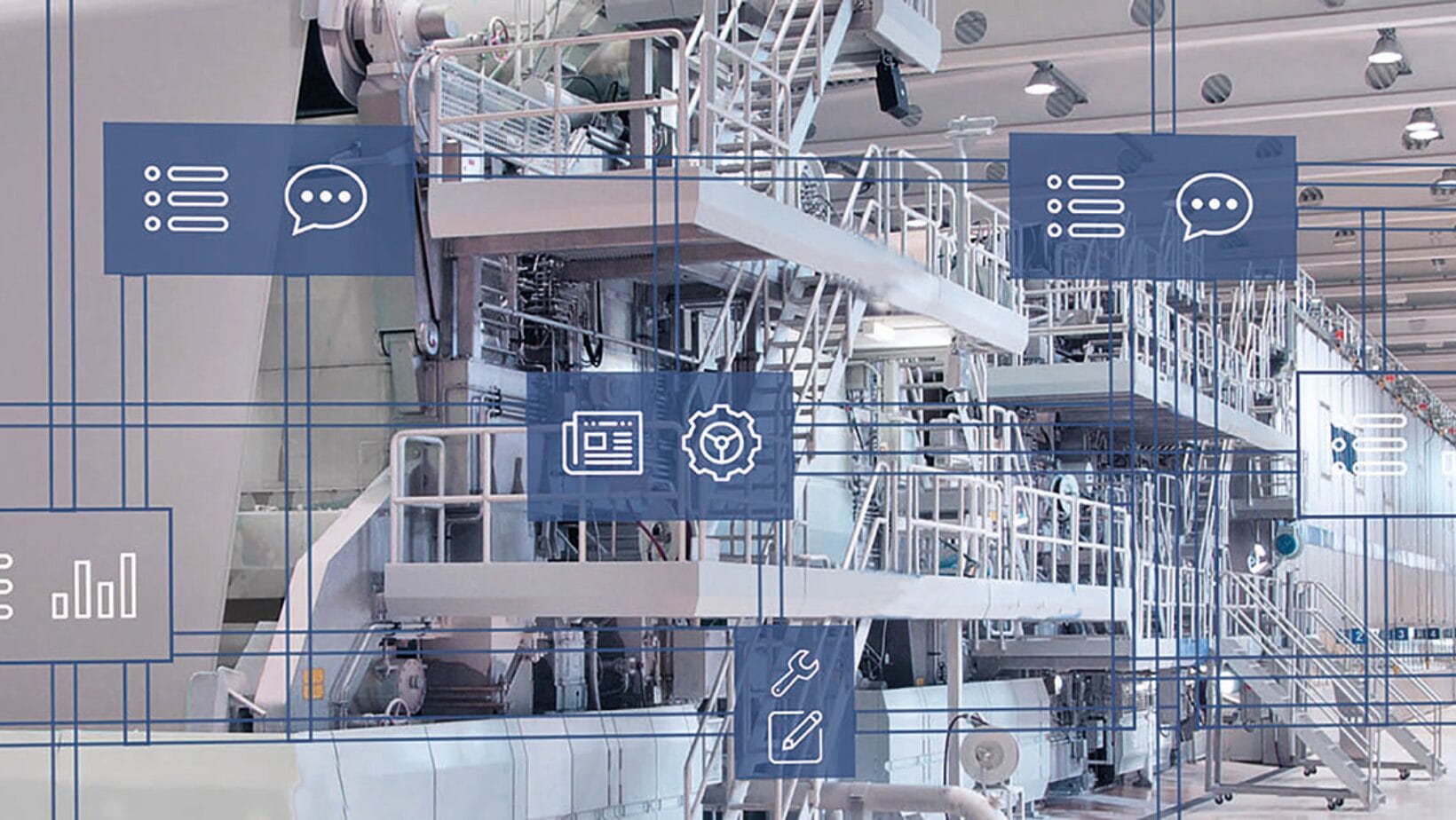
The data from the various production systems (e.g. process control system or machine control system) converge in the operator assistance system and are bundled and presented there in a task-orientated manner. At the same time, the system enables digital storage of production knowledge.
Trained on historical data, the system recognises whether the machine operator needs to intervene in the current situation and generates suitable solutions from which the operator can choose. This allows the operator to gain experience and a deeper understanding of the process, React more quickly and purposefully to disruptive situations and eliminate them sustainably.
For the company, this means that the knowledge gained through the assistance system is shared among employees and is retained in the company even when employees leave.
The project partners: Consultingtalents AG, Leipa Group GmbH, Munich University of Applied Sciences, ITA of RWTH Aachen University, Chair of International Production Engineering and Management, Institute of Production Engineering at the University of Siegen, Propakma GmbH, Veolia Umweltservice GmbH.
Source: Fraunhofer IVV