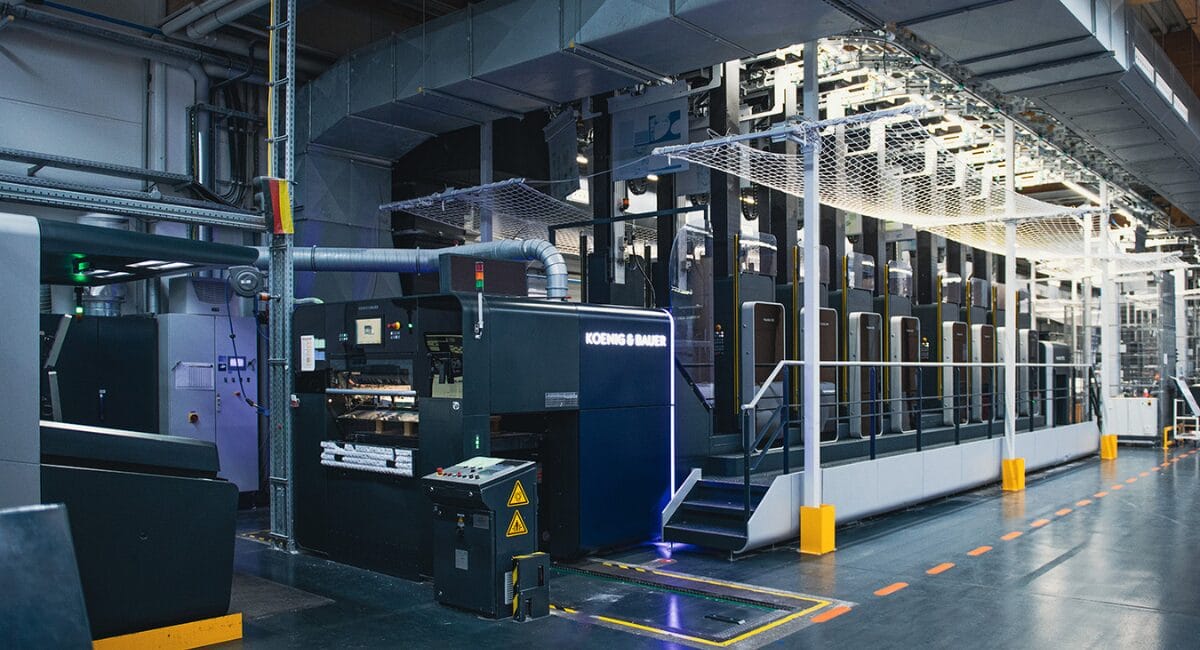
Koenig & Bauer installed a printing plate logistics system at the Mainfranken site, which has since transported more than one million printing plates. In the web-to-print business, process automation leads to high production.
With the automation of plate feed and transport directly to the changing chutes of the printing units and back to the disposal station, the Increasing the performance of printing machines. Particularly in the area of ultra-short runs, which are the order of the day in the web-to-print business, production can be organised more economically in this way. Koenig & Bauer offers maximum process automation with printing plate logistics that has enabled over one million printing plate changes in just two years when used at Druckhaus Mainfranken.
An independent system is used for each of the connected Rapidas at the Marktheidenfeld site. The printing plates are transported from prepress to the presses using plate trolleys. Here they are separated and taken into the transport system, identified using a DataMatrix code, transported to the printing units, the printing plates are changed, transported to the disposal station and deposited on a pallet for disposal. The Chain conveyors with plate carriers form the basis of the transport carousels. Over 716,000 printing plates have passed through the logistics systems in the two years since commissioning.

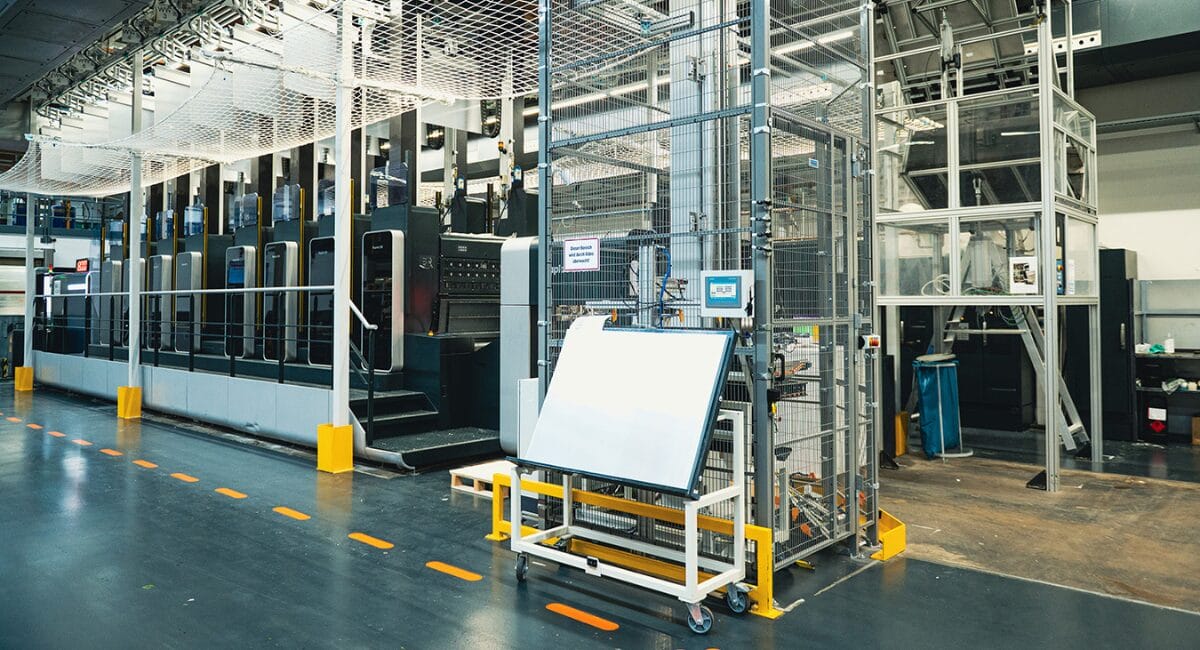
In Kesselsdorf near Dresden, the large-format Rapida sheetfed offset presses are integrated into a modular plate logistics system that goes one step further than in Marktheidenfeld. The Plates are already transferred to the chain conveyors in the pre-press stage. One of the Rapida presses receives the required plates via a switch - depending on the assignment of the individual print jobs to the presses. Plate logistics systems for large-format sheetfed offset presses - and at this level of automation - offer users a unique selling point. To date, they have been installed exclusively by Koenig & Bauer.
Ulrich Stetter, Managing Director of Druckhaus Mainfranken, sees plate logistics as a game changer in the web-to-print business: „Since we have been using the systems, the number of print jobs that we can process per shift and day has increased significantly.“ In addition reduce the error rate when changing discs compared to manual insertion of the printing plates into the change chutes.
There are few jobs that take longer. Most jobs - with 300 good sheets - are completed after just 3 minutes. This performance can hardly be achieved by a single person, especially over a complete shift. With a sequence of very short jobs, this person would have to cover a distance of 3 kilometres per shift on a medium-format Rapida. For short runs, printing plates with a mass of 148 kg per hour have to be moved, and correspondingly more for large formats. This workload pushes the operating personnel to their limits after a short time.
Source: Koenig & Bauer