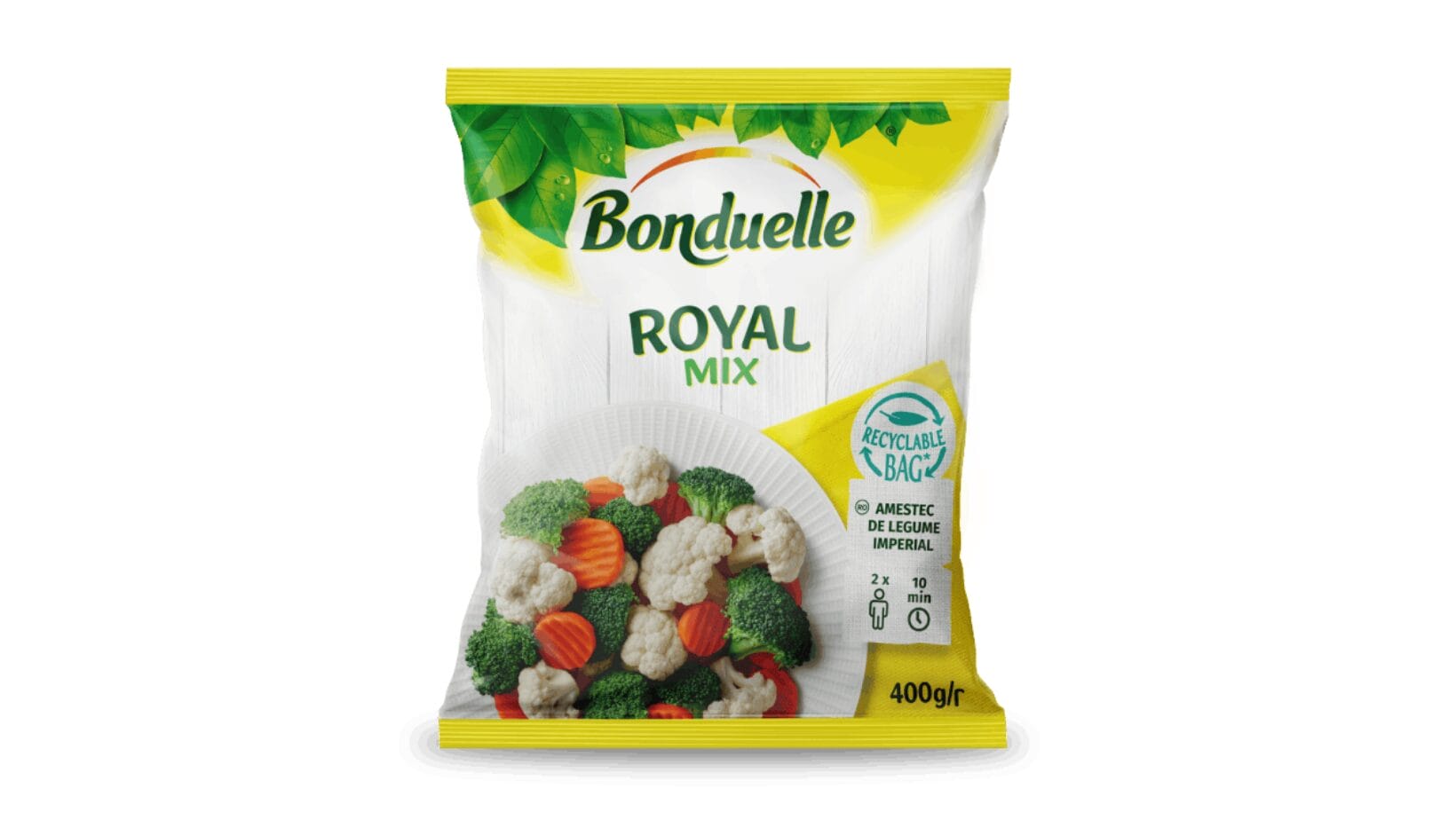
Food manufacturer Bonduelle has teamed up with ExxonMobil and Constantia Drukpol to develop a recyclable, non-laminated frozen food film that meets the company's sustainability goals and fulfils the strict requirements for frozen food packaging.
The aim of the project was to switch from conventional laminated, metallised films to a mono-material polyethylene (PE) solution, which improves recyclability and reduces complexity.
ExxonMobil, whose polyethylene portfolio offers processors and brand owners an extensive range of high-performance polymers and special co-polymers, and Constantia Drukpol, known for its expertise in polyethylene film conversion, have worked together on the new packaging solution. This now not only fulfils the functional requirements of deep-freeze films, such as sealability, mechanical strength and puncture resistance, but also supports Bonduelle's commitment to a circular economy.

By using the high-performance polyethylene Exceed from ExxonMobil, the new film achieved a better performance in puncture and tear resistance, especially for difficult-to-package vegetables such as spinach and broccoli. This development will enable Bonduelle to achieve its 2025 target of using 100 per cent recyclable or reusable packaging. It also represents a step forward in reducing plastic consumption, with a 25 per cent reduction in packaging material for its frozen food range in France.
„For our retail freezer bag category, we wanted to replace our previous multi-material metallised film as it was difficult to recycle. We opted for a mono-material PE solution without adhesives, which is easier to recycle compared to multi-material solutions. We faced many challenges during the development process, but thanks to the technical expertise of Constantia Drukpol and ExxonMobil, we were able to overcome them.“
Arnaud Warusfel, Packaging Development Manager at Bonduelle Europe Long Life
Source: ExxonMobil