Coperion and Herbold Meckesheim are supplying a complete system for bottle-to-bottle recycling to the Indian preform and plastic packaging manufacturer Magpet Polymer Pvt Ltd. In addition to the entire mechanical processing of the PET bottles, it includes all process steps relating to extrusion with a ZSK twin-screw extruder through to high-quality PET pellets.
The PET recycling system for Magpet is designed for a throughput of 5,500 kg/h. The PET pellets it produces have been approved by the European Food Safety Authority (EFSA) and the U.S. Food and Drug Administration (FDA). authorised for direct contact with food. It is also Brand Owner Approved.
„Magpet's aim is to play a pioneering role in the introduction of new technologies. The PET recycling plant is a big step in this direction. And it goes hand in hand with our efforts to be environmentally responsible. We are delighted to be working with Herbold and Coperion to set up this state-of-the-art PET bottle recycling plant in India.“
Devendra Surana, Managing Director of Magpet
Complete system with high efficiency from a single source
Magpet, which is part of the Magnum Group, has awarded Coperion and Herbold Meckesheim, both Hillenbrand companies, the contract for the entire plant because they have optimally harmonised their technologies and are realising efficient plastics recycling solutions that reliably deliver a high level of quality. Consistently high PET recyclate quality deliver.

The bottle-to-bottle systems from both manufacturers can be used to all recyclates processed together even if they have different iV values (iV = intrinsic viscosity) or fluctuating bulk densities. In addition, the Coperion-Herbold solution saves operating costs, logistics costs and energy compared to conventional PET recycling processes.
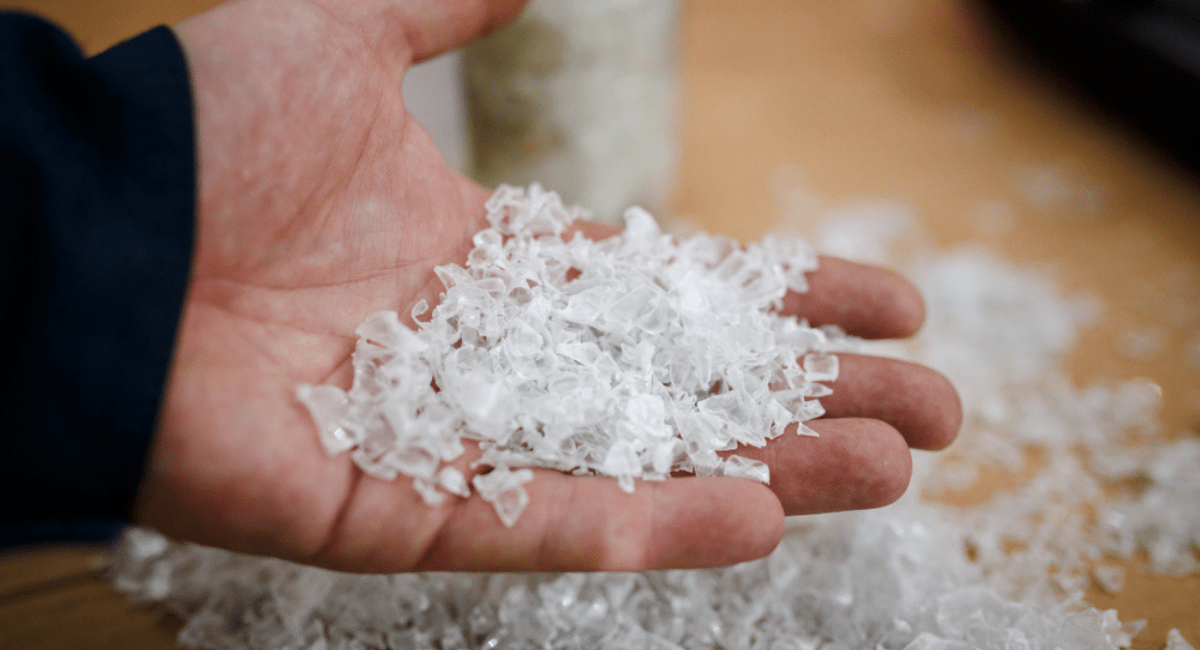
The system first processes the PET bottles into flakes. For this purpose, Herbold uses granulators with forced feeding and washing system technologies that process the PET in an energy-efficient and gentle way in order to minimise material loss due to fines formation and thus maximise yield.
This is followed by conveying and dosing into the ZSK recycling twin-screw extruder. There The PET flakes are gently melted, intensively dispersed and processed into a homogeneous mass. The twin-screw technology of the ZSK efficiently transfers the energy into the melt. Thanks to the high torque of the twin-screw extruder, the dwell time of the PET in the extruder is very short. Processing takes place at low temperatures. Degradation of the polymer chains is minimised and the product quality achieved is high. Volatile components such as monomers, oligomers and water are reliably removed from the melt and discharged. After leaving the ZSK recycling extruder, the still-warm material flow is transferred to an underwater pelletiser and condensed and decontaminated in an SSP reactor.
„In the bottle-to-bottle recycling plant for Magpet, we combine all the advantages of Coperion and Herbold Meckesheim technologies. All process steps, from mechanical pre-treatment to the finished recycled pellets, are optimally harmonised and PET of very high product quality is produced - with maximum energy efficiency.“
Jochen Schofer, Head of Sales Recycling at Coperion
Source: Coperion