APK AG has successfully scaled up its proprietary Newcycling technology for the recycling of post-consumer plastic waste. The focus is on flexible multi-material packaging waste as a material flow.
„We were able to increase the laboratory scale by a factor of 200 and are therefore arrived at an industrial scale,“ explains Dr Robert Marx, Chief Technology Officer of APK AG. „The development of Newcycling is progressing steadily, even during the provisional self-administration proceedings that APK AG is currently undergoing. Our post-consumer process is running smoothly and the quality of the corresponding Newcycling recyclates is impressive. Sensitive applications such as packaging in the personal care sector will represent an important market for our LDPE recyclate.“
Newcycling combines mechanical pre-treatment steps with solvent-based cleaning and separation processes. This enables the material technology to efficiently recycle complex and flexible packaging waste - such as multi-layer films - and obtain high-quality, unmixed recyclates. After initially being scaled up on the basis of waste from multilayer film production and trialled up to commercial LDPE and PA products, Newcycling is now focusing on post-consumer waste.

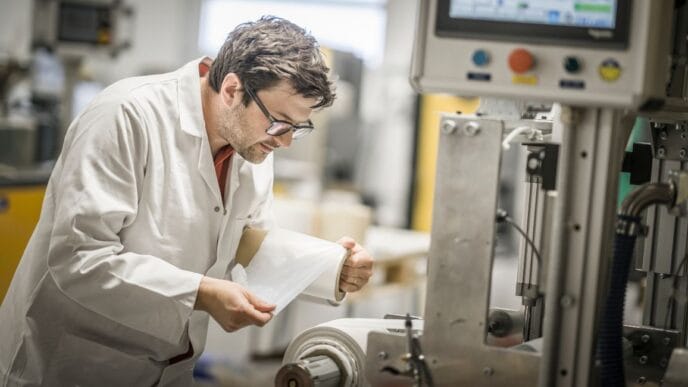
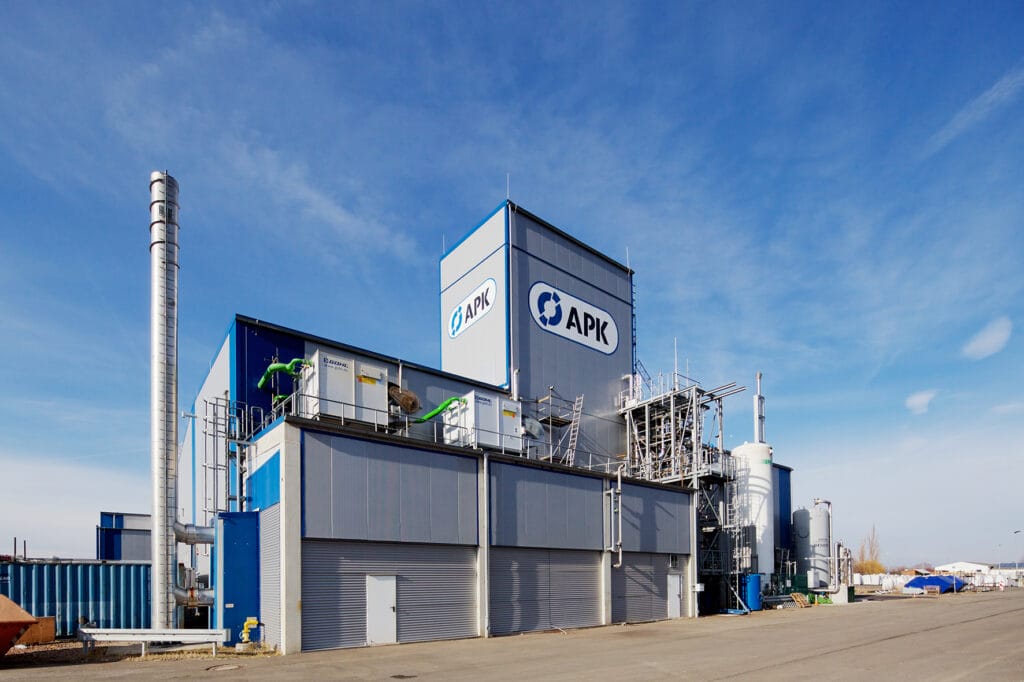
The successful scaling of post-consumer Newcycling was made possible thanks to of the subsidiary APK Newcycling Competence Centre GmbH (APK NCC) rapidly driven forward. In 2022, APK AG acquired the technical centre in Industriepark Höchst, Frankfurt am Main. „The most important task of our pilot plant is to prepare and optimise the processes developed by APK AG for later production,“ says Dr David Blum, Managing Director of APK NCC and Operations Manager of the pilot plant. Not only the volume could be increased 200-fold - The quality of the recyclates was also successfully reproduced and improved in terms of decolourisation and yield. „We have shown that recyclates from our campaigns can be used for personal care applications, especially for cosmetic rinse-off applications. External toxicologists have confirmed this based on our data,“ explains Hagen Hanel, Head of Technology and Science.
Personal care and cosmetics packaging - a challenge for recyclates
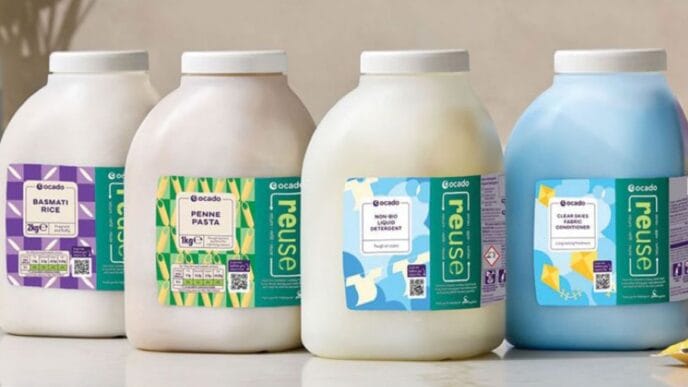
Plastic recyclates that fulfil the demanding quality requirements for use in the sensitive area of personal care and cosmetics packaging are in short supply. The Current changes to the EU Packaging Ordinance continue to drive demand. Harmonised toxicological guidelines and standards can strengthen confidence in the market and promote the use of post-consumer recyclates, especially polyolefins such as PP and PE. The CosPaTox („Cosmetics, Packaging and Toxicology“) consortium published in April 2024 a Guide with comprehensive recommendations for the safety assessment of recycled plastics in cosmetics and cleaning packaging. As a member of the consortium, APK AG has contributed to the expertise in the guidelines. The quality classifications of Newcycling recyclates are carried out accordingly.
Source: APK