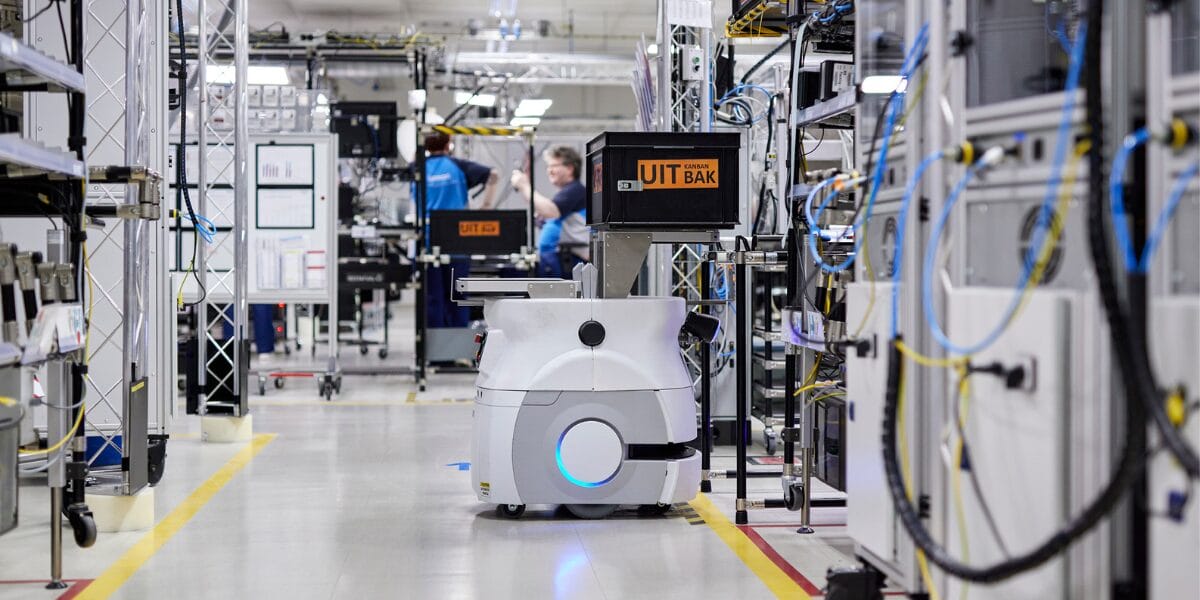
Manufacturers who want to position themselves efficiently and competitively while overcoming the hurdles of customised production and the shortage of skilled workers should rethink their replenishment systems on the production lines. AMR and cobots could provide support here.
The trend towards individualisation and personalisation in the manufacturing industry brings with it many operational challenges. Manufacturers have to stock an increasingly wide range of components and materials. This in turn leads to fluctuations that conventional systems often struggle to cope with. The consequences are Higher storage costs, longer lead times and production delays, as was also made clear in a PwC survey conducted in May 2024: 50 per cent of manufacturers stated that the customisation of products significantly extends lead times. 45 per cent also recorded an increase in production costs. Innovative approaches to efficiently manage this complexity are therefore necessary.
Rationalise replenishment on the production line
The replenishment of goods and materials, which includes tasks such as the just-in-time delivery of consumables and improved transport of goods, crates and pallets, poses a particular challenge in this respect. The shortage of skilled labour further exacerbates the situation, as many Replenishment and refilling tasks still carried out manually become. With fewer and fewer employees available to transport materials to and from production lines and manage inventory, manufacturers need to look for more efficient and less labour-intensive solutions.

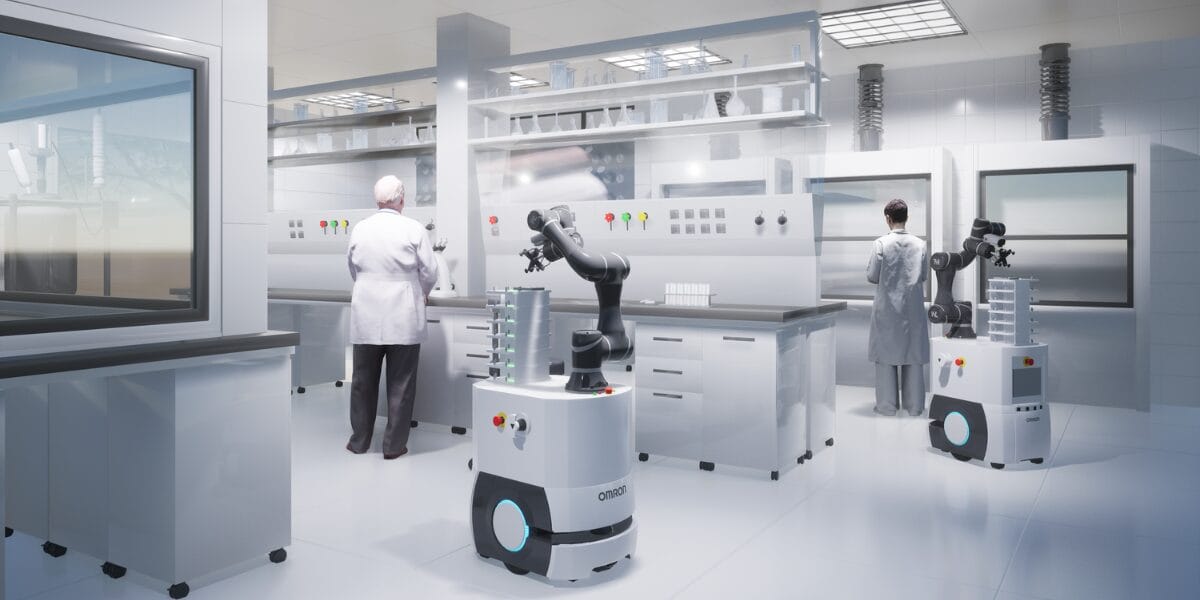
In pharmaceutical companies, for example, there are always critical bottlenecks when transporting clean, empty primary and secondary packaging to the production lines. This is primarily due to the fact that not enough employees available stand. This challenge is even more pronounced in environments where forklift trucks and other mechanical equipment cannot be used due to strict hygiene regulations and spatial restrictions typical of the pharmaceutical sector.
Automated solutions with AMR and cobots
Companies that want to tackle these interlinked difficulties need a holistic and innovative approach. Automated Mobile Robots (AMR) and cobots can minimise the labour intensity and effort involved in replenishment and reduce Consider the variability of customised production. The advantages of these robot technologies include
- Consumables on demand: AMRs can be programmed to deliver materials exactly when and where they are needed. This reduces unnecessary stock levels in production and the physical strain on employees. The use of AMRs for the delivery of packaging materials or work in progress (WIP) supports uninterrupted production by compensating for fluctuations in stock keeping units (SKUs).
- Flexibility and scalability: Compared to conventional conveyor systems, AMRs are more flexible and dynamic. They can be seamlessly integrated into Manufacturing Execution Systems (MES) and are scalable to up to 100 robots or more. This flexibility makes them particularly suitable for environments where product specifications change frequently, allowing companies to quickly adapt their production to new customer requirements without compromising on efficiency or safety.
- No margin for error: The precision with which AMR delivers consumables, parts and unfinished products to the lines minimises the risk of errors.
- Forward-looking replenishment: Innovative automation systems can reactively and proactively monitor consumption rates and predict when materials will run out.
- Occupational safety: AMRs also address one of the most pressing challenges associated with the automation of replenishment tasks on the production line: employee safety. AMRs and cobots are designed to work hand in hand and in harmony with employees.
Entering a new age of efficiency

Peter Lange, Business Development Manager Robotics at Omron Industrial Automation
(Image: Omron)
Research in the field of modern manufacturing emphasises the Effectiveness of the integration of AMR into manufacturing. A study published in the Journal of Manufacturing Systems in April 2024, for example, shows that the implementation of AMR in production environments increases the Reduce material handling time by up to 30 per cent can. Manufacturers benefit from increased efficiency and predictability. AMR and cobot fleets ensure that production lines are replenished punctually, accurately and efficiently. In combination with powerful fleet management technologies, they help to eliminate bottlenecks caused by a shortage of skilled labour and the need for adjustments.
Example from practice
The mobile LD-90 robots from Omron are fully autonomous, intelligent vehicles that help to optimise the Increase throughput, reduce machine dwell times, avoid errors and improve traceability. In contrast to conventional automated guided vehicles (AGVs), Omron's AMRs are orientated to the natural conditions of a plant.
Hipra, a biotechnology and pharmaceutical company based in Amer (Girona), Spain, also opted for this AMR to transform its internal logistics processes. The aim was to, increase flexibility and efficiency with the help of automated processes. This was to take place in a 100 per cent collaborative and flexible environment that would enable high production rates. An important requirement was for the mobile robots to work in harmony with the employees working in the same area.
„The integration of the new system into the production process enables fully automated processes at Hipra,“ emphasises Carlos Roncero, project manager at Omron. Hipra now benefits from the Navigation capabilities of the AMR without any aids. It also has all the necessary functions for safe use in rooms that are shared by people and machines.
„But there were also a few challenges, such as narrow corridors or the controlled opening and closing of doors, as well as heavy traffic during production peaks. We used innovative fleet management and robot intelligence to ensure that the AMRs navigated reliably and correctly throughout the plant.“