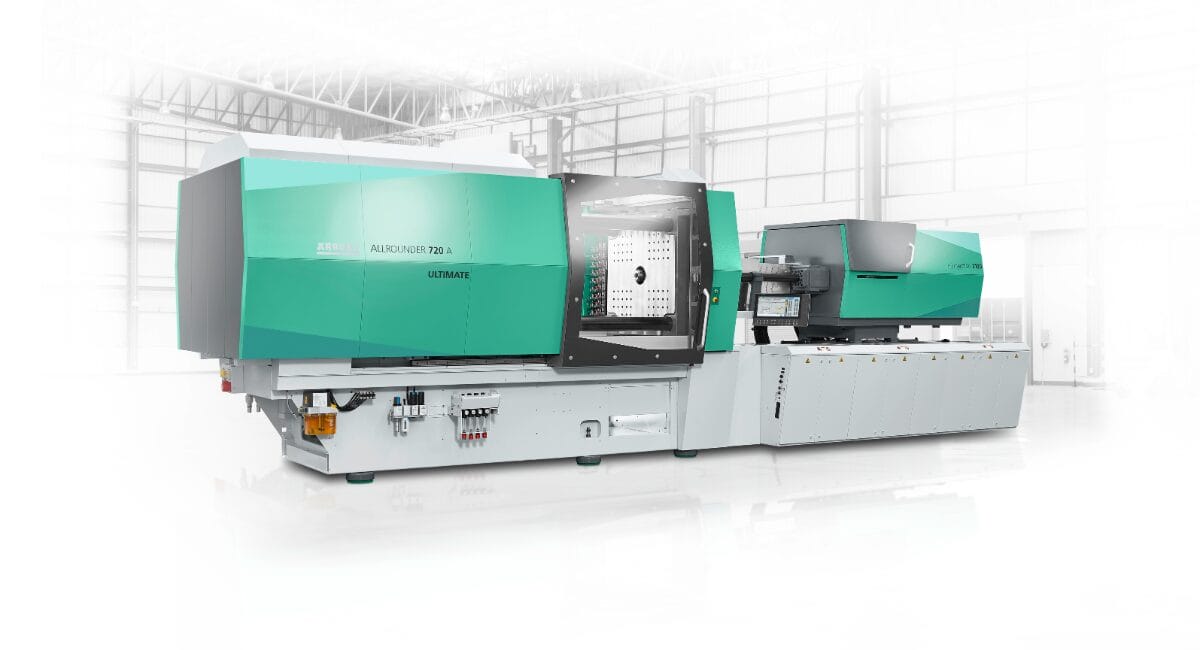
If you are looking for an efficient alternative to thermoforming and want to save resources and costs, the injection compression moulding process is the answer. The electric Allrounder 720 A from Arburg is used to produce thin-walled IML cups. In this application, material consumption and part weight can be reduced and the cups are recyclable.
The process sequence is complex and requires detailed process knowledge as well as a highly accurate and reproducible injection moulding machine. The electrically driven Allrounder 720 A with a clamping force of 3,200 kN is equipped with a size 1300 injection unit that is specifically optimised for high performance. Thanks to high-precision servomotors from Arburg's sister company AMKmotion and the drive of the working axes via planetary roller screws, the injection moulding machine achieves a high level of precision and reproducibility. High injection volume flows and injection speeds of up to 400 millimetres per second.
Minimised wall thickness
The high-performance electric machine uses a 4-cavity injection compression moulding tool from Brink to produce thin-walled, 400-millilitre IML round cups made of PP monomaterial using the injection compression moulding process. The plastic used is biomass-balanced and ISCC-certified. The mould is equipped with six high-resolution inductive displacement measuring and embossing sensors for process monitoring. The label was produced using the latest next-cycle technology from Belgian manufacturer MCC Verstraete NV. It can Completely separated from the PP of the cup during recycling are produced. A side-entry robot from Brink is integrated into the production cell, which inserts the labels, removes the finished cups and stacks them on a conveyor belt.

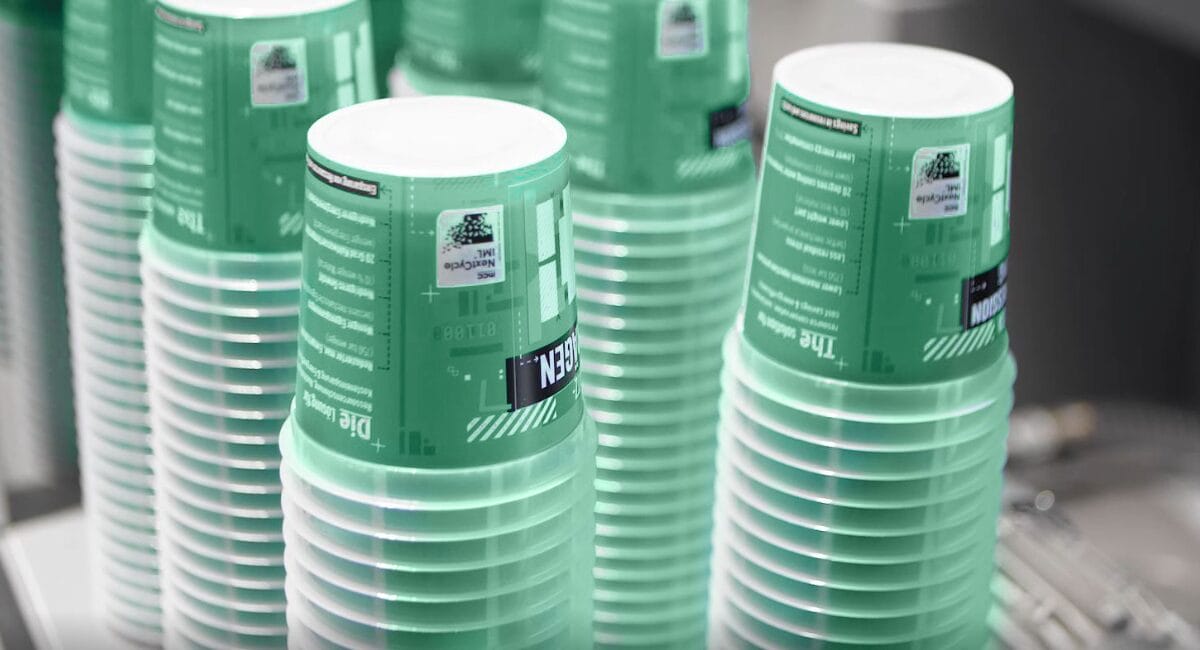
In a cycle time of 3.95 seconds, four moulded parts weighing 10.8 grams each with a lateral wall thickness of just 0.37 millimetres are produced. The cup with thermoforming geometry is characterised by a Flow path to wall thickness ratio of 380 : 1 which could not be produced in this form using the conventional injection moulding process. Furthermore, the weight of a conventional injection-moulded and non-injection-embossed 400-millilitre cup is 13 grams and the flow path to wall thickness ratio is only 280:1.
Injection moulding with advantages
The first thing that stands out when comparing injection moulding and injection compression moulding with an identical cycle time of 3.95 seconds is the reduced injection pressure of 1,450 bar for compression moulding compared to 2,200 bar for the classic process. There is also a clear difference in part weight: in injection moulding, the part weight without the banderole is 13 grams, whereas in injection compression moulding it is only 10.8 grams. This also results in a Lower energy consumptionThis is 0.67 kWh/kg for injection moulding and only 0.37 kWh/kg for injection compression moulding. With the lower part weight, material consumption in the injection compression moulding process with modified design is around 20 percent lower than in injection moulding. The electric machine consumes 34.76 kilograms of material per hour during compression moulding, compared to 45.57 kilograms for injection moulding. This means that most of the Save costs.
Extensive sensor technology in the four-cavity mould
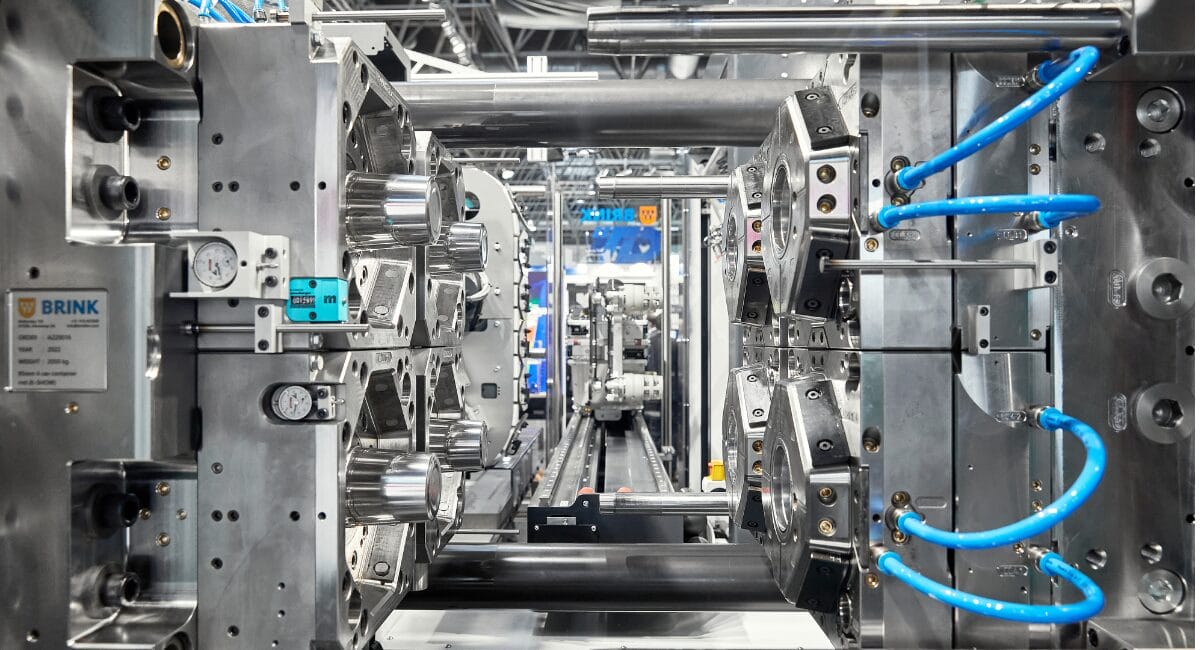
The mould is equipped with an embossing function via a spring assembly on the fixed mould side. The embossing process is realised via an additional parting line in the mould in order to avoid the core offset that often occurs in conventional injection embossing. The compression process takes place via the clamping unit, the maximum compression gap opens by 1.9 millimetres. It only closes completely when the melt is in the cavity. This process requires Less injection pressure, which reduces mould wear. It is possible to work with mould temperatures of 20 instead of twelve to 14 degrees Celsius. Four embossing path sensors at each mould corner monitor the embossing sequence with a measuring accuracy of one micrometre. The process is monitored via the Gestica control system.
Resource-saving and recyclable
In the resource-saving production of thin-walled IML cups for the packaging industry, particular emphasis was placed on material-saving component design and energy efficiency. Thanks to the all-electric packaging machine in combination with injection compression moulding improves the energy balance by 20 per cent with a reduction in component weight. This is why injection compression moulding is used for this application. Compared to classic injection moulding, this process requires less injection pressure. The quality of the cups is also improved due to reduced internal stresses. In contrast to thermoforming, no pre-produced foils are used and no punching waste is produced.