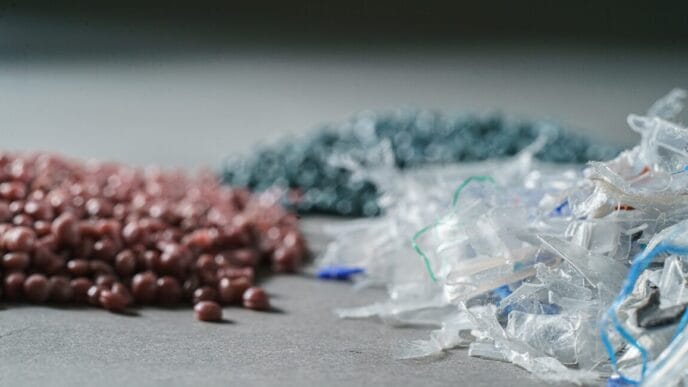
The Fraunhofer IVV and the Albstadt-Sigmaringen University of Applied Sciences have developed a prototype of an almost 100 per cent bio-based, thermoformable multilayer film that is suitable for packaging food in a protective gas atmosphere.
The new multilayer film developed by the Fraunhofer Institute for Process Engineering and Packaging (IVV) and the Albstadt-Sigmaringen University of Applied Sciences in the project PLA4MAP have developed, based on PLA (polylactide), soya protein and sunflower wax.
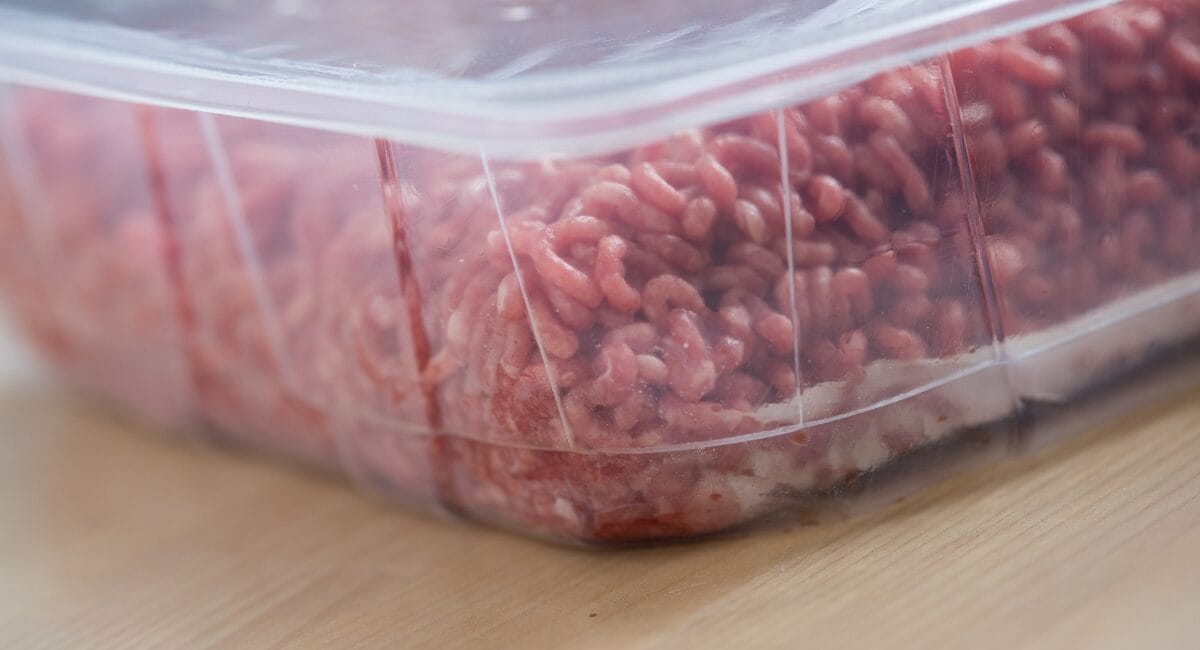
Sensitive foods such as fresh meat or sliced sausage and cheese products are often packaged in modified atmospheres to inhibit the proliferation of germs and extend shelf life. To maintain the modified atmosphere for a sufficiently long time, the packaging materials must have certain gas barriers. Many bio-based plastics available on the market do not yet have this.

Four-layer material composite
This is where the PLA4MAP composite came in. The researchers developed a shell made from a four-layer material composite: between two top layers of PLA, a thin Protein layer made from soya protein concentrate as an oxygen barrier and a thin Wax-hotmelt layer as a water vapour barrier placed. Sunflower seed wax, a by-product of edible oil production, was chosen for the wax layer. The sealing film was also based on PLA, supplemented by metallisation. Transparent barriers with silicon or aluminium oxide layers are also possible.
The composite material fulfils all the required barrier properties, can be processed very well by thermoforming and has a Very high bio-based content - Only the inorganic layer of the lidding film and parts of the wax hotmelt layer are not of plant origin.
Establishing recycling streams for PLA
The proportion of PLA in multilayer composites is just under 82 per cent. If suitable sorting and recycling streams are established for PLA, this proportion could be recycled. Tests in the project showed that new, functional packaging from the recycled material can be produced. With an estimated total market share of less than one per cent of plastic food packaging in Germany, PLA is currently used in the production of food packaging. only utilised for energy.
Environmental balance and costs
The high energy consumption in PLA production and the fact that only existing pilot-scale manufacturing process mean that the sustainability of the new, bio-based material composite does not yet come close to comparable fossil-based packaging. However, the ifeu still sees significant potential for optimisation in both areas. According to ifeu, the currently still high production costs can also be reduced by expanding global PLA production and, above all, by reducing the weight of the packaging.
A user manual summarises the most important results for practical use. A business case and information on recyclability and environmental performance have also been published. All materials are available free of charge download ready.
Source: Fachagentur Nachwachsende Rohstoffe e. V (FNR)