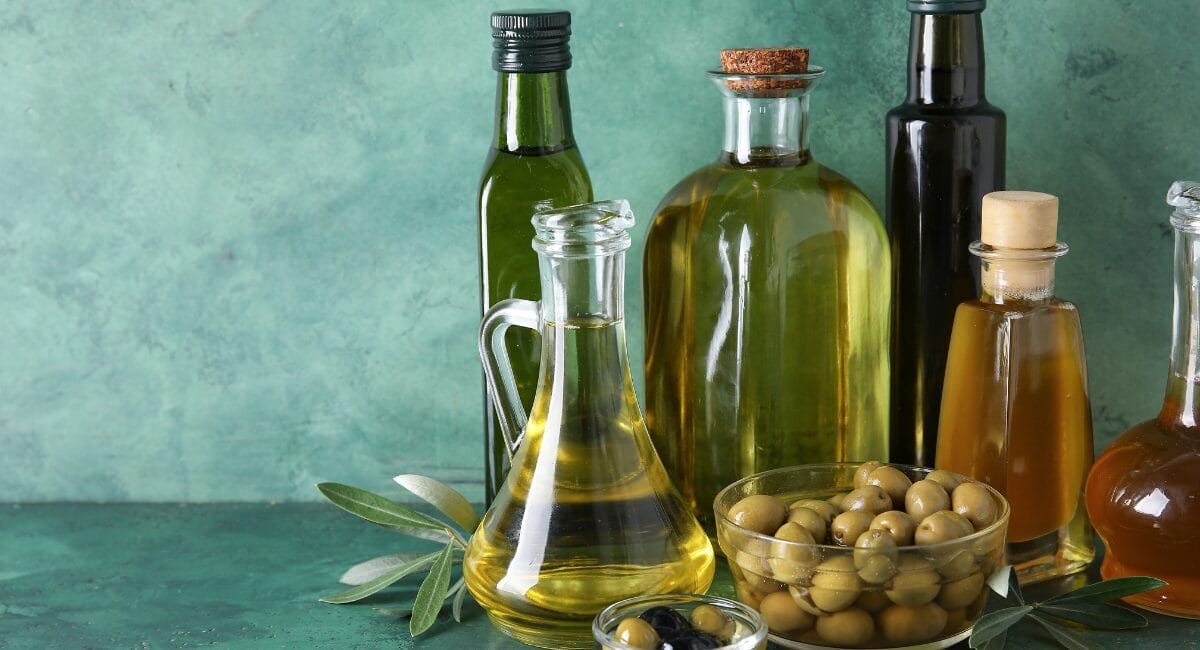
Researchers at the Fraunhofer IST have used vegetable oils and extracts from tree bark in a project to create moisture-repellent coatings for paper. Their aim is to replace plastic packaging and open up new fields of application for paper.
If the durability, resistance and quality of paper products are improved, the potential of paper as a material could be utilised even better. Researchers at the Fraunhofer Institute for Surface Engineering and Thin Films IST, in collaboration with the Technical University of Darmstadt and the Thünen Institute of Wood Research, have dedicated themselves to this task in the BioPlas4Paper project. They are focussing on Plant substances such as oregano or chia oil and extracts obtained from bark material, to produce homogeneous, moisture-repellent layers on paper. These plant ingredients are characterised by their antibacterial effect, among other things.
„We use previously unutilised plant substances with a high proportion of unsaturated fatty acids to make paper hydrophobic, i.e. water-repellent. To do this, we use atmospheric pressure plasma technology, in which gas is excited by means of high voltage under ambient pressure in such a way that a plasma, i.e. a mixture of particles, ignites.“
Martin Bellmann, Scientists at the Fraunhofer IST in Braunschweig
The plant substances are converted into an aerosol by the addition of nitrogen and introduced into the plasma as vapour-like organic precursor compounds in order to form polymer networks. Experts refer to this process as plasma polymerisation. The micrometre-sized particles combine with each other to form plasma polymers, However, the tiny droplets also cross-link with the paper and lie flat on the rough paper substrate, penetrating deep into the pores and fibres of the surface.

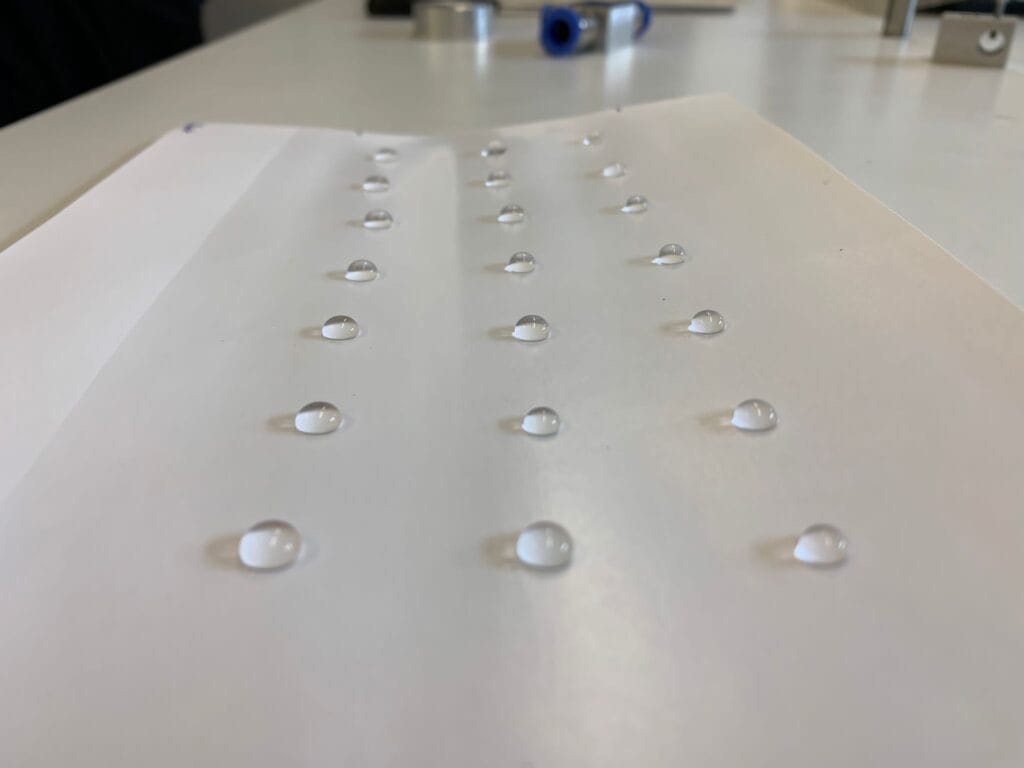
In numerous tests with a wide range of vegetable oils and extracts the researchers were able to prove that biobased substances can be reproducibly and homogeneously deposited or separated using plasma. Very good hydrophobic layers could be achieved with olive and chia oil, for example. Martin Bellmann: „One example of an application is moving boxes, which can be exposed to rain for longer periods without softening thanks to our hydrophobic layers.“
The aim is to, to equip the material paper for ever more demanding utilisation scenarios and thus also replace plastic materials in the future. „Currently, coatings or additives of petrochemical origin are still used to refine paper as a material, which we wanted to avoid at all costs. By using natural raw materials, for the extraction and processing of which modern technologies were used, we have succeeded in doing this,“ explains Dr Andreas Geißler, project manager at the Department of Macromolecular Chemistry & Paper Chemistry at TU Darmstadt and coordinator of „BioPlas4Paper“.