Ukrainian companies impress at WorldStar Awards
At the WorldStar Awards of the World Packaging Organisation, three companies from Ukraine were delighted to receive an award.
The trade magazine for the packaging industry

"Every people has the right to live independently. Every city has the right to complete security. Every person has the right to be free and to seek their own happiness. Each of us has the right to start and develop our own business and to see it grow with joy. Every Ukrainian believed this before the war and still believes it today. But we have changed. The business environment has also changed."
After seven months of war, Valeriia Grankin, Managing Director of the Ukrainian printing company Slavena, looks back on the changes in the Ukrainian printing industry. For packaging journal, she takes a look at the different types of companies that are still operating and how competition in the market has changed.
I remember my working day on 23 February 2022 very clearly. I remember what I was wearing, what kind of work I was doing, what tasks I gave my employees, what rotations were due for processing. I remember that it was a Disturbingly quiet and emotionally intense day was. We were wishing a colleague a happy birthday and I could sense how much unease there was in the heavy silence of the employees. They looked at me and waited for me to say what would happen next. We knew exactly that at that moment the troops of our aggressive neighbour were 60 kilometres away from us. We could literally feel the hot breath on the back of our necksbut we refused to believe what would happen. At that moment, I believed that there would be no war.
But the war came to our homes the very next morning and brought our normal lives, our work and basically everything that made us happy to a standstill. On the very first day of the attack Ukraine imposed martial law, so that all companies, including print shops, closed their doors to employees and customers indefinitely. We all hoped that this period would not last longer than two days. But the days merged into one endless, terrible day.

But life had to go on and the country's economy had to cope with the concentrated evil that still prevails in our country today. That is why In March, one printing plant after another reopened in areas of Ukraine where the war was not felt as stronglyas in Kharkiv, Kherson, Zaporizhia, Mykolaiv, Nikopol and, at that time, in the Kyiv region.
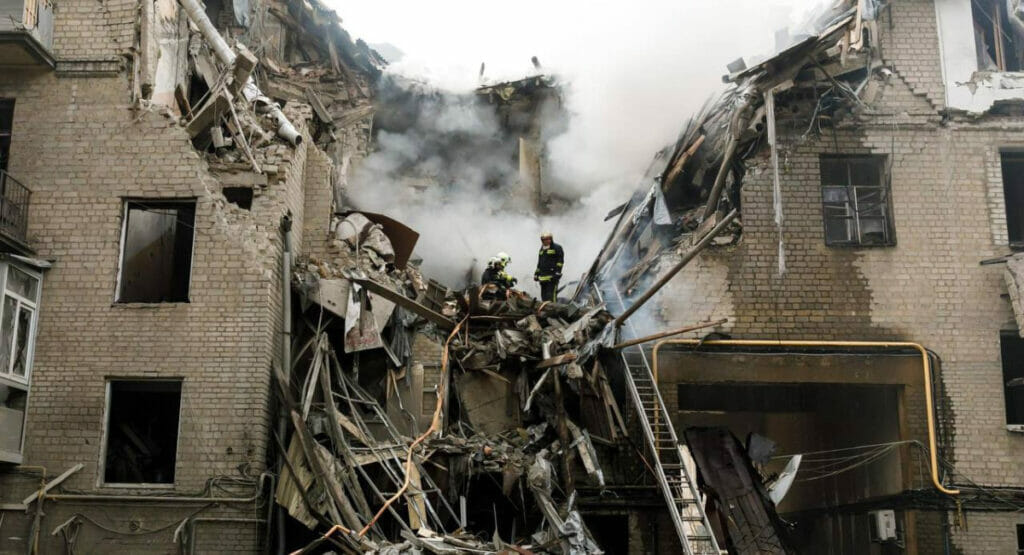
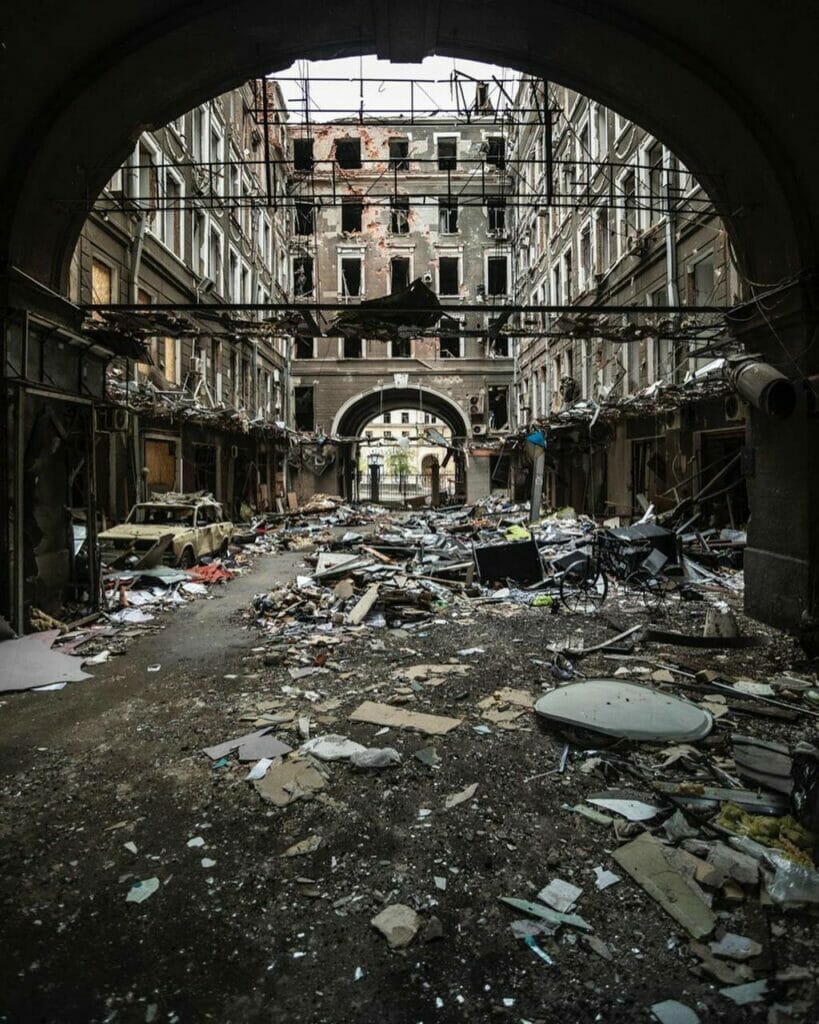
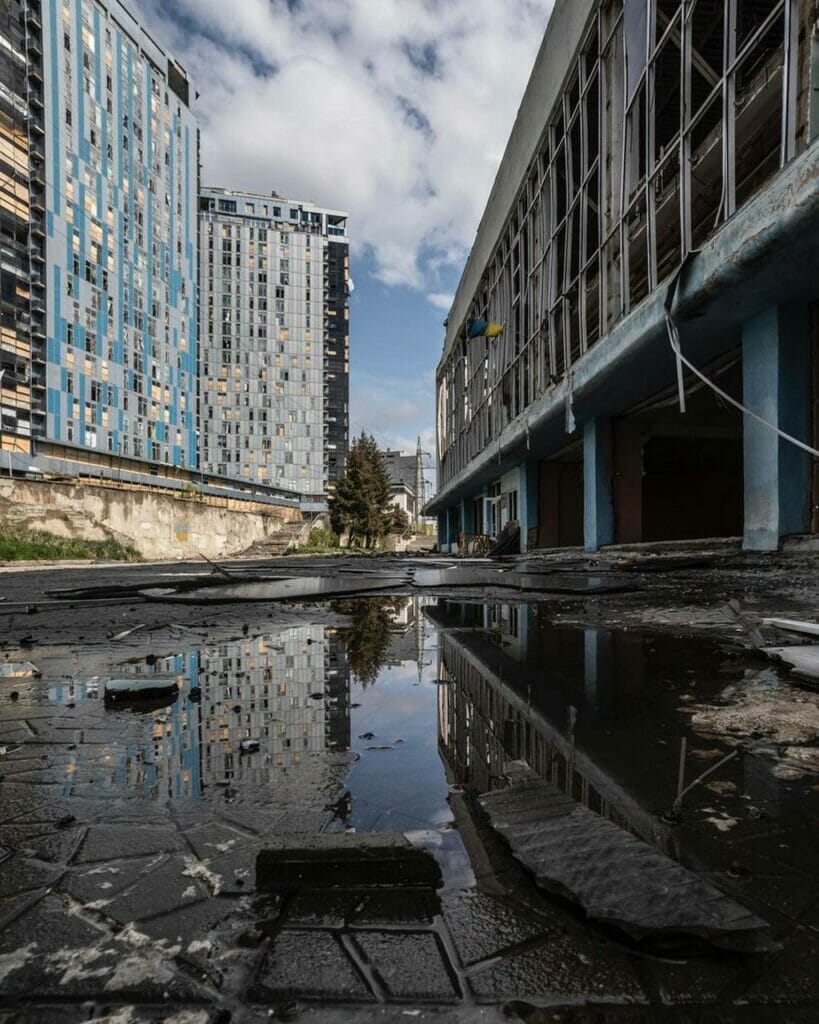
Print shops in relatively safe cities were opened slowly and cautiously. People knew that terrible things could happen in their area at any time. They processed the orders they had received before the war began and took new orders, but often the print shops' capacity utilisation did not even reach half the pre-war volume.
At some point I realised that the Print shops in my country can be divided into three categoriesThese are: printing plants that are not affected by the war, printing plants that are located in the war zone and those that are located in occupied territories. My family's cardboard packaging printing plant is located in Kharkiv, which falls into the second category [Kharkiv itself was not taken by Russian forces, but was in contested territory until the Ukrainian counter-offensive in early September and was the target of a Russian missile attack in early October. Editor's note]. The print shops that I categorised in the first category are operating quite quietly, although their volume initially declined, but now their sales are increasing again.
In the Our company in Kharkiv also falls into the second category. There are also three large printing works that printed books (one warehouse was damaged in the first months of the war and a large part of the production was destroyed by fire after the bombardment) and two large printing works that produced labels (one of which was severely damaged by a rocket hit). Accordingly, we are unable to operate at full capacity and cannot even reach 30 per cent of the previous year's volume. But each of us tries to achieve at least 10 to 15 per cent so that we can pay our employees.

The third category includes a city in the south of Ukraine, Kherson. This city is occupied and with it a large cardboard printing plant that has always been our direct competitor. And now we don't even know if it is still intact. [At the time of going to press, there is still fierce fighting in Kherson Oblast. The city is located in a territory occupied by Russia and claimed by means of a sham referendum. Editor's note].
The Ukrainian printing market has therefore changed. Many print shops are bluntly stating that it will be a very long time before the second and third categories of companies reach full capacity again and that it would be unwise not to meet the resulting demand. That's just the way business is. But one Business cannot be built on this kind of temporary weakness of a competitor. This cold analysis is juxtaposed with further rocket fire on cities that have already been destroyed and, as a company owner, you worry about your own business. At the same time, we are ashamed of such banal thoughts when human lives are at stake. So every day is an emotional rollercoaster ride. I don't even want to imagine how our fellow sufferer from Kherson feels. But as the saying goes, the strong don't lie down and accept defeat. Instead, they are all the more determined to fight for a better future.

And here I would like to express my surprise that the major German companies are reaching out to us right now and declaring their willingness to help us get back on our feet after the war. They want to help us out of the crisis and support us in our reconstruction. And therein lies the quality that only a self-confident company has: the Power to support someone who operates in the same market as you but is in difficulty.
One might expect that the printers in the first category had the opportunity to increase their volume at the expense of the printers in the second and third categories - their customers may well have gone to the printers that were still able to work. However, this did not happen. Rather, some customers reduced their production volume due to the general decline in sales in the country. Others have not yet reopened because they are still in the way of the enemy. And still others prefer to keep at least part of their awarding contracts to the print shops they have previously worked with to support them in difficult times. But there is another reason. They can only take the lead if they offer more value than their competitors. And value is not always easy to create.
Today, a large number of print shops in Ukraine are operating in the usual pre-war mode, but are facing more difficulties than before. The Doubling of cardboard costs, the lack of a variety of coating materials and specialised equipment on the market often make it difficult to manufacture high-quality products. At the end of the year, every printing company, including ours, has to make plans for the next year to reserve quotas for cardboard, which now seems impossible. The war was not planned by anyone and we don't know when we will start work again - this year, next year or even later.
Our cities are constantly being shelled, there are victims among the civilian population and children, houses and infrastructure are being destroyed. People are leaving the cities and moving to other regions in the hope of finding refuge and protection there. One could be forgiven for thinking that this situation is leading to a brain drain to other print shops. But in reality, this is not the case. Only a handful of skilled workers have found employment in print shops in other regions, and not because of low qualifications. This is due to the fact that in our country, in an extremely short period of time, a a strong sense of patriotism and gratitude for what we had. This refers not only to the attitude towards the country, but also to the respect for the workplace where you spent your last day before the war. Some are waiting for their sites to reopen, others are rushing to work under fire, some have temporarily taken another job and some have simply gone to the front to defend their country.
It was not easy for me to write this article - I still find it difficult to reflect on the situation and realise what has happened to my country, my life and my company. There is a brutal war going on in my hometown of Kharkiv. Some of our Employees live right here in our company because they have nowhere else to go. They work, they transport products under fire. A lot has changed. Often things don't go as planned and often we face a plethora of difficulties, but we realise that all this makes us stronger and I don't think that any problem that comes our way after the war can throw us off track. We hear a lot about how Ukrainians have shown the world their strength and their desire for freedom. But our Strength is that Ukraine does not doubt itself, its future or its victory. And that is why we continue to work, smile, make plans and prepare for the reconstruction of the country after the war.

At the WorldStar Awards of the World Packaging Organisation, three companies from Ukraine were delighted to receive an award.

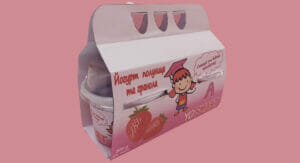
A cardboard packaging designed to teach Ukrainian children the Latin alphabet was honoured with the German Packaging Award.

After eight months of war, CEO of Ukrainian printing company Slavena, Valeriia Grankina, looks back at what has changed in the Ukrainian printing industry. For packaging journal, she takes a look at different types of companies that are still operating and how the competition on the market has changed.

After eight months of war, Valeriia Grankin, CEO of a Ukrainian printing company, looks at the changes in the country's printing industry.

In view of an impending gas shortage, the Würzburg-based printing press company Koenig & Bauer has adjusted its production. The process gas previously used in production could be replaced from the end of July 2022, and the heating energy at the large production sites could be gas-free by 1 September 2022.

According to ArGeZ, suppliers recorded a 13 per cent increase in turnover. However, the dynamic global situation continues to weigh on the industry.