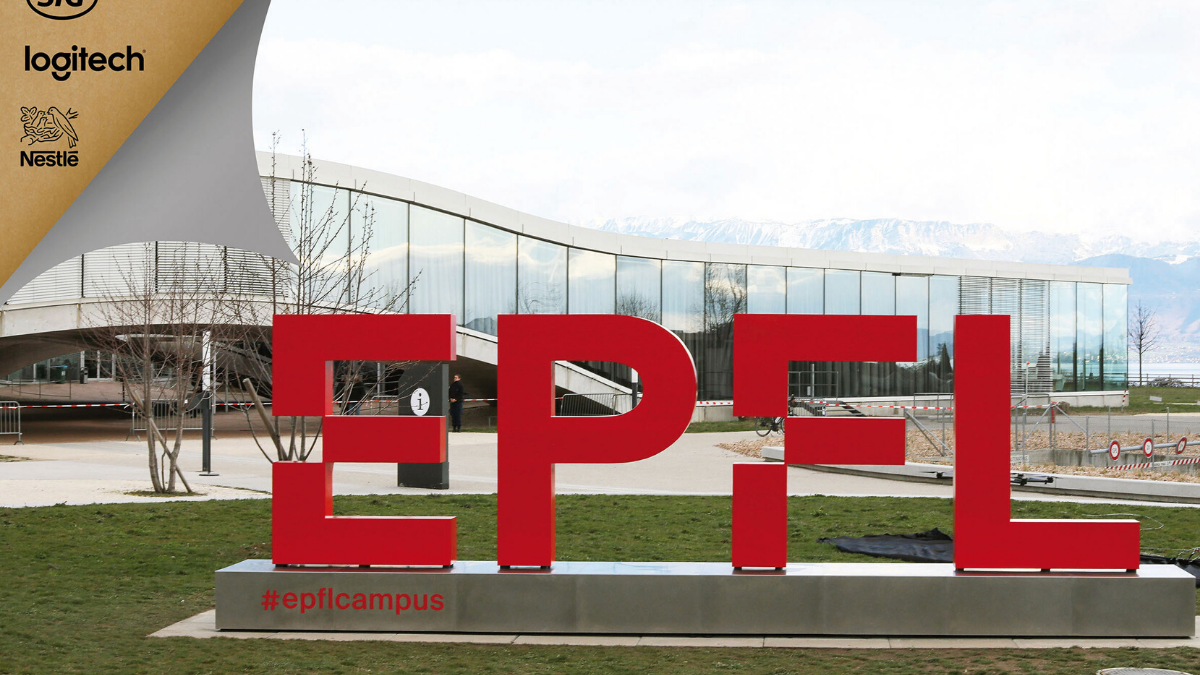
SIG has announced a joint initiative with Nestlé, Logitech and other industry partners to support research at EPFL (Swiss Federal Institute of Technology in Lausanne, Switzerland) into more sustainable materials to tackle environmental issues associated with plastic waste.
„Sustainable product innovation is at the centre of SIG's Way Beyond Good, which aims to do more for society and the environment than it takes in. We already offer our customers some of the most sustainable aseptic packaging solutions on the market. But we want to go further. That's why we're working with Nestlé and others to drive progress towards the sustainable packaging materials of the future.“
Klaus Andresen, Senior Vice President Global Technology at SIG
Develop and implement new research programme
The companies have made a joint commitment, five million Swiss francs over ten years to make them available. With this funding, the EPFL Institute Materials research a new chair for sustainable materials research supported.
The chair, which will be headed by a tenure-track assistant professor, will Development and implementation of a new research programme on sustainable materials at EPFL, one of the most dynamic and cosmopolitan science and technology institutions in Europe.

The core areas of research will address critical questions such as the overall environmental impact of materialsthe Research into bio-based, biodegradable and recyclable materials, including high-performance paper-based barrier materials, that could help to tackle the environmental problems associated with plastic packaging.
„Tackling plastic pollution is a high priority for Nestlé. We remain committed to exploring new approaches to packaging reuse while minimising our environmental impact. Evaluate new recycling technologies and sustainable packaging materials. The development of high-performance, environmentally friendly materials requires a fundamental understanding of material structures and properties. This is why we are investing in sustainable materials research at EPFL together with our innovation partners.“
Stefan Palzer, Nestlé Chief Technology Officer
Supporting customers with sustainable solutions
Beverage cartons are fully recyclable and have a lower environmental footprint than many packaging alternatives for long-life food and drinks such as milk, juice or soups. They are mainly made from cardboard made from renewable wood. In most cases, small amounts of polymers and aluminium are required as barrier layers and to protect liquid foods and for the closures.
SIG already offers an innovative, Aluminium-free aseptic packaging for dairy products (combibloc EcoPlus) and the SIGNature Pack, where via mass balance equalisation it is ensured that the the polymers used for the carton packaging are 100 per cent linked to renewable, wood-based raw materials.
The company is now working on this, Aseptic packaging made from 100 per cent renewable materials - without mass balance and without aluminium - which can be used for a range of products, including juices that are more sensitive to light and oxygen.
More about the Way Beyond Good from SIG: https://www.sig.biz/de/verantwortung/way-beyond-good
Source: SIG