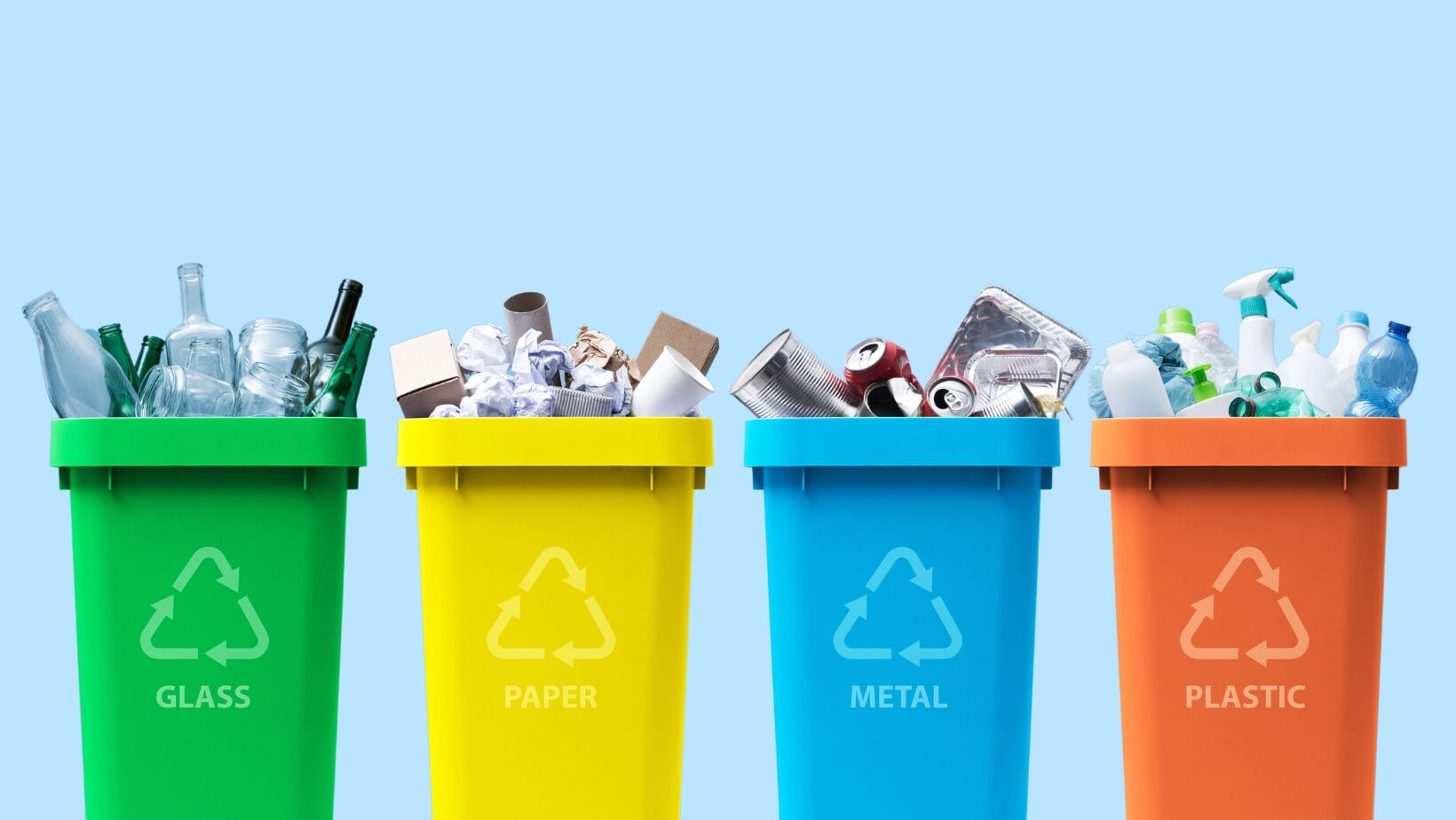
German households throw too many recyclables into the residual waste. Recycling and environmental services provider Alba wanted to find out why waste separation in Germany is not working better and commissioned Civey to conduct a survey.
According to Federal Environment Agency the black bin contains around 40 per cent organic waste and over 25 per cent paper, plastics, electronic waste and glass. The Civey opinion and market researchers surveyed over 5,000 adults in Germany for Alba. The result: for 24.7 per cent of those surveyed, the composition of waste is too complicated to separate properly. And 22.9 per cent stated, too little space at home for several waste bins.
28.5 per cent of respondents could not think of any obstacles. Waste separation does not seem to be an obstacle for them. A lack of interest in waste separation (5.5 per cent) or the time involved (3.9 per cent) are hardly any reasons for wasting raw materials. 11.1 per cent cite other reasons.

„On the one hand, the survey shows that packaging needs to be designed more simply. A combination of different materials poses major problems for many consumers when it comes to waste separation. Secondly, there is an obvious lack of information and education: waste separation does not have to take up a lot of space. And: those who separate their waste correctly will realise that less residual waste is produced.“
Dr Robert Arbter, Chairman of the Management Board of Alba
Waste has long ceased to be rubbish. Since the landfill ban for household waste was introduced in 2005, Germany has consistently endeavoured to recycle waste. The glass and paper industries, for example, are now in favour of The company relies on used glass and paper for around two thirds of its production. And since 2012, the Closed Substance Cycle Waste Management Act has even made the separate collection of waste mandatory in all areas.
Arbter: „Far too many valuable raw materials continue to be lost in Germany. The potential for biogas from organic waste from households and businesses alone would be of immense value for the energy transition. It is also important to note that electronic waste should not be disposed of in residual waste, but must be returned to the retailer. All too often, crushed lithium-ion batteries cause fires in the waste disposal industry.“
Source: Alba