In its 2024 progress report, the Alliance to End Plastic Waste took stock of five years of work to reduce plastic waste and at the same time presented its new strategy up to 2030.
The international negotiations as part of the INC process to combat plastic pollution make this clear: A global political agreement is complex and sometimes characterised by profound conflicts of interest - particularly between ambitious countries and those that are opposed to binding measures. At the last meeting in December 2024 (INC-5), no concrete result was achieved despite intensive discussions. Instead of a final document, only a chair's text - an unofficial but trend-setting non-paper - remained as a basis for further negotiations. The next meeting (INC-5.2) is currently taking place in Geneva and could be a decisive moment for the development of a global plastics agreement.
However, as recently became clear during the EU Green Week, regulatory impetus alone is not enough.In view of a estimated investment requirements of around 1.8 trillion euros by 2040, public-private partnerships in particular are essential to secure industrial innovations.

Financing scalable solutions
The Alliance to End Plastic Waste recognised this challenge early on and is working on it, capital risk-free for system change, especially with regard to plastics. With blended finance - By strategically combining public and private capital, it creates the conditions for financing scalable solutions, minimising investment risks and opening up new markets. In countries such as Indonesia and Ghana, successful projects are already being implemented together with local authorities, development banks and industry partners.
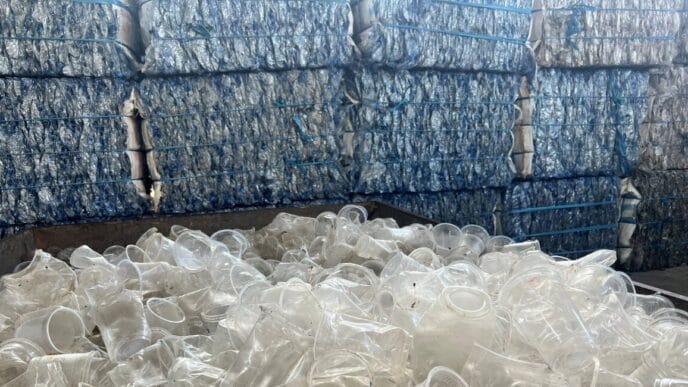
Since its foundation in 2019, Allianz has, according to its own information Around 240,000 tonnes of plastic waste was reduced and more than 253,000 tonnes recycled. In addition, over USD 610 million in financing commitments were raised from external partners. Projects in countries such as South Africa and Brazil have achieved measurable results. In addition, the organisation's activities have created over 2,100 formal jobs.
With the new strategy, the Alliance implement larger, integrated programmes in future - particularly in India, Indonesia and South Africa. In each of these countries at least 100 million US dollars will flow into national initiatives. In addition, the alliance is planning thematic projects on systemic challenges in the plastics industry, such as dealing with flexible plastics that are difficult to recycle.
The recently published Progress report the Alliance to End Plastic Waste provides an overview of developments over the last five years and shows how the organisation is developing its strategy in order to act faster and more effectively. One focus of future work will be on the Cooperation with governments, development banks and civil society organisations. The aim is to enable investments in effective waste solutions through mixed and concession financing and to promote a broad system change.
Source: Alliance to End Plastic Waste