Koenig & Bauer unveils new sheetfed printing solutions
Koenig & Bauer MetalPrint is presenting an expanded portfolio for the metal packaging industry at Metpack 2026.
Read more " 




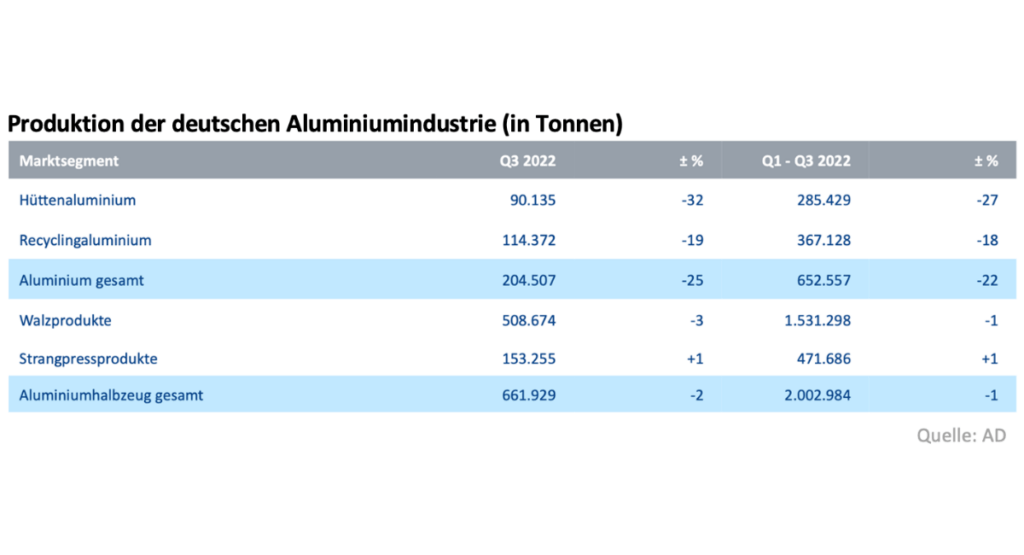
In the aluminium semis processing sector, production volumes fell by 2% to just under 662,000 tonnes in the past quarter. Among these, the manufacturers of rolled products recorded a decline of 3 per cent, while the producers of extruded products slightly exceeded the level of the same period in the previous year (+1 per cent). In the first nine months of this year, the semi-finished products sector recorded an overall decline of 1% to 2 million tonnes. However, the comparatively moderate development in the semi-finished products sector should not hide the fact that difficult times lie ahead here too. Incoming orders already indicate this.

„The situation for the entire German aluminium industry continues to threaten its existence. Anyone talking about securing raw materials, resilience and reducing dependencies must not forget aluminium. Without aluminium, there would be no electric cars, no solar panels and no wind turbines. Without the material, we could throw our ambitious climate targets overboard. The announced price caps for gas and electricity until spring 2024 are the right way to alleviate the situation for the industry in the short term. That is why they should definitely come into force on 1 January 2023. However, capping the electricity price at 13 cents per kilowatt hour would still not allow the competitive production of primary aluminium in Germany. It is a first step in the right direction, but more must follow.“
Rob van Gils
Source: Aluminium Deutschland e.V.