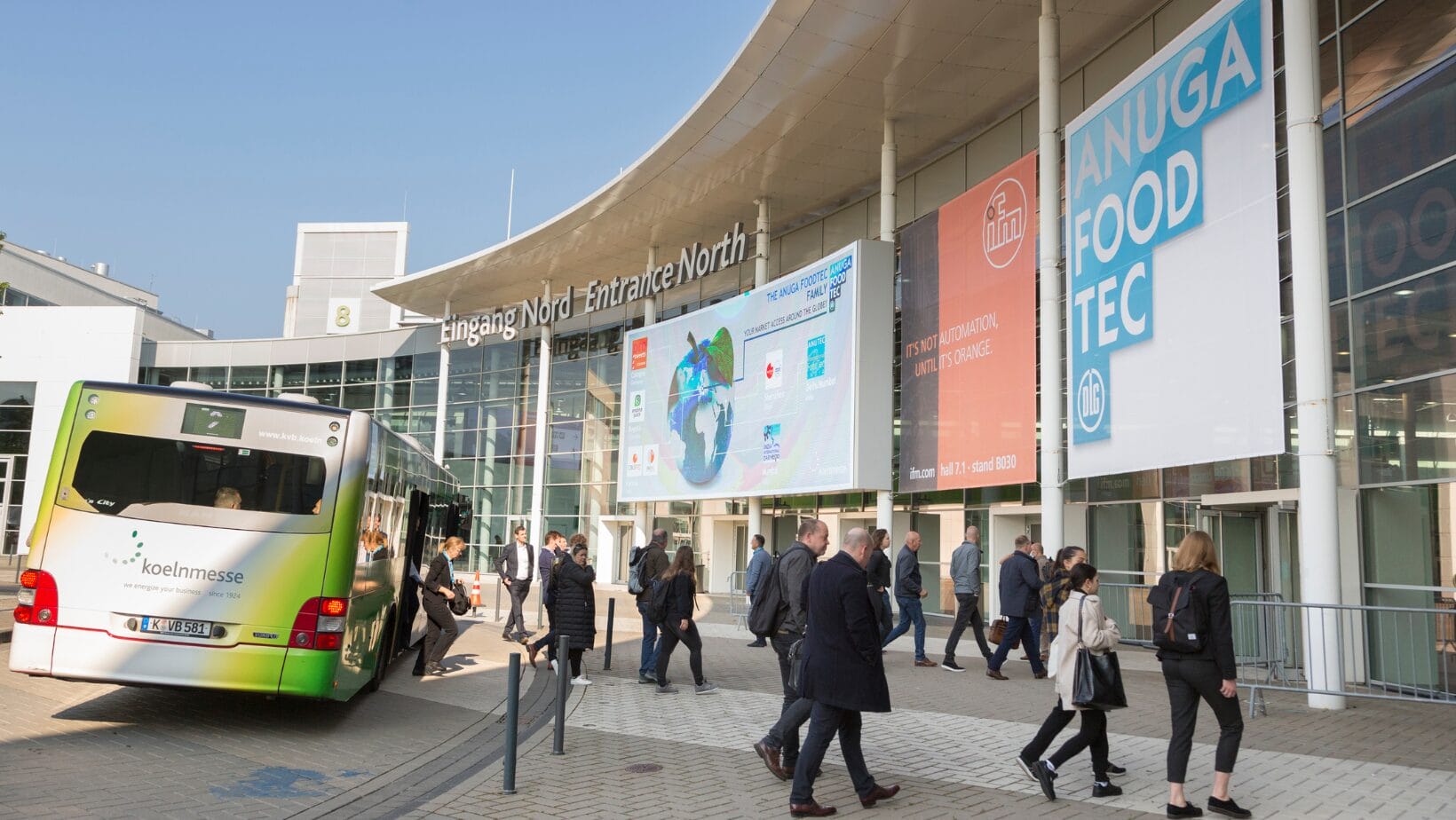
From 19 to 22 March 2024, suppliers of innovative and practical sensor solutions will be presenting high-performance sensors at Anuga FoodTec that perform many cross-system communication functions - both from machine to machine and from machine to cloud.
Sensors are indispensable elements for automation. With fast response times and reliable and accurate measured values, they have been helping food producers to optimise their processes and thus save energy, time and media for decades. However, in the course of digitalisation and networking, the tasks of measurement technology are also changing. It is no longer enough to „just“ measure process parameters. The more complex the automation scenario, the greater the demands on sensor precision and reliability. The large volumes of data pose new challenges when configuring and connecting the measurement technology. Traditional sensors that supply binary signals for the control system are reaching their limits here. They are increasingly being replaced by sensor systems in which the signal preparation and signal processing are combined in one housing in addition to the actual measured variable acquisition.
Smart automation starts with the sensor
At Anuga FoodTec, measurement technology suppliers, including Baumer, Endress+Hauser, ifm, Siemens, Vega, Optel and Beckhoff, will be showcasing their products and services. how food producers can remain competitive with smart sensors in the age of Industry 4.0. What all developments have in common is that digitalisation is not being driven forward as an end in itself, but has a practical background. Self-explanatory operating concepts, sensor diagnostics and options for wireless data exchange are key concepts for smart processes. In addition to high-resolution measurement technology, artificial intelligence and deep learning algorithms play an important role. The more intelligence is integrated into the sensor in the form of sophisticated signal processing, the more possibilities there are for self-monitoring and reconfiguration.

Data moved to the cloud
At the same time, communication standards such as OPC UA are also gaining ground in the food industry. This makes it possible, Communicate data through and into all levels of automation - right into the cloud. Once there, they can be analysed as required. For example, in addition to the process value, the vibration frequency of the pipe or the temperature of the electronics can also be read out from a Coriolis flowmeter. In addition to monitoring the current status of the measuring device, this data can be used to also used for predictive maintenance can be used. The sensors can send the diagnostic codes to a condition monitoring system with the aim of initiating a timely check of the sensor before it no longer provides data. This reduces the number of system downtimes and process interruptions.
The field devices communicate with the cloud via gateways and edge devices on a second channel parallel to the control circuit. This enables both communication levels to be operated simultaneously and independently of each other, the necessary interfaces are already implemented in the hardware of Industry 4.0-capable sensors. Many measuring points in existing systems can also be retrofitted with wireless interfaces such as WirelessHart, WLAN or Bluetooth. Another advantage of the latest generation of sensors is the integrated web server. This not only fulfils modern cybersecurity requirements, but also enables simple and convenient commissioning using mobile devices. The entire configuration and diagnostics process takes place via a standard web browser, so no in-depth knowledge of PLC programming is required.
Industry 4.0 expertise for the entire sector
Visitors can see this for themselves at Anuga FoodTec, how easily and quickly current automation tasks can be solved with smart sensors. From 19 to 22 March 2024, the technology providers will be presenting a complete portfolio of hygienic flow, level, temperature, pressure and other analytical sensors that are specially designed to meet the requirements of the food and beverage industry. They allow a view into the process and provide plant operators with important diagnostic and process data. The range extends from sensors and connectivity components to online services and apps for various diagnostic tasks. Food producers who are already well advanced with their implementation in terms of Industry 4.0 and are considering direct communication with a cloud solution or another higher-level system will also find future-proof solutions in Cologne.
Source: Cologne Trade Fair Centre / Anuga FoodTec