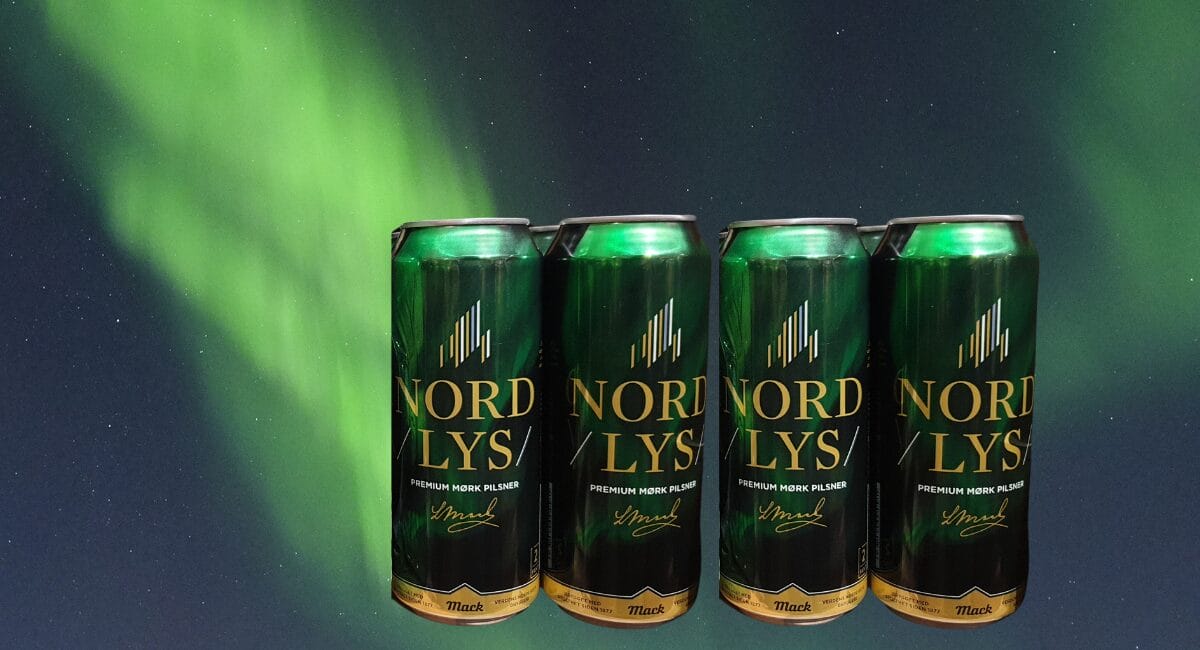
In the far north of Norway, beer is brewed in accordance with the German Purity Law. Mack's Ølbryggeri is located at 69 degrees latitude, making it the northernmost industrial brewery in the world. Mack has around 20 different types of beer on offer, as well as water and various soft drinks, the majority of which are produced under licence for the Coca-Cola Company. German filling technology is used for bottling, among other things.
Mack was founded in Tromsø in 1877 by Ludwig Markus Mack, the son of an immigrant baker from Braunschweig. The family business, now in its fifth generation, is today the fourth largest brewery in Norway. The portfolio includes around 20 different types of beer, mainly lagers, but also IPA, Wit and Stout. The bestsellers are Isbjørn Pilsner (the Norwegian word for polar bear) and the dark Nordlys (Northern Lights). The Arctic beers from Mack's Ølbryggeri have a market share of around ten per cent in Norway.
Rune Lennart Andreassen has been the head brewer since 2008 and is pursuing an ambitious goal: „We are pursuing a strategy, to become the most important brewery in Norway.“ Mack is today one of five industrial breweries in Norway and at the same time the northernmost brewery not just of the country, but of the world. Further north, only the Svalbard Bryggeri (Mack is a co-owner here) brews on Spitsbergen, but this small microbrewery produces just as much beer in a year as Mack does in a day.

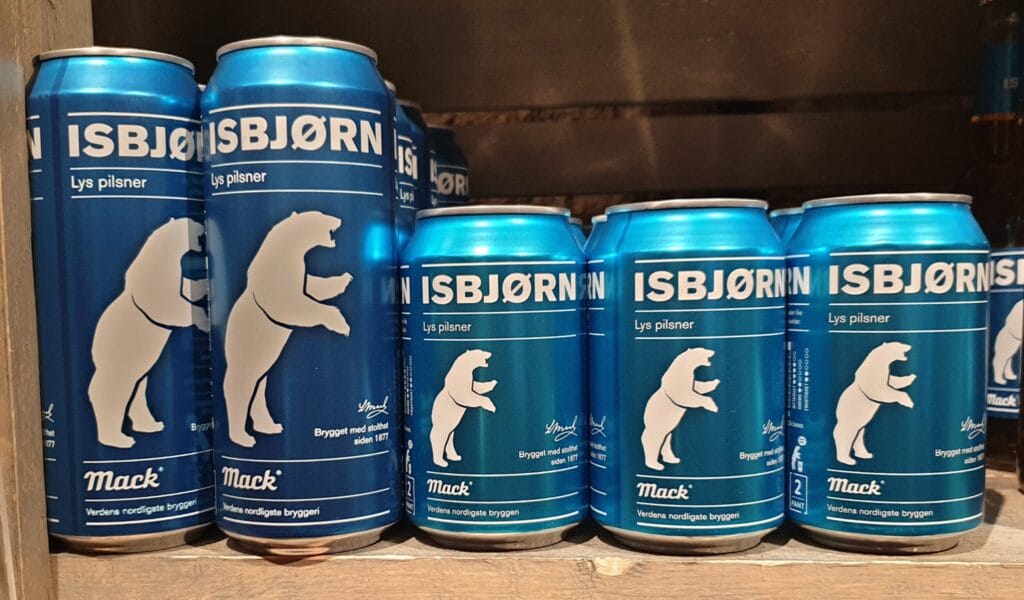
Licence bottling for Coca-Cola
Years ago, the company's location in the centre of Tromsø became too small, so in 2012 the production moved to Nordkjosbotn, 70 kilometres away - and increased the volume of beer produced from 95,000 to 240,000 hectolitres per year within ten years. At full capacity, Mack could even produce up to 300,000 hectolitres of beer per year. The company's second mainstay is soft drinks, cider and iced teas. Andreassen: „We produce around 80 per cent of our soft drinks under licence for the Coca-Cola Company and have many audits here at the plant.“ They are filled in disposable PET bottles, which are delivered as space-saving preforms and blown into bottles on our own machines. Mack now only fills glass bottles for restaurants and hotels.
The beers, on the other hand, are almost exclusively canned. „90 per cent of Norwegian beers are now bottled in cans“, explains Rune Andreassen, who is also responsible for sustainability at the company. Cans and PET bottles are part of the Norwegian deposit system, which was developed by Infinitum and is considered one of the most efficient in the world. The empty disposable containers are sold in the supermarkets via the vending machines of the Norwegian manufacturer Tomra were taken back - with a return rate of over 92 per cent.
„In the past, there were also reusable systems, but these proved to be less environmentally friendly in Norway due to the enormous distances and the widely dispersed population. Back then, it was almost impossible for breweries to get containers back to their plants. As a result, all Norwegian breweries abolished the washing machines for returnable PET bottles between 2012 and 2015. A reintroduction would be one step forwards and two steps backwards.“
Rune Lennart Andreassen, Head brewmaster
Modern technology from all over Europe
The new production facility on Balsfjord not only offers plenty of space and the best glacier water, but also logistical advantages. All beverages can be transported by lorry directly via the European route E6, the longest continuous road connection in Scandinavia. „The good transport links are important for us, as we have grown considerably in recent years. 2024 was even the best sales year in the company's history“, reports Rune Andreassen. The significant growth was also made possible by the Investment in modern technical equipment from renowned European mechanical engineering companies.
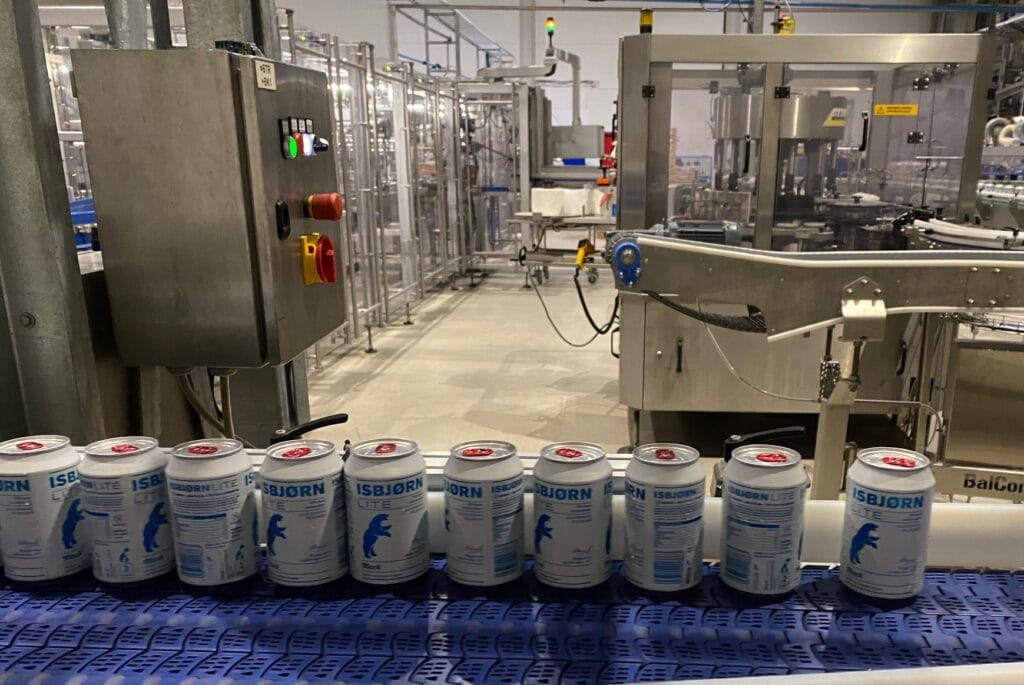
Krones, for example, supplied the main filling line for beverage cans with a capacity of 25,000 cans per hour. A smaller filling line for cans and glass bottles with a capacity of 8,000 units per hour was supplied by the Slovenian manufacturer Vipoll, a GEA Group company. „We use this line for limited runs, for example when we fill speciality beers in glass bottles.“ Both bottling lines are fully automated and work with robot support in the final packaging.
The barrel filling process was also converted to a Keykeg-system. The transparent, double-walled plastic drums from the Dutch manufacturer OneCircle are equipped with an inner bag in which the beers can be kept for around five weeks. The Norwegian return partner Infinitum then ensures that Empty keykegs prepared for reuse be filled. Finally, Mack fills bulk beer into 1,000-litre tanks, which are lined with hygienic beer tank liners made of 14-layer co-extrusion film from the German manufacturer Nittel in Halle.
Mack in turn fills the soft drinks on a filling and packaging line from the northern Italian machine manufacturer SMI. The preforms are first blown into bottles on site. „After all, we use different shapes, depending on whether a Coca-Cola brand or a private label is bottled“, explains Rune Andreassen. The line operates at a capacity of up to 25,000 bottles per hour, depending on the container size of 0.5 litres or 1.5 litres. Rune Andreassen: „We source our preforms from Lithuania, the aluminium cans from Sweden, the cardboard from Norway and the rest, such as the shrink film, from other European countries.“ However, the Arctic beers and soft drinks are mainly drunk in Norway. A small proportion is exported to Sweden, and Mack beers are even said to be available in China and New Zealand.
Craft beers and rock music
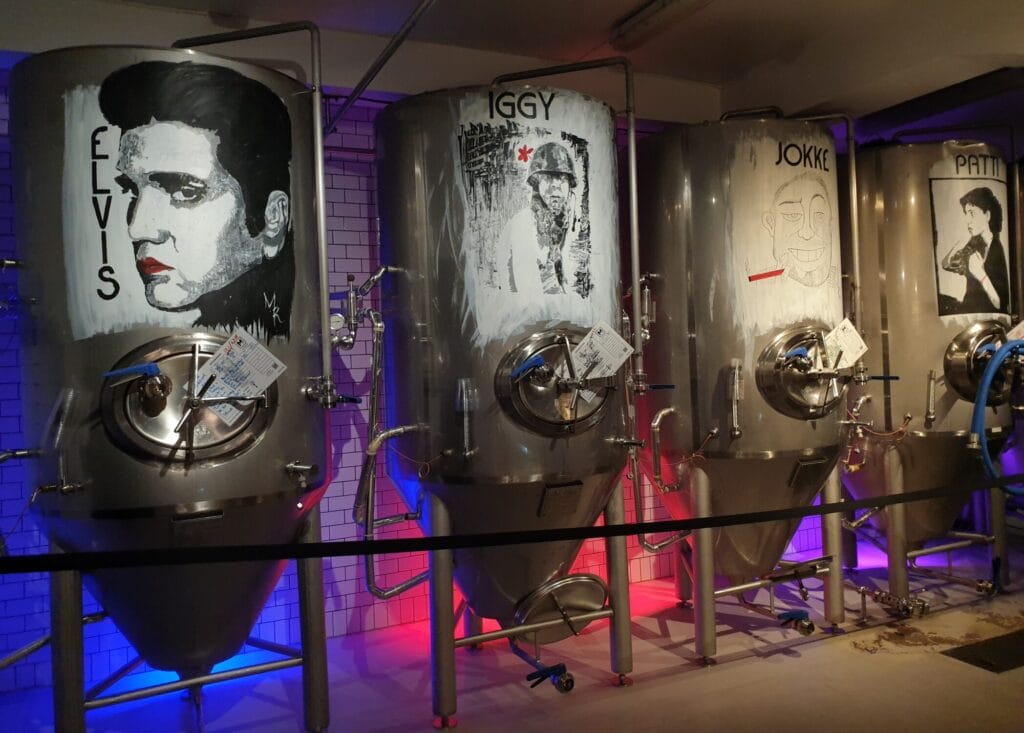
Even after the relocation of industrial production, beer is still brewed at the former site in the centre of Tromsø: in a microbrewery that was launched in 2000 as a small pilot brewery and test station. Today, „Mikrobryggeri“ is a brand in its own right with over 100 different craft beers in the repertoire. The three master brewers usually pursue their craft to rock music and have also immortalised their passion for music on the fermentation and storage tanks: with portraits of Elvis, Patti Smith, Iggy Pop, Ringo Starr, John Wayne and local rock greats. For every beer brewed, they create a new playlist that can be accessed via QR code. And between the brewhouse (from German manufacturer Caspary) and the fermentation tanks, there is also live music from time to time.